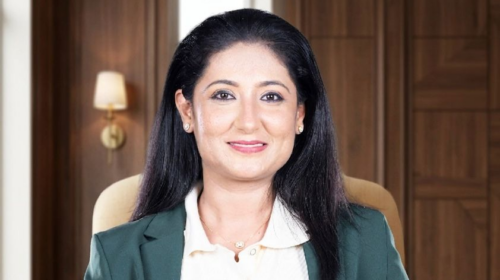
At BrilliantRead Media, we always strive to bring meaningful and powerful stories from India and around the world to empower and motivate our growing community. As part of this endeavour, we invited Twinkle for an exclusive interview with us. Twinkle is a Coach, Leadership & Communication Consultant. Let’s learn more about her background, journey and her advice for our community!
Excerpts from our exclusive interview with Twinkle:
Your journey spans 13+ years of global corporate experience. What led you to start working on communication, executive presence, and emerging leadership capability alongside your corporate role?
I have spent several years in the banking industry and currently work as a Project Manager, leading risk and finance initiatives.
Somewhere along the way, I started noticing a pattern. There were people around me who were incredibly capable, but when it came to speaking in meetings, structuring their thoughts, or even talking about their own work, something would hold them back.
I could relate to that personally. As I progressed in my career, there were phases where I second-guessed myself, stayed quiet in important conversations, or replayed discussions later, thinking, “I should have said that.”
Over time, I realised that opportunities often don’t slip away because people lack capability. They slip because people struggle to express their values in the moment. That realisation stayed with me.
It made me deeply curious about the art of communication. And communication, to me, is far more than words. Body language, presence, listening, and energy all communicate something long before we speak.
I have always felt these are underrated professional skills. That curiosity eventually led me to start designing and facilitating workshops alongside my corporate role. It didn’t begin as a big vision, instead it started as a dialogue with a cross functional team to understand where the gap lies, the impact on their business and that led to one session, then another.
Over time, it became something I genuinely care about, that is, creating spaces where people feel comfortable enough to speak, reflect, and realise they already have more to say than they think.
How has your corporate experience influenced the way you approach communication, behavioural skills, and leadership presence in your workshops?
My corporate experience is what keeps my approach grounded and practical.
I don’t see communication as a separate or theoretical skill. It shows up in everyday workplace moments like meetings, stakeholder conversations, project updates, presentations, even in how people introduce their work.
So when I design a session, I always start with one question:
“What should change for someone after this session?”
Maybe it’s speaking more clearly in meetings. Maybe it’s structuring thoughts better under pressure. Maybe it’s learning how to handle difficult questions without losing clarity.
I also tend to look at communication through three interconnected dimensions which are appearance, behaviour, and communication. Because what you say is only one part of how people understand and perceive you.
Another important realisation for me has been this: communication improves only when people feel psychologically safe.
If people constantly fear judgment or overthink how they will be perceived, real participation never happens.
That’s why a big part of my work focuses on creating an environment where people feel safe enough to express themselves first. Once that happens, growth follows naturally.
Executive presence is often misunderstood. How do you define it in today’s workplace, especially for professionals stepping into leadership roles?
Executive presence is one of those terms that gets discussed a lot, but is often reduced to how someone dresses, speaks, or carries themselves.
For me, it goes much deeper than that. Executive presence shows up in how clearly you think, how simply you explain ideas, how intentionally you listen, and how you handle conversations that matter.
But all of this rests on one important foundation that is subject clarity.
When people know their work deeply, they naturally communicate with more confidence and conviction.
At the same time, executive presence is not about pretending to know everything. Being able to say “I don’t know” or asking thoughtful questions often builds more trust than trying to appear perfect.
I’ve seen people speak very little in meetings and still command immense presence because when they contribute, it’s thoughtful and valuable.
I’ve also seen the opposite.
Another aspect that often gets overlooked is listening. Not just hearing words, but paying attention to what is being said, what is not being said, and responding with awareness.
That takes practice and maturity.
Executive presence is not about being the loudest or most confident person in the room. It’s about being understood, trusted, and taken seriously when you contribute.
And that starts much earlier than leadership titles. It develops in everyday moments such as how you present an idea, how you respond under uncertainty, how you handle disagreement or pushback.
Those small moments compound over time.
What are the most common communication and presence gaps you observe in professionals as they move into leadership roles?
A few patterns consistently stand out.
One is the inability to organise thoughts in the moment. People know what they want to say, but struggle to articulate it clearly under pressure.
Another common pattern is hesitation. Many professionals hold back valuable ideas because they are unsure how those ideas will be received.
This also affects how people disagree. Some avoid difficult conversations entirely, while others communicate frustration more strongly than intended.
I also notice a lot of overthinking. People spend so much time analysing what to say that they eventually say nothing at all.
Lastly, there’s overexplaining that is trying to communicate everything instead of communicating what truly matters.
Most of these patterns are shaped by past experiences and conditioning. But the positive part is that once people become aware of these patterns, they can consciously start changing them.
From your experience, can executive presence be developed through practice and awareness? What has worked in your sessions?
Absolutely. Executive presence can definitely be developed.
What I’ve seen repeatedly is that the hardest part is simply taking the first step. Most people already have ideas and perspectives, but they just hesitate to express them.
I usually encourage people to start small.
It could be asking one thoughtful question in a meeting, contributing one clear point, or structuring one update more intentionally.
I also introduce simple frameworks like the WSN method to help people organise their thinking.
And confidence doesn’t develop through theory. It develops through execution in real situations.
Over time, these small actions compound. You start seeing more clarity, more participation, and eventually more confidence and presence.
In high-stakes corporate environments, what communication habits differentiate professionals who influence effectively from those who struggle to be heard?
In high-pressure environments, the biggest differentiator is clarity under pressure.
Professionals who influence effectively are usually clear, concise, and intentional. They focus on what matters instead of trying to communicate everything at once.
That clarity directly improves decision-making because it helps others quickly understand the core issue.
Another important difference is perspective-taking. Influential communicators think beyond themselves. They ask:
“What matters to the other person?”
“What is relevant in this situation?”
“How can I position this message so it lands effectively?”
I often introduce the concept of WIIFM “What’s In It For Me?” because communication shifts dramatically when people start thinking from the listener’s perspective.
There’s also a principle from the book Getting to Yes that has stayed with me for years: focus on interests, not positions.
That idea applies not only to negotiation but to everyday workplace communication as well.
When these elements are missing, even strong ideas fail to create impact.
How do you approach building confidence in professionals who hesitate to speak up or experience self-doubt in leadership situations?
I don’t see confidence as the starting point. I see it as the outcome.
Most hesitation comes from the meaning we attach to situations. We assume how people will react, and those assumptions hold us back.
So the first step is helping people understand the “why” behind their hesitation.
Sometimes I simplify fear as “False Evidence Appearing Real.” That shift alone helps people create distance from their assumptions.
From there, I introduce a simple practice to recognise what you are feeling, respond instead of reacting, and then reframe the situation. I call it the RRR loop.
But mindset alone isn’t enough. Small actions matter.
Speaking once in a meeting, asking one question, sharing one perspective, these repeated actions create familiarity, and familiarity gradually builds confidence.
Confidence is built through repeated action, not waiting to feel ready.
You have engaged with both corporate professionals and student cohorts. How does your approach differ across these groups?
The core philosophy remains the same, but the context changes significantly.
With students, the starting point is awareness. Many of them haven’t yet experienced how communication impacts interviews, workplace dynamics, or career growth. So the focus is on helping them connect communication with opportunity.
With corporate professionals, the conversations become more situational and nuanced, such as stakeholder management, executive meetings, influencing decisions, managing teams, handling pushback, or communicating under pressure.
I also think deeply about behavioural outcomes.
For students, success may simply mean introducing themselves better or approaching interviews with more clarity.
For professionals, it could mean improving executive presence, structuring thoughts more effectively, or understanding how body language shapes perception in leadership conversations.
Another key difference is unlearning.
Professionals often carry years of habits, assumptions, and communication patterns. So sometimes the work involves letting go before learning something new.
But in both groups, transformation happens when communication stops feeling theoretical and starts feeling practical and personal.
From your experience, what is one shift in communication that creates a noticeable impact in how professionals are perceived at work?
One of the biggest shifts is moving from explaining to positioning.
Many professionals focus only on sharing information. But impactful communication is really about helping people understand why that information matters.
The moment people start asking themselves, “Why should this matter to the listener?”, their communication changes completely.
At the same time, communication is never just verbal.
Your body language, tone, attentiveness, and overall presence influence how your message is received.
I often describe appearance, behaviour, and communication as one integrated package. When all three align, people come across as more credible, clear, and trustworthy.
And over time, that directly shapes professional perception.
With evolving workplace dynamics and AI influencing how we communicate, what skills should professionals focus on building today?
Today, access to information is no longer the challenge. Information is everywhere.
What’s becoming far more important is human connection.
We live in a world filled with communication, but not necessarily meaningful communication.
That’s why emotional intelligence is no longer optional. It influences how we read situations, respond under pressure, and understand the impact we create in conversations.
I also believe professionals need to move beyond surface-level interactions. Whether it’s a conversation, presentation, or even an email, people can immediately sense when communication is generic versus thoughtful.
And in an age of constant multitasking, presence itself has become a powerful skill.
Listening without distraction. Paying attention fully. Responding with intention.
These sound simple, but they are increasingly rare.
That’s why I see them as power skills for the future because they directly influence trust, collaboration, leadership, and long-term professional impact.
Executive presence today is no longer about authority alone. It is about clarity, emotional intelligence, trust, and the ability to create meaningful human connections in increasingly complex workplaces.
At BrilliantRead, we don’t just share startup stories – we bring you journeys that challenge perspectives, spark ideas, and fuel ambition. Every story we feature is carefully chosen to add real value, inspire action, and ignite possibility within our growing community of entrepreneurs and dreamers.
If you have a powerful story – one that can inspire, educate, or create impact – we want to hear from you.