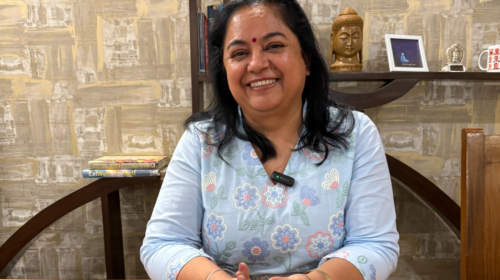
At BrilliantRead Media, we always strive to bring meaningful and inspiring stories from India and around the world to empower and motivate our growing community. As part of this endeavour, we invited Seema for an exclusive interview with us. Seema is a renowned Handwriting & Personality Development Coach who has helped more than 3,000 students across the globe transform their handwriting, confidence, and learning abilities through her structured training programs. Let’s learn more about her inspiring journey, teaching philosophy, and valuable insights.
Excerpts from our exclusive interview with Seema:
What inspired you to become a handwriting coach, and how did your journey begin in this niche field?
Since 1989, my work has been centred around helping children truly understand and practically apply what they learn rather than simply memorising subjects. My focus has always been on developing observation, attentive listening, logical thinking, self-awareness, responsibility, and patience.
A major turning point came in 2013 when I conducted a survey involving 2,700 students from Classes 1 to 5 across South Delhi schools. The findings were alarming: many children struggled with illegible handwriting, inconsistent writing pressure, spelling mistakes, slow writing speed, and even reading difficulties in the early grades. Despite using prescribed handwriting workbooks, these challenges remained unresolved.
That experience made me realise that handwriting is a foundational life skill that requires structured training rather than repetitive practice. I designed a comprehensive program that focuses on posture, pencil grip, body awareness, mindfulness, and correct letter formation.
To support this, I also developed my own Cursive English and Hindi handwriting coursebooks that help children visually understand letter formation, maatra placement, and improve writing speed naturally.
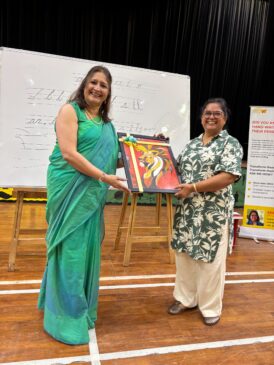
Principal of Paul George Global School (Rosemary Gaikwad) under the Aegis of Muthoot Group
You’ve helped over 3,000 students globally. What was the turning point that helped you expand your impact beyond local boundaries?
The COVID-19 lockdown became an unexpected opportunity. When schools closed, I immediately adapted by learning Zoom and shifting my classes online.
This transition allowed me to reach students not just across Delhi-NCR but from different parts of India and around the world. Families appreciated the structured approach and personalised attention each child received, even in a virtual classroom.
Today, I conduct both online and offline group sessions for students of different age groups and learning levels, and it has been incredibly fulfilling to witness their transformation regardless of geographical boundaries.
Many people think handwriting is simply about writing neatly. How do you connect handwriting with personality development?
Personality is a reflection of an individual’s natural abilities, habits, and potential. My approach focuses on helping children recognise and strengthen these qualities.
Children learn through visual, auditory, and kinesthetic experiences, often using all three simultaneously. Handwriting requires seamless coordination between the mind, brain, eyes, and hands while also demanding mindfulness and concentration.
As children improve their handwriting through structured training, they also develop important life skills such as observation, attentive listening, patience, focus, understanding, and the ability to apply what they learn. These qualities naturally contribute to their overall personality development.
What are the most common mistakes children make while learning to write, and how can parents help correct them early?
Interestingly, children are not actually making “mistakes” intentionally. Most handwriting challenges arise because the necessary developmental skills haven’t matured yet.
Good handwriting depends on properly developed fine motor skills, gross motor skills, and ocular motor coordination. Children write according to patterns stored in their subconscious, which feel perfectly correct to them.
Poor posture and an incorrect pencil grip often result in handwriting that is too dark, too light, slow, or difficult to read. Instead of focusing only on repeated writing practice, parents should strengthen their child’s hand muscles, improve hand-eye coordination, encourage reading, and engage them in exercises and activities that support overall motor development. These foundational improvements naturally lead to better handwriting.
You emphasise transformation rather than correction. What does your step-by-step process look like when a child joins your program?
The very first principle of my program is that no child’s handwriting is judged.
The learning journey is divided into three structured levels, each supported by a personally handwritten coursebook provided at the time of enrollment.
Students begin by relearning and unlearning correct letter formation, starting with lowercase letters to build natural writing flow. Once they master accurate formation and consistency, they gradually move toward speed writing using stopwatch-based practice that they can perform independently. This systematic approach ensures lasting improvement rather than temporary changes.
How do you help children who resist writing practice or lack confidence in their handwriting?
Confidence is built through small, visible successes.
During the very first session, we focus on transforming just three letters. When children immediately see the difference in their own handwriting, they become excited and begin believing in their ability to improve.
Since there is no criticism or comparison, they feel safe to learn. This positive experience motivates them to continue practising with enthusiasm and confidence.
In today’s digital age, do you think handwriting still plays a crucial role in a child’s development? Why?
Absolutely. While technology has become an important part of education, handwriting remains a fundamental life skill that cannot be replaced. Writing by hand strengthens the connection between the brain and the body, improves concentration, enhances memory retention, supports language development, and develops fine motor coordination.
Children who write confidently are often able to express their thoughts more clearly, complete classroom work efficiently, and perform better during examinations. Digital devices are valuable tools, but handwriting continues to play an essential role in a child’s cognitive, academic, and personal development.
What advice would you like to give parents who want to improve their child’s handwriting and overall learning experience?
Parents should understand that handwriting is not merely about neatness; it reflects several developmental skills working together.
Avoid comparing your child with others or forcing endless writing practice. Instead, focus on creating a positive learning environment, strengthening foundational motor skills, encouraging reading habits, and supporting the child with patience and consistency.
Every child has immense potential. With the right guidance, structured training, and encouragement, handwriting can become a powerful tool for building confidence, discipline, and lifelong learning skills.
At BrilliantRead, we don’t just share startup stories; we bring you journeys that challenge perspectives, spark ideas, and fuel ambition. Every story we feature is carefully chosen to add real value, inspire action, and ignite possibility within our growing community of entrepreneurs and dreamers.
If you have a powerful story, one that can inspire, educate, or create impact, we want to hear from you.