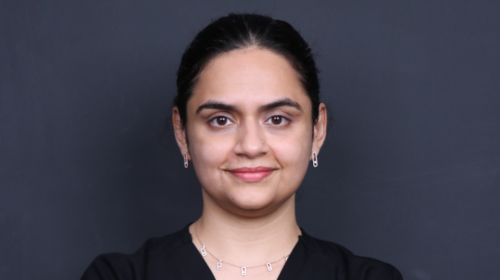
At Brilliant Read Media, it is our constant endeavour to identify and share some of the unique and compelling stories from the startup ecosystem. As part of this, we invited Dr. Shruti Marwah for an interview with Brilliant Read Media. To say it further, Dr. Shruti is a Facial Plastic Surgeon, Rhinoplasty and Natural Facial Aesthetics Specialist. Let’s learn more about her background, inspiring journey so far and her advice for our growing community!
Excerpts from our exclusive interview with Dr. Shruti:
You trained in ENT before pursuing MCh Plastic Surgery at AIIMS, New Delhi. What inspired this transition, and what drew you toward facial aesthetics?
Before pursuing my MCh in Plastic Surgery from AIIMS, New Delhi, I completed my MS in ENT from UCMS, Delhi. My foundation in ENT gave me extensive exposure to the intricate anatomy of the face, head, and neck. I was always fascinated by facial reconstruction and aesthetics, and over time, I realized that my true passion lay in facial plastic surgery.
The face is central to a person’s identity and confidence. The opportunity to combine my surgical expertise with artistic precision to help patients look and feel their best naturally led me toward facial aesthetics.
Facial plastic surgery is often described as a blend of medicine and artistry. How do you balance scientific precision with aesthetic judgment?
Facial plastic surgery demands an exceptional balance between science and art. The expectations are extremely precise, and there is very little margin for error. Every face is unique, so there is no one-size-fits-all approach.
The first step is understanding exactly what the patient hopes to achieve. Equally important is helping them understand what is realistically possible based on their anatomy.
During surgery, my focus is on delivering results that align with those expectations while respecting facial harmony. Technical excellence alone isn’t enough; you also need aesthetic judgment and an appreciation for natural beauty.
You’ve trained internationally in Switzerland, Germany, and Turkey. What key learnings from these global experiences have influenced your practice in India?
My international training taught me much more than surgical techniques. One of the biggest takeaways was the importance of teamwork, discipline, and structured protocols.
I observed that a positive work environment and strong collaboration among healthcare professionals significantly improve patient outcomes, even under demanding workloads. I also appreciated how strictly international centres adhere to standardized protocols. Following evidence-based systems greatly reduces the margin of error, enhances patient safety, and consistently improves surgical outcomes. These are principles I have consciously integrated into my own practice.
Rhinoplasty is considered one of the most technically demanding cosmetic procedures. What should patients realistically know before considering nose reshaping surgery?
Rhinoplasty is indeed one of the most technically challenging procedures in facial plastic surgery, and there are relatively few surgeons who specialize in it extensively.
Patients should come prepared with a clear understanding of the specific changes they would like. During the consultation, we discuss not only what is achievable but also what may not be possible based on individual anatomy.
Another important aspect is patience. Rhinoplasty is not a procedure where final results appear immediately. Swelling gradually subsides over several months, and tissues continue to settle during the healing process. Patients who understand this journey tend to have a much more satisfying experience.
In today’s world of social media filters and beauty trends, how do you help patients develop realistic expectations?
This has become one of the most important aspects of my consultations, especially with younger patients. Many arrive with heavily filtered celebrity photographs or edited social media images, expecting surgery to recreate those looks.
I spend considerable time educating them using photographs of my actual patients without filters or makeup. I explain that surgery enhances anatomy it cannot recreate digital filters or makeup effects.
My consultations typically last between 30 minutes and an hour because I believe counselling is just as important as surgery itself. By the end of the consultation, both the patient and I should have complete clarity about the expected outcome.
How do you ensure cosmetic enhancements look natural while preserving a person’s individuality?
My philosophy has always been that the best cosmetic surgery is the one that enhances your features without making it obvious that you’ve had something done.
To achieve this, it’s important not to push tissues beyond their natural limits. Facial tissues can only heal, retract, or expand to a certain extent. Trying to create dramatic or overly aggressive changes can lead to unnatural results.
I believe facial plastic surgery should harmonize the face rather than alter someone’s identity. The goal is for patients to look like a refreshed, more confident version of themselves not like someone else.
Cosmetic surgery is closely linked with confidence and emotional well-being. How do you assess whether a patient is mentally and emotionally ready for a procedure?
Psychological assessment is an integral part of facial cosmetic surgery. Many patients come with insecurities, and some may already be undergoing treatment for anxiety or depression.
During consultations, we carefully explore their emotional well-being, medical history, and psychological background. We also use structured psychological questionnaires to better understand whether the patient is seeking surgery for the right reasons.
Cosmetic surgery should enhance confidence it should never be viewed as a solution for emotional distress. Only after carefully assessing a patient’s mental readiness do we decide whether surgery is appropriate.
Have there been situations where you’ve declined to perform a cosmetic procedure? What ethical principles guide those decisions?
Absolutely. In fact, I decline nearly 30% of patients who consult me for facial cosmetic surgery.
Sometimes patients have unrealistic expectations that simply cannot be achieved safely. In other situations, they may be experiencing severe anxiety, depression, or emotional distress and believe surgery will solve those underlying issues.
There have been cases where we’ve requested psychiatric clearance, and the psychiatrist advised against proceeding with surgery. In such situations, patient wellbeing always comes first.
Ethics must always outweigh commercial interests. If I genuinely believe that surgery is not in a patient’s best interest, I would rather decline the procedure than perform something that may ultimately leave them unhappy.
What are some of the biggest myths surrounding Botox, fillers, facelifts, and cosmetic surgery?
One of the biggest misconceptions is that cosmetic procedures are only for celebrities. Today, people from all walks of life, including professionals, homemakers, parents, and young adults, choose aesthetic treatments simply because they want to feel more confident.
Another common myth is that Botox or fillers make everyone look artificial or that stopping Botox causes the face to age dramatically. Neither is true.
When performed by a properly trained plastic surgeon or dermatologist with a thorough understanding of facial anatomy, Botox and fillers can produce subtle, elegant, and natural-looking enhancements. Problems usually arise when treatments are excessive or performed by inadequately trained individuals.
What advice would you give someone considering a facial cosmetic procedure for the first time?
My advice is simple.
First, always verify your surgeon’s qualifications. Ensure you are consulting a properly trained plastic surgeon or dermatologist. Unfortunately, many unqualified individuals are performing aesthetic procedures today, which can be extremely risky.
Second, educate yourself about the recovery process. Every procedure has a healing timeline, and understanding it helps set realistic expectations.
Finally, come prepared with a clear idea of what you hope to achieve. It also helps to review your surgeon’s previous work to understand their aesthetic style. Personally, I believe in natural results that complement the patient’s existing facial features rather than dramatically changing their appearance.
The objective is not to create a different face; it is to create a better, more confident version of your own.
At BrilliantRead, we don’t just share startup stories; we bring you journeys that challenge perspectives, spark ideas, and fuel ambition. Every story we feature is carefully chosen to add real value, inspire action, and ignite possibility within our growing community of entrepreneurs and dreamers.
If you have a powerful story, one that can inspire, educate, or create impact we want to hear from you.