
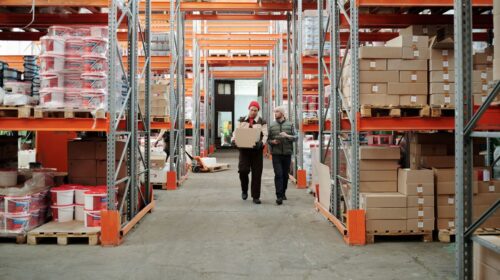
High-volume sales events often create intense demand for warehouse operations, order fulfillment, inventory control and shipping. Reviewing logistics performance after an event concludes helps retailers identify successful methods and areas that require adjustment – this systematic assessment provides data for future promotions and assists in managing the partnership between the retailer and the logistics provider.
Evaluate Order Accuracy
Order accuracy is a vital metric for measuring 3PL performance during peak periods. Retailers should check if customers received the items, quantities and specific versions they purchased. Frequent errors in picking or packing suggest that warehouse systems are less effective when order numbers rise.
Patterns of errors are also important to identify – If mistakes are more frequent at specific times, the cause is often related to peak order volumes, the number of staff available, the layout of the inventory or the complexity of the orders. Analyzing these conditions helps the retailer and the 3PL find functional ways to improve the process.
Assess Processing Durations
The time required to process orders is an indicator of how well a warehouse manages high demand. Retailers can compare the time spent receiving, picking, packing and dispatching orders during the event against standard periods. Substantial delays are an indication that the warehouse capacity or the sequence of work is insufficient for the workload.
Priority orders are another area for review to ensure they met their specific deadlines. Sales events often include different order types with various shipping requirements. Reviewing these details helps determine if the current fulfillment system is flexible enough to manage different priorities.
Check Inventory Precision
Inventory levels are often less accurate after a busy campaign because high activity levels lead to record discrepancies. Retailers can compare digital stock records with the physical items in the warehouse to find differences. Accurate data is necessary to decide if the 3PL must reorder products or move them to different locations.
Stockouts and remaining inventory are also significant factors. Items that sell more quickly than predicted cause delays, whereas unsold promotional goods take up warehouse space after the sale ends – these observations help retailers create better demand predictions and stock distribution plans for future events.
Review Shipping Metrics
Shipping results are another measure of how well logistics function. Retailers should verify if the 3PL gave orders to carriers on time and if there were unusual delays during transit. Analyzing shipping data helps determine if problems started in the warehouse, with carrier schedules or in other areas.
Customer experiences are also relevant to delivery performance. Retailers can track complaints, inquiries about packages and instances where delivery dates are missed. Logistics providers in specific regions, like a 3PL Toronto, often use multiple carriers – comparing the services can show patterns that require further discussion.
Analyze Communication Quality
Information sharing between the retailer and the 3PL is a major factor in the success of a campaign. Retailers should evaluate if data regarding stock, order numbers, marketing plans and shipping needs is accurate and timely. Reliable communication is essential when order volumes change rapidly.
Handling of fulfillment exceptions is another area to examine. Delayed shipments, lack of stock and incorrect addresses require quick decisions from the retailer and the 3PL. Reviewing these instances shows if current problem solving steps are effective or if the roles of staff need more definition.
Compare Financial Expenditures
A review after a campaign includes the costs of increased logistics activity. Retailers can compare fees for handling, storage, shipping and other services against the planned budget. Costs that are higher than expected are often a sign that the event required more resources or that initial volume estimates were wrong.
Service quality is as important as the cost of the service – Lower costs are not beneficial if they lead to slow delivery or incorrect orders. Evaluating expenses alongside performance data gives retailers a clear view of how efficiently the 3PL supported the event.
Identify Necessary Changes
The final step is to use the review to improve future events – Retailers should find repeating delays, inventory errors, communication gaps or space limitations to discuss with the 3PL. The objective is to find the causes of these issues rather than just counting how many times they happened.
Future plans can incorporate the findings – Retailers might change their inventory predictions, share information earlier, adjust the latest times for daily orders or book more warehouse space. Cooperation with the 3PL to set these changes before the next busy period makes the fulfillment process more predictable.
Conclusion
Reviewing 3PL performance after a high volume sales event allows retailers to assess accuracy, speed, inventory, shipping, communication and expenses. By looking at both successes and difficulties, retailers use actual data to improve future planning and create more effective logistics systems.