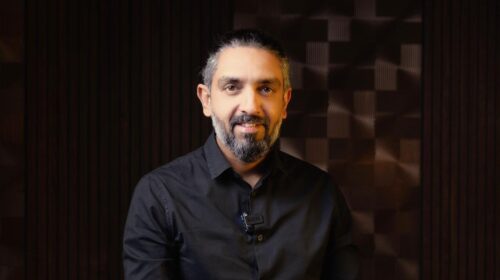
At Brilliant Read Media, it is our constant endeavour to identify and share some of the unique and compelling stories from the startup ecosystem. As part of this, we invited Ratiesh Sharma for an interview with Brilliant Read Media. To say further, Ratiesh is an Entrepreneur and Founder & CEO at The Kite Flyers. Let’s learn more about his background, inspiring journey so far and his advice for our growing community!
Excerpts from our exclusive interview with Ratiesh:
You spent over two decades building brands before becoming an entrepreneur. What inspired you to take the leap and establish The Kite Flyers, and what has entrepreneurship taught you that corporate leadership never could?
I had spent many years working with brands, teams, and different businesses. Somewhere along the way, I started thinking about what I would do differently if I had the opportunity to build something of my own. I wanted to create a creative agency where we could work closely with clients, understand their actual business challenges, and bring strategy, creativity, and execution together. That vision eventually became The Kite Flyers.
Entrepreneurship has taught me a very different kind of responsibility. When you run your own business, there is no one else to pass the decision to.
You are responsible for your clients, your people, your cash flow, and the direction of the company. I believe that experience teaches you patience, resilience, and, most importantly, how to keep moving forward even when you don’t have all the answers.
Artificial intelligence can now create content, analyse data, and influence marketing strategies. Where do you believe human marketers will remain irreplaceable, and where should they willingly let AI take over?
I think AI is going to become a natural part of how we work, and marketers should embrace it wherever it can save time or help them work more effectively. Whether it is analysing data, creating first drafts, conducting research, automating repetitive tasks, or exploring multiple creative possibilities, AI can certainly make teams faster and more efficient.
However, marketing is ultimately about people. Understanding why someone feels a certain way, what will resonate with them, what is culturally relevant, or even recognising when something doesn’t feel right still requires human judgement.
For me, it isn’t really about AI versus humans. The marketers who will succeed are those who understand what technology can do better and recognise where human thinking, creativity, and judgement must continue to lead.
You often highlight the gap between selling and understanding the customer. What is one customer behaviour that marketers still fundamentally misunderstand?
I think brands sometimes assume that customers are thinking about them far more than they actually are. In reality, customers are rarely thinking about a brand’s campaign, product features, or marketing objectives. They are thinking about their own needs and challenges.
They want to know: What do I need? Will this make my life easier? Can I trust this brand? Is it worth my money or time?
Instead of constantly asking, “What do we want to communicate?”, brands need to ask, “What is the customer actually looking for?”
When you begin to approach marketing from the customer’s perspective, your communication naturally becomes more relevant, meaningful, and effective. Ultimately, understanding the customer must come before trying to sell to them.
The Kite Flyers operates at the intersection of creativity, strategy, and technology. When these three pull in different directions, which should a business prioritise, and why?
For me, strategy has to come first. Before deciding how creative an idea should be or which technology to use, we need to be clear about the problem we are trying to solve.
Once that direction is established, creativity helps us communicate the idea in a way that people will notice, connect with, and remember. Technology then enables us to execute it more effectively, work faster, and sometimes achieve a much larger scale.
I don’t see strategy, creativity, and technology as three separate elements competing with one another. Strategy provides direction, creativity gives the idea its expression, and technology helps take it further.
The strongest work happens when all three are aligned with the same business objective.
As a founder, how do you build a team that doesn’t simply execute your vision but also challenges you, disagrees with you, and ultimately makes the business better?
I actually believe disagreement is healthy. If everybody in the room agrees with me all the time, then there is probably something wrong.
As a founder, your responsibility isn’t to have every answer. It is to build a team of people who feel comfortable expressing their opinions and saying, “I think there is another way to look at this.”
Of course, there should be sound reasoning behind every point of view. But when people know they can speak openly, you create an environment where better ideas and stronger decisions can emerge.
Many times, the final solution becomes much stronger because someone had the confidence to challenge the original thought.
For me, that is what a good team should do. It shouldn’t simply execute the founder’s thinking; it should challenge it, strengthen it, and ultimately improve it.
Marketing is increasingly expected to demonstrate ROI, while brand building often takes years to deliver results. How do you balance short-term performance with long-term brand equity when clients expect immediate outcomes?
This is a conversation we have quite often. Businesses naturally need results. They need leads, sales, enquiries, and measurable outcomes, which makes performance marketing extremely important.
However, if you focus exclusively on immediate conversions, you may generate results today without building enough value for the brand tomorrow.
Brand building creates trust, familiarity, and preference over time, while performance marketing helps convert demand into measurable business outcomes.
I don’t believe brands should choose one over the other. The right balance depends on the business, its objectives, and the stage of its journey.
The important thing is to recognise that not every marketing activity can be measured using the same metric or timeline. Some initiatives deliver immediate results, while others create the foundation for sustainable growth. A strong marketing strategy needs to account for both.
If you could offer one piece of advice to a young marketer or founder starting out in 2026 something you wish someone had told you 20 years ago, what would it be?
I would probably say, don’t be in such a hurry to have all the answers.
When you’re younger, you sometimes feel that you need to prove yourself in every room. You feel the need to speak, have an opinion, and demonstrate that you know what you’re doing.
Over the years, however, I’ve realised that listening is equally important. Ask questions. Observe people. Understand businesses. And keep learning.
Marketing will continue to evolve. Technology will change, and platforms will come and go. But if you remain curious and committed to learning, you will usually find your way.
Looking back, I think that is something I would have appreciated hearing much earlier in my career.
BrilliantRead is committed to bringing stories from the startup ecosystem, stories that reshape our perspective, add value to our community and be a constant source of motivation not just for our community but also for the whole ecosystem of entrepreneurs and aspiring individuals.
Note: If you have a similar story to share with our audience and would like to be featured on our online magazine, then please write to us at [email protected], we will review your story and extend an invitation to feature if it is worth publishing.