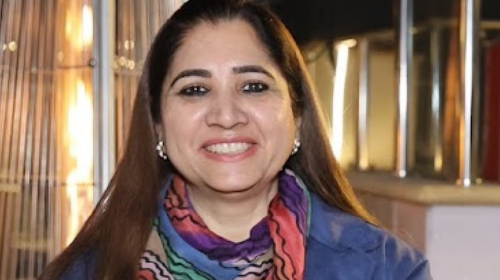
At BrilliantRead Media, we always strive to bring meaningful and inspiring stories from India and around the world to empower, transform and motivate our growing community. As part of this endeavour, we invited Taran Deep for an exclusive interview with us. Taran Deep is an Entrepreneur, Independent Director, Founder Director at Happy Hospitality Club and Founder of Uplifto. With extensive experience across hospitality, real estate, marketing, travel and events, she is passionate about business transformation, strategic collaborations, corporate governance and building sustainable business ecosystems. Let’s learn more about her background, professional journey, entrepreneurial experiences, leadership philosophy and valuable advice for our community!
Excerpts from our exclusive interview with Taran Deep:
Could you please take us through your professional journey and share what inspired you to pursue entrepreneurship, leadership and business transformation?
My professional journey has been a continuous process of learning, evolving and reinventing myself. Having worked with organisations such as Jaypee and across sectors including real estate, marketing and communications, hospitality, travel and events, I have experienced business from multiple perspectives. My corporate years gave me an understanding of structured organisations, strategic thinking, stakeholder management and execution.
However, the real turning point came when I moved out of my last corporate role as Head of Branding and Marketing at a reputed real estate company and transitioned into consultancy. I initially worked with destination boards before embarking more fully on my entrepreneurial journey.
That transition was a real eye-opener. Suddenly, there was no department to fall back on and no team taking care of the administrative side of business. You could be strategising and implementing a campaign one moment, and the next, you were preparing invoices, following up on payments, managing operations, overseeing staff and looking after accounts. You became HR, finance, operations, business development and leadership, sometimes all in the same day.
The absence of a regular monthly salary was another significant adjustment. A corporate job provides a certain financial cushion and predictability, whereas entrepreneurship requires you to keep moving forward even when the next retainer or assignment is uncertain. It taught me resilience, patience and, above all, financial and personal discipline.
One of the biggest lessons was learning to create my own accountability. When you work for an organisation, systems and reporting structures provide a framework. As an entrepreneur, you have to build that framework for yourself.
What kept me going was the belief that I was building something of my own, something meaningful that could eventually create opportunities and employment for others.
Today, as a qualified Independent Director and through my work with Happy Hospitality Club and my other entrepreneurial ventures, I bring those experiences into how I look at businesses and leadership. I understand the boardroom perspective, but I also understand what it takes to execute an idea on the ground.
I believe leadership is not just about having a vision; it is about having the resilience to build it, the discipline to sustain it, and the humility to understand every aspect of the journey.
You have worked across diverse industries, including hospitality, real estate, marketing, travel and events. How has this cross-industry exposure shaped your approach towards business development and strategic collaborations?
Working across different industries has given me the ability to look at businesses beyond their immediate operational boundaries. Every sector has its own challenges, customer expectations, commercial priorities and stakeholder dynamics. However, certain fundamentals remain common: relationships, trust, execution, adaptability and the ability to identify opportunities.
My experience in marketing and communications helped me understand the importance of positioning, storytelling and brand perception. My exposure to real estate gave me insights into large-scale projects, structured business environments and stakeholder management. Hospitality, travel and events further strengthened my understanding of customer experience, partnerships and operational execution.
I have always believed that meaningful business development is not simply about identifying opportunities or closing transactions. It is about understanding what different stakeholders bring to the table and creating collaborations where everyone sees value.
Some of the most interesting opportunities emerge at the intersection of industries. My cross-sector experience allows me to connect people, ideas and businesses that may not traditionally operate together.
For me, strategic collaboration is about creating long-term value rather than pursuing short-term commercial gains.
As a Ministry of Corporate Affairs-qualified Independent Director, what does effective corporate governance mean to you, and how can it help organisations achieve sustainable growth?
Good governance is often misunderstood as a compliance requirement, whereas I see it as an essential foundation for sustainable business growth.
For entrepreneurial and emerging organisations, governance becomes particularly important as they move from founder-led operations towards structured and scalable businesses. In the early stages, founders tend to manage almost everything themselves. While that approach may work initially, it can become a limitation when the organisation starts growing.
A strong governance framework brings clarity in decision-making, accountability, risk management and strategic direction. It also encourages organisations to look beyond immediate revenue and consider long-term sustainability.
An Independent Director can bring an objective perspective to the boardroom. Having someone who is not directly involved in day-to-day operations can help challenge assumptions, identify potential risks, evaluate strategic decisions and encourage management to consider different perspectives.
I believe governance should not restrict entrepreneurship or innovation. Instead, it should create an environment where businesses can take calculated risks while maintaining accountability.
Ultimately, good governance is about building organisations that are not dependent solely on individuals but are supported by strong systems, transparent processes and responsible leadership.
Happy Hospitality Club has emerged from your vision of community building and industry collaboration. What inspired you to establish this platform, and what gap are you looking to address within the hospitality ecosystem?
The idea behind Happy Hospitality Club emerged from my belief that the hospitality industry has immense potential when people and organisations come together.
Hospitality is a relationship-driven industry. It involves hoteliers, restaurant owners, vendors, consultants, entrepreneurs, service providers and several other stakeholders. While these individuals and organisations operate within the same ecosystem, there is often a gap between meaningful networking and actual business collaboration.
I wanted to create a platform that could bridge this gap.
The objective was never to build just another networking group. I wanted Happy Hospitality Club to become a community where people could connect with the right stakeholders, exchange knowledge, explore business opportunities and develop relationships that could translate into tangible outcomes.
Over time, the focus has expanded towards community building, industry engagement, vendor partnerships, knowledge sharing and creating opportunities for professionals across the hospitality ecosystem.
I strongly believe that an industry becomes stronger when its stakeholders grow together. Happy Hospitality Club is built around that philosophy.
Entrepreneurship often involves uncertainty, operational challenges and difficult decisions. What are some of the most important lessons you have learnt while building and managing your ventures?
Entrepreneurship teaches you lessons that are difficult to understand until you experience them yourself.
One of the biggest lessons is that having a good idea is only the beginning. Building a sustainable business requires consistency, financial discipline, operational efficiency and the ability to manage people.
In the initial stages, entrepreneurs often underestimate the importance of cash flow management. You may have projects, clients and business opportunities, but unless you are able to manage collections, expenses and working capital effectively, the business can become difficult to sustain.
People management is another important aspect. As an entrepreneur, you gradually realise that you cannot do everything yourself. You need people who understand the vision, take ownership and are willing to contribute beyond their defined responsibilities.
I have also learnt that operational discipline is non-negotiable. Processes, documentation, reporting structures and accountability may not always seem exciting, but they are what allow a business to function consistently.
My biggest takeaway is that entrepreneurship is not just about building something; it is about creating an organisation that can sustain itself, adapt to changing circumstances and continue creating value even in your absence.
Through Silken Weddings & Events, you are involved in managing complex, high-value experiences. What does it take to deliver successful experiences while balancing stakeholder expectations, finances and execution?
Managing high-value experiences is a completely different ball game because you are dealing with multiple moving parts simultaneously.
Whether it is a wedding, an event or a large-scale experience, you are managing expectations, budgets, timelines, vendors, teams, logistics and, most importantly, emotions. Every stakeholder has a different perspective, and ensuring that everything comes together seamlessly requires considerable planning and coordination.
One of the biggest challenges is that there is very little room for error. When people invest significant amounts of money and emotional energy into an experience, they expect everything to be executed flawlessly.
I believe the foundation of successful execution lies in three things: preparation, communication and accountability.
Preparation ensures that potential challenges are anticipated rather than addressed at the last moment. Communication keeps all stakeholders aligned, while accountability ensures that responsibilities are clearly defined.
At the same time, reputation plays a significant role in this business. A successful event is not simply about delivering what was promised; it is about creating an experience that people remember for the right reasons.
For me, the real success of an experience lies in the ability to manage complexity behind the scenes while making everything appear effortless to the people experiencing it.
Every entrepreneurial journey comes with defining moments. What has been one of the most challenging business decisions you have made, and what did it teach you about resilience and reinvention?
One of my most significant business decisions came during COVID, when I had to reassess the future of Uplifto, my branding, marketing and communications venture.
Uplifto was my first entrepreneurial venture, established in late 2017, something I had built with immense passion and a strong belief in the value of branding and communication.
However, COVID fundamentally changed business priorities. Companies became increasingly focused on immediate sales, revenue generation and survival. At the same time, the market evolved, competition increased, and newer players entered with different cost structures. The traditional scope of branding and communication services was no longer sufficient in the same way.
It was difficult to accept that something I had invested so much of myself in needed to change. There is an emotional attachment to a business you have created from scratch, and sometimes that attachment can prevent you from seeing what the market is telling you.
I eventually decided to slow down Uplifto rather than continue operating with a model that was no longer aligned with the market’s needs. It was not an easy decision, but I realised that continuing simply because of emotional investment would not necessarily lead to meaningful results.
The important part is that I do not see this as the end of Uplifto. I see it as an opportunity to reinvent it. I am now looking at reviving it with a different scope of work, more relevant deliverables and a stronger focus on business transformation and strategic advisory, rather than the conventional branding and communications model.
The experience taught me that entrepreneurship requires you to separate your emotional attachment to a venture from your assessment of its commercial viability.
Sometimes, you have to pause, reassess and change direction rather than continue doing the same things and expect different results. Reinvention is not an admission of failure; it is an acknowledgement that the market has changed and your business must evolve with it.
One of the most valuable lessons I have learnt is that you can remain committed to your vision without remaining attached to the same business model.
You strongly emphasise relationships, mentorship and collaboration. How important are these elements in helping entrepreneurs and emerging leaders navigate challenges and create meaningful opportunities?
I consider mentorship, networking and strategic relationships extremely important, particularly in today’s interconnected business environment.
No entrepreneur or professional has all the answers. Every stage of business brings new challenges, and sometimes a conversation with someone who has already navigated a similar situation can provide clarity that would otherwise take months to develop.
Networking, however, should go beyond exchanging business cards or adding contacts on professional platforms. It should be about building relationships based on trust, mutual respect and shared interests.
I have always believed that the quality of your professional relationships is far more important than the number of connections you have.
Mentorship also plays a significant role because it allows individuals to learn from the experiences, mistakes and achievements of others. Similarly, strategic collaborations can help businesses access new markets, capabilities, customers and resources that may not be available internally.
Through my work with Happy Hospitality Club, I have seen how the right connections can create opportunities that benefit multiple stakeholders.
My advice to entrepreneurs and young professionals would be to invest in relationships without always expecting immediate returns. Some of the most valuable professional associations develop over time, and their real value often becomes visible when you least expect it.
Uplifto is now exploring a stronger focus on business transformation and strategic advisory. What is your vision for the venture, and how do you see businesses adapting to an increasingly dynamic business environment?
I believe strategic advisory is becoming increasingly relevant because businesses today operate in an environment where change is constant.
Market dynamics, customer expectations, technology, competition and economic conditions are evolving rapidly. What worked for an organisation three years ago may not necessarily work today.
Many businesses have strong products, capable teams and market opportunities, but they struggle to translate these strengths into sustainable growth. Sometimes, the challenge is not a lack of ambition but the absence of clarity, structure or the right strategic direction.
This is where I see the role of strategic advisory evolving.
My vision for Uplifto is to move beyond conventional branding and communication services and focus more on business transformation, strategic positioning, growth opportunities, stakeholder engagement and organisational development.
I believe advisory should be practical and execution-oriented. It should not be limited to preparing presentations or offering recommendations. The real value lies in helping organisations identify challenges, evaluate opportunities and develop actionable strategies.
Ultimately, businesses need partners who can understand both the bigger picture and the operational realities of implementation.
That is the space I would like Uplifto to contribute to.
Looking ahead, what is your vision for Happy Hospitality Club and your broader mission of transforming the hospitality ecosystem through collaboration and strategic leadership?
My vision for Happy Hospitality Club is to build a globally scalable hospitality ecosystem that connects professionals, hoteliers, vendors, entrepreneurs and industry stakeholders through meaningful relationships and business opportunities.
We have been building the community with the belief that hospitality grows stronger when people collaborate, share knowledge and create opportunities for one another. I want HHC to evolve beyond a conventional networking platform into a professionally managed organisation with structured membership programmes, knowledge-sharing initiatives, vendor partnerships and opportunities for business development.
However, I also recognise that ambition alone does not create scale. The next phase of HHC must focus on strengthening our standard operating procedures, creating replicable systems, defining clear roles and responsibilities, and bringing more capable people into the organisation who believe in the vision and can help execute it.
I want to build a model that does not depend entirely on the founders’ personal involvement in every activity, but one that can operate consistently, maintain quality and expand into new geographies. Once these foundations are strong, the larger ambition is to take HHC beyond India and build an international network connecting hospitality professionals across markets.
For me, the challenge is to preserve the warmth and trust of a close-knit community while creating the systems and governance required for a scalable business.
My broader mission has always been to build something meaningful—not just businesses that generate revenue, but platforms that create opportunities, strengthen relationships and enable others to grow.
I believe that the future belongs to organisations that can combine purpose with sound business fundamentals. That is what I want HHC to represent: a collaborative ecosystem that is professionally managed, commercially sustainable and capable of creating a lasting impact on the hospitality industry.
Finally, what would be your message to aspiring entrepreneurs, young professionals and emerging leaders who wish to build meaningful careers and create a lasting impact?
My message would be to remain curious, adaptable and disciplined. Do not be afraid to explore different industries, take calculated risks or reinvent yourself when circumstances demand it.
Entrepreneurship and leadership are not linear journeys. There will be moments when things work in your favour and others when you will have to question your decisions, reassess your approach and start again.
Do not measure success only by revenue, designations or professional achievements. Look at the relationships you build, the opportunities you create for others and the value you contribute to the ecosystem around you.
Most importantly, understand that sustainable success is built over time. Stay committed to your larger vision, but remain flexible about the path you take to achieve it.
At BrilliantRead, we don’t just share startup stories; we bring you journeys that challenge perspectives, spark ideas, and fuel ambition. Every story we feature is carefully chosen to add real value, inspire action, and ignite possibility within our growing community of entrepreneurs and dreamers.
If you have a powerful story, one that can inspire, educate, or create impact, we want to hear from you.