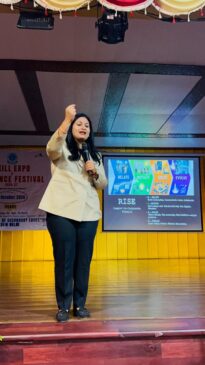
At BrilliantRead Media, it is our constant endeavour to identify, recognise and share inspiring stories of individuals who are making a meaningful difference through their work, vision and contributions. As part of this endeavour, we invited Monica Swamy for an exclusive interview with BrilliantRead Media.
Monica is a Global Leadership Coach, Leadership Development Trainer, Keynote Speaker, Independent Learning & Development Consultant and ICF-accredited Coach. With over 18 years of professional experience across engineering, HR, recruitment, learning and development, and leadership development, she has dedicated her journey to empowering individuals and organisations to unlock their potential and create lasting impact.
Through her expertise in leadership development, communication, executive presence and experiential learning, Monica helps professionals become more confident, influential and future-ready leaders. Her philosophy, “Redefine. Realign. Rise.”, reflects her belief in continuous growth, professional reinvention and the importance of human capabilities in an increasingly AI-driven world.
Let’s learn more about her professional background, inspiring journey, leadership philosophy and valuable advice for our growing community!
Excerpts from our exclusive interview with Monica:
To begin with, could you take us through your professional journey and what inspired you to venture into leadership development and reinvention coaching?
My journey is, in many ways, a story of reinvention. I began my professional career as a software engineer with Accenture in 2008. Over time, I transitioned into HR, recruitment, learning and development, and eventually leadership coaching and independent consulting.
Having experienced both the technology and people sides of business, I began recognising something important: technical knowledge helps us perform our jobs, but our human skills often determine how effectively we work with others, navigate challenges and lead change.
After more than 12 years in the corporate world, I took the leap into independent consulting, training and coaching. Reinventing myself was not simply a career decision; it was an opportunity to build a career around the impact I wanted to create.
Over the years, I have worked with professionals and students across industries and geographies, reaching more than 40,000 learners through training and development initiatives.
Today, my mission extends beyond leadership development. I want to help individuals and organisations recognise that as artificial intelligence becomes more powerful, our humanity becomes even more valuable.
I believe the future needs people who can think critically, communicate meaningfully, lead empathetically and reinvent themselves continuously.
For me, reinvention is not about becoming someone else. It is about discovering what you are capable of becoming.
You help ambitious professionals become confident and influential leaders. What are some of the biggest mindset barriers that prevent people from realising their true potential?
In my work with professionals and leaders, I have observed that potential is often limited not by a lack of competence, but by self-doubt, fear of judgement and reluctance to step outside familiar roles.
I meet capable professionals who have years of experience but hesitate to speak in meetings, communicate their achievements, take ownership or pursue leadership opportunities. They wait for confidence before taking action, whereas confidence often develops through action.
Another challenge is the belief that technical excellence alone guarantees career growth. In today’s workplace, professionals must also know how to influence stakeholders, manage conflict, collaborate across teams and communicate with clarity.
With AI transforming how we work, there is another risk: becoming so focused on acquiring technical skills and using digital tools that we neglect the human capabilities that differentiate us.
My approach is to help people move from awareness to action. We work on identifying limiting beliefs, recognising strengths, practising new behaviours and building the confidence to apply them in real workplace situations.
Your biggest competitor is not always the person sitting next to you. Sometimes, it is the smaller version of yourself that fear has convinced you to become.
Growth begins when we stop asking whether we are good enough and start asking what we can learn, practise and contribute next.
In your experience, what truly differentiates a high-impact leader from someone who is simply managing a team?
A manager may focus on delivering results through people. A high-impact leader understands that sustainable results depend on the people delivering them.
In leadership development, I emphasise three dimensions: leading yourself, leading others and leading results. You cannot consistently lead others effectively without understanding your own behaviour, assumptions, strengths and blind spots.
High-impact leaders build trust, communicate purpose, listen without immediately judging, provide constructive feedback and create an environment where people feel both accountable and empowered.
This becomes particularly important in an AI-driven workplace. When information and solutions become increasingly accessible through technology, leaders must offer something more than instructions. They must exercise judgement, navigate ambiguity, inspire people through change and make decisions with empathy and responsibility.
Through my experiential leadership interventions, I encourage participants to move beyond discussing leadership concepts and actually practise them through simulations, role plays, reflection and workplace applications.
A leader’s real legacy is not just the results delivered while they are in charge; it is the capability, confidence and character they help build in others.
That is the difference between managing tasks and creating lasting leadership impact.
Many professionals are highly skilled but struggle with confidence and executive presence. What practical steps would you recommend to help them develop greater self-belief and influence?
I often tell professionals that executive presence is not about being the loudest person in the room, speaking with a particular accent or pretending to have all the answers. It is about being clear, credible, composed and purposeful.
I recommend starting with three practical shifts.
First, learn to articulate your value. Be able to explain what you contribute, what problems you solve and what outcomes you create. Competence matters, but people also need to understand your contribution.
Second, practise communicating with intention. Structure your thoughts before speaking, lead with your key message, support it with evidence and conclude with a recommendation. Listen actively, ask thoughtful questions and learn to handle disagreement constructively.
Third, build confidence through exposure. Volunteer to present, facilitate a discussion, lead a small initiative or have a conversation you have been postponing. Each experience gives you an opportunity to practise and improve.
In my coaching and training work, I believe confidence develops when individuals become more self-aware and deliberately practise the behaviours they want to strengthen.
We cannot eliminate every moment of nervousness, but we can learn to act effectively despite it.
Confidence is not the absence of fear; it is the ability to move forward without allowing fear to make every decision.
How can professionals develop influence and demonstrate leadership even when they do not hold a formal leadership position or managerial authority?
Leadership begins before the promotion. Influence begins before the designation.
I encourage professionals to focus on three things: credibility, relationships and contribution.
Build credibility by doing what you promise. Build relationships by understanding other people’s perspectives and communicating respectfully. Build influence by solving meaningful problems rather than simply highlighting what is wrong.
Learn to translate technical information into business outcomes. A brilliant idea gains influence when you can explain why it matters to customers, colleagues, stakeholders and the organisation.
Equally important, learn to listen. People are more likely to consider your ideas when they feel understood rather than merely persuaded.
These are human skills that no professional should postpone developing until they reach a managerial position.
You do not need authority to demonstrate leadership. You need the courage to take ownership, the empathy to understand people and the ability to create value.
My work in leadership and human skills development is rooted in this belief: every professional can begin leading from where they are, regardless of their current title.
For professionals who feel stuck, unfulfilled or uncertain about their career direction, how can they recognise when it is time to reinvent themselves?
My own career journey has taught me that reinvention is not reserved for people who have failed. Sometimes, it is the next step for people who have succeeded but are ready for something more meaningful.
You may be performing well but no longer learning. You may have achieved the milestones you once wanted but find yourself questioning what comes next. Or you may sense that your strengths and aspirations have evolved beyond your current role.
I encourage people to pause and reflect through three questions:
Redefine: What does success mean to me now?
Realign: Are my current choices aligned with my strengths, values and aspirations?
Rise: What practical step can I take towards the future I want?
This philosophy, Redefine. Realign. Rise., reflects the kind of reinvention I encourage through coaching.
Reinvention does not always mean leaving a job or starting a business. It can mean becoming a more influential leader, learning to communicate with confidence, moving into a different role or developing capabilities that prepare you for the future of work.
With AI reshaping careers, continuous reinvention is becoming an essential professional capability rather than an occasional career decision.
Do not wait for change to make your current identity irrelevant. Give yourself permission to evolve before circumstances force you to.
Your past experience is not wasted when you reinvent yourself. It becomes the foundation on which you build your next chapter.
As artificial intelligence transforms the workplace, what leadership and human skills do you believe will become essential for long-term professional success?
I believe the future belongs to professionals who can combine technological competence with human excellence.
AI is changing how quickly we can access information, analyse data and complete tasks. However, organisations still need people who can exercise judgement, build relationships, navigate difficult conversations and make responsible decisions.
Through my work, I advocate for strengthening five human superpowers:
> Emotional Intelligence: Understanding yourself and responding to others with empathy.
> Communication and Influence: Expressing ideas clearly, listening actively and creating alignment.
> Critical Thinking: Questioning assumptions, evaluating AI-generated information and making sound decisions.
> Adaptability and Reinvention: Learning continuously and responding constructively to change.
> Leadership and Collaboration: Building trust, taking ownership, managing conflict and helping people succeed together.
These capabilities are not optional soft skills to be developed after technical training. They are essential skills for performance, employability and leadership.
My mission is to help bridge the gap between what technology enables us to do and what human beings must learn to do better.
I do not believe we should fear AI or compete with it on every front. We should learn to use it responsibly while deliberately strengthening the capabilities that make us effective human collaborators and leaders.
AI may accelerate our work, but human skills determine how wisely, responsibly and meaningfully we use that acceleration.
The organisations that understand this will be better positioned to build leaders who can deliver results without losing sight of the people behind them.
Women often face self-doubt and workplace biases when stepping into leadership positions. What advice would you offer women aspiring to become confident and influential leaders?
I would tell women to stop waiting for the day they feel completely ready. That day may never arrive if readiness becomes a condition for taking every opportunity.
In my coaching work, I believe confidence grows when women recognise their strengths, acknowledge their achievements and practise using their voices in situations that matter.
Do not minimise your contribution. Do not assume that your work will automatically be noticed. Communicate your impact, ask for opportunities, seek constructive feedback and build relationships with people who can support your development.
Learn to say no when necessary, negotiate with clarity and speak up when you have a perspective worth sharing. You do not need to imitate someone else’s leadership style to be influential.
At the same time, we must recognise that self-doubt is not the only barrier. Organisations have a responsibility to address workplace bias, ensure fair access to opportunities and create environments where different leadership styles can thrive.
As we build more AI-enabled workplaces, we must also ensure that human-centred leadership, inclusive decision-making and empathy remain priorities.
You do not need to become less of yourself to become more of a leader.
My message to women is to invest in your capabilities, own your voice and give yourself permission to grow. And my message to organisations is to create workplaces where talent is recognised, developed and given the opportunity to lead.
What are some common mistakes ambitious professionals make that unknowingly slow down their career growth?
One common mistake is believing that working harder will automatically lead to career advancement.
Hard work is important, but professional growth also depends on how effectively you communicate, collaborate, influence and adapt.
I see professionals who become so focused on execution that they neglect visibility. Others remain dependent on their own expertise instead of learning to delegate, empower colleagues and think strategically. Some avoid difficult conversations, while others stop learning once they become comfortable in their roles.
Today, another mistake is treating AI as a substitute for professional judgement rather than a tool to enhance it. Using technology to become faster is valuable, but we must also learn to ask better questions, evaluate outputs and communicate insights meaningfully.
My advice is to build a development plan that includes both technical and human capabilities. Seek feedback, practise difficult conversations, build cross-functional relationships and take responsibility for your own learning.
Your technical skills may help you enter the room. Your human skills often determine how effectively you contribute once you are there.
Career growth requires us to move beyond doing our current job well and prepare for the responsibilities, relationships and challenges of the role we aspire to take on next.
Finally, what is the one powerful message you would like to share with professionals who aspire to become confident, future-ready and high-impact leaders?
Never let the pursuit of professional success disconnect you from the human qualities that make your success meaningful.
Learn continuously. Embrace technology. Challenge your assumptions. Reinvent yourself when necessary. But never stop developing your ability to listen, empathise, communicate, collaborate and lead with integrity.
I began my career in technology, moved through HR and learning, and eventually built an independent practice around leadership development and human transformation. My journey has reinforced one belief: our careers are not fixed identities. They are evolving opportunities to learn, contribute and create impact.
Today, through corporate training, leadership development, coaching and experiential learning, I want to help individuals and organisations unlock potential that might otherwise remain undiscovered.
My ambition is to reach lakhs of individuals across India and the globe with this message: as AI transforms the way we work, we must become more intentional about developing the human capabilities that technology cannot replace in their entirety.
Because leadership is not merely about managing performance. It is about creating trust, enabling growth and making decisions that respect our shared humanity.
My message is simple: In an AI-driven world, do not compete to become more machine-like. Develop the human skills that help you become a more capable professional, a more conscious leader and a more impactful human being.
At BrilliantRead, we don’t just share startup stories; we bring you journeys that challenge perspectives, spark ideas, and fuel ambition. Every story we feature is carefully chosen to add real value, inspire action, and ignite possibility within our growing community of entrepreneurs and dreamers.
If you have a powerful story, one that can inspire, educate, or create impact, we want to hear from you.