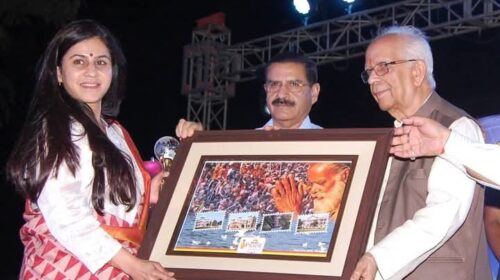
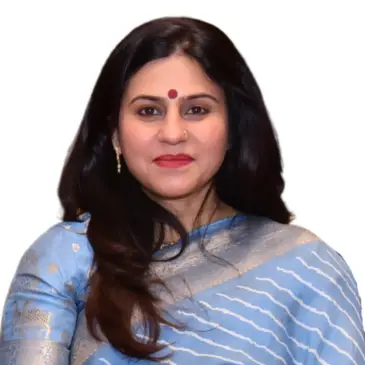
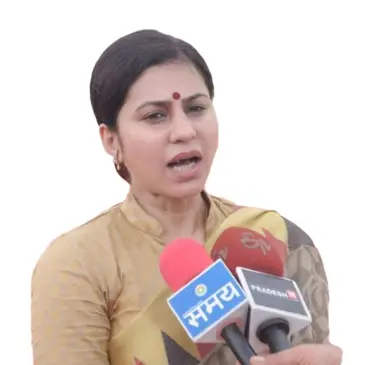
At Brilliant Read Media, it is our constant endeavour to identify and share some of the unique and compelling stories from the startup ecosystem. As part of this, we invited Shivani Jaiswal for an interview with Brilliant Read Media. To say further, Shivani is an Entrepreneur and Co-Founder at The Solitaire Group. Let’s learn more about her background, inspiring journey so far and her advice for our growing community!
Excerpts from our exclusive interview with Shivani:
Can you walk us through your professional journey—from founding The Innovators to building The Solitaire Group and forming Saathi Welfare Trust? What were the key turning points?
When I look back, my journey has never been a straight line—it has been a continuous process of evolution.
My entrepreneurial journey began in 2005, when my husband and I co-founded The Innovators Digital Ads Pvt. Ltd. We started in outdoor media advertising and printing, a space that demanded agility, strong negotiation skills, operational discipline, and a willingness to take risks. Those early years laid the operational foundation for everything that followed.
However, we were never meant to remain confined to a single vertical. One of the first major turning points came when we transitioned into construction and real estate development in Prayagraj, a Tier-2 city where organized development was still emerging. As a woman stepping into this sector, skepticism was inevitable—but conviction always outweighed hesitation.
This journey led to the development of Solitaire Valley, a 200-acre integrated township offering villas, luxury apartments, studios, and penthouses—an effort to bring metropolitan-style living while remaining rooted in local aspirations.
Another meaningful shift came in 2017, when we began developing housing for economically weaker sections under the PMAY scheme through a PPP model. Around the same time, the introduction of RERA transformed the real estate landscape. That phase significantly strengthened my understanding of land regulations, compliance, housing policies, and the importance of transparency in the sector. It reinforced my belief that leadership requires a 360-degree understanding of the business.
In 2023, our journey expanded into hospitality under The Solitaire Group. One of the most significant milestones is the upcoming Taj Ayodhya, a luxury five-star hotel developed by The Solitaire Group in collaboration with IHCL. By then, we had already launched Solitaire Stays, our luxury boutique property in Goa. More recently, we have also introduced Ameya by Solitaire, a boutique luxury resort coming up at Gorai Beach in Mumbai.
Parallel to the business journey, forming Saathi Welfare Trust was deeply personal. It allowed us to institutionalize the social initiatives that had always been close to my heart and create a structured platform for community welfare and inclusive growth.
For me, entrepreneurship has always been about innovation with impact—and about redefining possibilities, especially for women stepping into spaces where representation is still evolving.
What inspired you to engage deeply in both entrepreneurship and social welfare work?
Interestingly, my journey in social welfare and entrepreneurship evolved almost simultaneously.
When we started The Innovators, my involvement in community work was already a natural instinct. Initially, it was informal—simply helping wherever I felt I could make a difference.
As our construction projects expanded, I began interacting closely with the labour communities working on our sites. One thing that deeply moved me was seeing very young children accompanying their parents and sometimes even helping with small construction tasks. It made me realize that without intervention, many of these children might grow up around labour instead of education.
To address this, I started a small informal school near the construction site, where children were taught basic education, hygiene, and sanitation. It wasn’t easy in the beginning—we often encouraged attendance with simple incentives like snacks—but gradually it grew into a meaningful learning space for them.
We also organized health and eye camps for the labour community, especially for women who often had limited access to healthcare. Today, we follow a similar model at our Ayodhya project site as well.
Beyond this, I have long been involved in supporting leprosy patients with food and medicines. Being trained in Kathak, I have also spent time teaching dance to differently-abled children at a Vikalang Kendra, helping them express themselves through movement.
For me, entrepreneurship and social responsibility have never been separate paths. If we are fortunate enough to build businesses and opportunities, it becomes equally important to create a positive impact in the communities around us.
As I often say:
“When women step into spaces where they are rarely seen, they don’t just build businesses—they expand possibilities for many others to follow.”
What were some of the biggest early challenges you faced while establishing The Solitaire Group, and how did you overcome them?
One of the biggest challenges in the early years was not starting the company itself, but navigating the ecosystem around it.
I have been fortunate to have a very supportive partner in my husband, with whom I could openly discuss ideas and challenges. That support system made the entrepreneurial journey much stronger.
However, working in real estate in a city like Prayagraj meant stepping into a sector where women were almost non-existent at the time. Many meetings involved rooms full of men, and it was often difficult to be heard or taken seriously. There was natural skepticism about a woman’s expertise in construction and development.
Over time, I realized that leadership in such environments requires patience, preparation, and quiet confidence. The ability to navigate different personalities and egos while staying firm on your vision became an important leadership skill.
There were also practical challenges. Real estate involves extensive site visits and travel, and infrastructure was not as developed then. Long road journeys, limited facilities, and working with largely male field teams were all part of the experience.
But persistence builds credibility. With consistent delivery of projects like Solitaire Valley, perceptions gradually changed. Today, I see those early hurdles not as barriers, but as experiences that shaped my leadership journey.
How do you define the core vision and mission of The Solitaire Group today?
Our vision at The Solitaire Group has always been to create spaces that are not just well built, but thoughtfully imagined for the people who live in, visit, or experience them.
When we began in real estate, the idea was to bring metropolitan standards of planning and lifestyle to cities like Prayagraj through projects such as Solitaire Valley—integrated communities that combine quality construction with a better way of living.
Today, as we expand into hospitality with projects like our upcoming five-star hotel in Ayodhya and our boutique property in Goa, our mission has evolved into something broader: to create innovative, experience-driven luxury across all Solitaire developments.
At its core, the group stands on three principles: Innovation, Quality, and Responsibility.
Whether in real estate or hospitality, our focus remains on building spaces that are enduring, thoughtfully designed, and meaningful for the communities around them.
How would you describe your leadership style, and how has it evolved as the organization has scaled?
I would describe my leadership style as hands-on, collaborative, and constantly evolving.
In the early years, while building our first projects, I was deeply involved in almost every aspect of the business—from site visits and operations to sales, compliance, and customer engagement. As a co-founder, I believed it was important to understand every function because real estate requires attention to detail across many moving parts.
As the organization has grown and diversified into hospitality, my role has naturally evolved. Today, my focus is more on vision, strategy, and building strong teams.
Leadership, for me, is now about empowering capable people, encouraging fresh ideas, and fostering a culture of accountability and innovation. At the same time, I still believe in staying connected to the ground reality—whether through site visits, interactions with teams, or understanding customer expectations.
That balance between strategic thinking and practical involvement continues to shape my leadership journey.
As a woman leader and entrepreneur, what personal practices help you stay focused and resilient?
Entrepreneurship, especially in sectors like real estate and hospitality, demands constant focus and resilience. For me, maintaining that balance comes from a few personal practices.
One of them is continuous learning. I consciously stay updated on regulations, market trends, and leadership perspectives. Learning keeps the mind open and helps navigate challenges with clarity.
I also believe in staying connected to the ground reality. Visiting project sites, interacting with teams, and understanding daily operations keeps me anchored.
Equally important is maintaining inner balance. Spending time with family, traveling, and engaging with activities I enjoy—especially dance, which has been part of my life through my training in Kathak—helps me recharge.
Ultimately, what keeps me grounded is the belief that entrepreneurship is rarely linear. If one stays patient, keeps learning, and continues moving forward with conviction, resilience naturally follows.
What’s one leadership lesson you learned the hard way?
One of the most important lessons I have learned is that there is no substitute for hard work. Vision alone is not enough—consistent effort and dedication are what ultimately bring results.
Another lesson has been learning how to navigate people and situations with patience. Every business journey involves different personalities, egos, and challenges. The key is to stay focused on the larger goal.
I have also realized that perfection rarely comes ready-made. Instead of searching endlessly for perfect teams or resources, it is far more effective to invest in mentoring and training people. When teams understand the vision and standards you are working toward, they gradually begin to see things through the same lens.
What motivated you to start Saathi Welfare Trust, and how do you integrate social impact into your work?
Saathi Welfare Trust emerged from the social initiatives that had already been part of my journey for many years.
Through the trust, we aim to structure and expand our work in education, healthcare, and community welfare, particularly among labour communities and underserved groups connected to our projects.
The idea is simple: business growth and social impact should go hand in hand. When development happens responsibly, it can uplift not just infrastructure but also the communities around it.
What advice would you give to aspiring entrepreneurs—especially those who want to create impact both in business and society?
My advice would be to begin with conviction and belief in your idea.
At the same time, we live in an era where information is abundant. The real skill lies not in accessing information but in choosing the right and purposeful knowledge that can help shape your entrepreneurial journey.
Entrepreneurs today are fortunate to have strong institutional support in India—from government startup policies and incubators to mentorship and funding opportunities, including initiatives dedicated to supporting women entrepreneurs.
Another important insight is that innovation does not always come from copying global ideas. Often, the best opportunities emerge from observing the gaps in our everyday lives. If we remain curious and aware of the challenges around us, the gap between necessity and availability can become the next entrepreneurial opportunity.
So my advice would be: Believe in yourself, stay observant, use information wisely, and approach entrepreneurship with discipline and purpose.
If you could go back and give your younger self one piece of advice, what would it be?
I would tell my younger self to stay focused on your goals and not feel guilty about not being able to do everything for everyone.
As women, we often carry multiple responsibilities and feel the pressure to be perfect in every role—professionally, personally, and socially. Over time, I realized that it is perfectly acceptable if you cannot give 100% to every role at every moment.
What truly matters is clarity of purpose and commitment to the path you have chosen. When you let go of unnecessary guilt and focus your energy where it matters most, you grow with far greater confidence and balance.
BrilliantRead is committed to bringing stories from the startup ecosystem, stories that reshape our perspective, add value to our community and be a constant source of motivation not just for our community but also for the whole ecosystem of entrepreneurs and aspiring individuals.
Note: If you have a similar story to share with our audience and would like to be featured on our online magazine, then please write to us at [email protected], we will review your story and extend an invitation to feature if it is worth publishing.