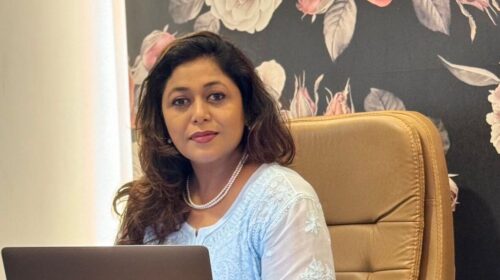
At Brilliant Read Media, it is our constant endeavour to identify and share some of the unique and compelling stories from the startup ecosystem. As part of this, we invited Shruti Tiwari for an interview with Brilliant Read Media. To say further, Shruti is an Entrepreneur and Founder at VLW Global. Let’s learn more about her background, inspiring journey so far and her advice for our growing community!
Excerpts from our exclusive interview with Shruti:
What inspired you to start VLW Global, and how did your journey into luxury wedding planning begin?
VLW Global did not begin with a business plan—it began with a feeling I kept returning to: I felt most alive when I was creating something meaningful for people.
I grew up in a family where relationships, togetherness, and simply being present for one another were deeply valued. At the time, you don’t fully realise how strongly those values shape you, but looking back, I think that is why weddings felt instinctively meaningful to me even before I formally entered the industry. At their core, weddings are about people, emotions, family, and shared moments that remain long after the celebration ends.
My journey was not linear. I studied commerce and later moved into mass communication and journalism, even interning with media organisations because that seemed like the expected path at the time.
However, I soon realised that while media taught me a great deal, it wasn’t where my natural energy flowed. I was always drawn more toward ideas, spaces, details, and the invisible work of bringing experiences together.
Before starting VLW Global, I worked in various roles within the events industry—from coordination to client management—which gave me a practical understanding of how events truly function behind the scenes.
By the time I founded VLW Global, I knew I had found something that felt deeply aligned with who I was.
With over a decade of experience in designing and managing events, what has been the most defining moment in your career so far?
The most defining moments in my career have often arrived disguised as pressure or uncertainty—moments when things could easily have gone wrong but ultimately became powerful learning experiences.
One such instance involved executing an entire wedding setup within an extremely limited timeframe. We had only a few hours to complete the entire production. My team and I were physically involved in every aspect—lifting tables, managing trucks, checking florals, coordinating vendors—and then stepping straight into event execution without sleep.
In moments like those, titles disappear. You are no longer the founder or the creative lead; you are simply someone ensuring that the work is done with integrity.
Beyond individual events, another defining milestone was the moment I realised that VLW Global had evolved from being just a wedding execution company into a trusted partner for families. When a family invites you back to plan another wedding—and then another—that trust means far more than any award.
One wedding that remains particularly meaningful to me was an LGBTQ celebration we planned. It felt larger than an event; it represented inclusivity, trust, love, and the evolving landscape of celebrations in our country.
Luxury weddings are about both creativity and precision. How do you balance artistic vision with flawless execution?
Artistic vision is what people notice first, but flawless execution is what they remember—even if they don’t consciously recognise it.
A beautiful setup means little if the experience feels stressful, if guests feel confused, or if the couple cannot fully enjoy their day.
For us, the balance begins very early in the planning process. Creativity cannot exist in isolation. Every design idea must be tested against practical considerations such as venue limitations, weather, timing, guest movement, and technical feasibility.
Sometimes a concept may look stunning on paper, but if it adds unnecessary complexity during execution, we rethink it. I have learned that restraint is also an important part of design.
At VLW Global, we invest significant time in pre-planning so that once the event begins, everything feels seamless rather than improvised. Precision comes from preparation, experience, and a team that understands the importance of every detail.
Most importantly, I never separate aesthetics from emotion. A wedding should not feel like a production set—it should feel warm, comfortable, and authentic to the people at its centre. That, to me, is when luxury becomes meaningful: when beauty and ease exist together.
You’ve worked with diverse clients and destination weddings. What are the biggest challenges when planning large-scale weddings?
The biggest challenge with large-scale weddings is that people often see only the beauty, not the many layers beneath it.
A destination wedding is rarely just about the ceremony or celebration. It involves hospitality, logistics, timelines, family expectations, cultural nuances, and guests arriving from different parts of the world with varying needs.
The complexity lies in how interconnected everything is. A delay in one area can create ripple effects across several others.
When working with diverse families, understanding what truly matters to them—beyond the obvious brief—is essential. Sometimes two families may have different expectations, traditions, or ways of making decisions, and a large part of our role is to create alignment while ensuring everyone feels heard.
Scale itself adds another dimension. Guest movement, room allocations, transport, technical setups, weather contingencies, food service, and the timing of rituals all determine whether the experience feels seamless or overwhelming.
There is also an emotional aspect that people often underestimate. Weddings carry immense personal significance, and alongside managing production, you are often quietly navigating emotions in the background.
For me, planning large weddings is not about controlling every variable. It is about building systems strong enough that even when something changes, the experience remains calm and joyful for the couple and their families.
Indian weddings are evolving rapidly, especially with younger couples wanting more personalised experiences. How are these changing trends shaping the industry?
One of the most significant shifts we are seeing today is that weddings are becoming more personal rather than purely performative.
In the past, many decisions were driven by tradition, social expectations, and established formats. Today, younger couples often begin by asking what truly feels right for them.
This does not mean traditions are disappearing. Indian couples still deeply value rituals, family, and cultural identity. However, they are becoming more selective—choosing to retain what feels meaningful while letting go of elements that feel excessive or disconnected from who they are.
This shift is transforming the industry because weddings are no longer built around templates. They are becoming narrative-driven. A couple’s story, travels, shared memories, and personal aesthetics now influence everything from décor to the structure of the celebration.
There is also a stronger focus on guest experience. Couples are thinking about comfort, intimacy, flow, and how the celebration feels—not just how it photographs.
Technology has also played a role. Inspiration is now global, communication is faster, and couples come into planning conversations far more informed.
For planners, this means listening has become more important than ever. It is no longer enough to execute beautifully; you must understand personalities, values, and emotional priorities.
Overall, I believe this shift is a healthy and exciting evolution for the industry.
When you start planning a wedding, how do you translate a couple’s story and personality into décor, design, and the overall experience?
For me, the process always begins with listening before designing.
Every couple arrives with visible preferences, but they also carry many subtle cues—how they interact, what environments make them comfortable, what they value, and how they imagine people feeling at their wedding.
Sometimes what couples initially say they want may not fully reflect what truly suits them. That is why early conversations are so important.
I pay attention to small details: how they describe memories, the kind of celebrations they naturally gravitate toward, whether they prefer warmth and intimacy or energy and scale.
These insights often reveal far more than mood boards alone.
From there, décor becomes less about creating something visually impressive and more about building an atmosphere that feels authentic to them. Colours, textures, florals, lighting, guest flow, and transitions between events should all reflect the couple’s personality.
Ultimately, the goal is simple: when the couple walks into the space, it should feel familiar in some way—even if they are seeing it for the first time.
For aspiring entrepreneurs who want to enter the wedding or events industry, what mindset and skills are most important for success?
The first thing I often say is that this industry appears far more glamorous from the outside than it feels on the inside.
What people usually see are beautiful celebrations and perfectly executed moments. What they do not see is the patience, unpredictability, and emotional stamina required behind the scenes.
Because of that, mindset is just as important as skill.
You must genuinely enjoy working with people. Creativity in this industry cannot exist in isolation—you are constantly navigating expectations, emotions, and different personalities.
Adaptability is equally important. No matter how experienced you become, unexpected challenges will always arise. The ability to remain calm and solution-oriented under pressure is one of the greatest strengths you can develop.
Anyone entering this space should first learn the fundamentals thoroughly: coordination, vendor management, timelines, budgeting, and logistics. These aspects may not seem exciting initially, but they are what make creativity sustainable.
Creativity matters, of course, but creativity without discipline is difficult to maintain.
Finally, honesty and consistency are invaluable. This industry runs on trust, and your reputation is built gradually through how you deliver, communicate, and handle difficult situations.
There are no shortcuts to credibility here. But if you remain committed, keep learning, and stay open to growth, it can be an incredibly fulfilling industry in which to build something meaningful.
BrilliantRead is committed to bringing stories from the startup ecosystem, stories that reshape our perspective, add value to our community and be a constant source of motivation not just for our community but also for the whole ecosystem of entrepreneurs and aspiring individuals.
Note: If you have a similar story to share with our audience and would like to be featured on our online magazine, then please write to us at [email protected], we will review your story and extend an invitation to feature if it is worth publishing.