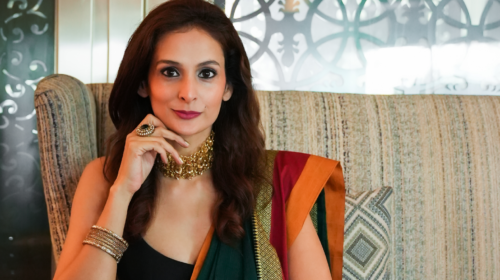
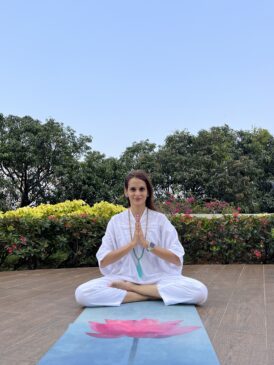
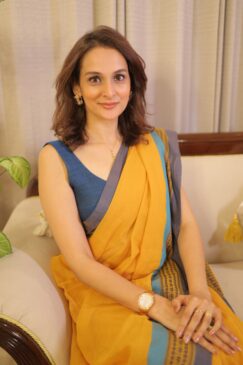
At Brilliant Read Media, it is our constant endeavour to identify and share some of the unique and compelling stories from the startup ecosystem. As part of this, we invited Medha for an interview with Brilliant Read Media. To say it further, Medha is a Vedic Astrologer, Spiritual Counsellor, Theta-Healer, Yoga Teacher and Founder at Tender Wisdom. Let’s learn more about her background, inspiring journey so far and her advice for our growing community!
Excerpts from our exclusive interview with Medha:
You have been a Vedic astrologer for the last two decades and come from a long lineage of astrologers. After living this knowledge for so many years, if you had to defend astrology to a room full of skeptics using only logic and no belief, what would be your strongest argument?
Wow! I absolutely love this question.
I find it ironic that we often equate astrology with a belief system. If I were speaking to a room full of skeptics, I would first help them unlearn what they assume astrology or Jyotish, as it is known in Sanskrit, actually means.
Jyotish is traditionally defined as a tool for time measurement. It is not simply the study of planets, constellations or fortune-telling. It is one of the Vedangas, a group of disciplines that help us understand and interpret the Vedas, alongside phonetics, meter, grammar, etymology and rituals.
Notice that we haven’t even mentioned prediction or belief yet.
The fascinating part is that every skeptic in that room already relies on the fundamental principle of time measurement every single day. We plan meetings, lunch breaks, doctor’s appointments and even track our children’s school-bus timings using clocks and calendars.
The clock on your phone, in your home, office or car is essentially helping you measure celestial time. At its most basic level, it tracks the movement of the Sun and helps us organise our lives around it.
Jyotish works with many such “clocks,” governed by different celestial movements. Following only one clock because it is familiar doesn’t make the others irrational; it simply means we haven’t learned how to read them.
The difference between a layperson and an astrologer, in this context, is that the astrologer has learned to read more of these clocks.
And just because I cannot do something that someone else can doesn’t mean I should immediately say, “I don’t believe in it.” A more logical approach would be: “Let me understand it completely before I decide whether I accept or reject it.”
That, to me, is a fair position for a skeptic.
Your work combines counselling with Vedic wisdom to support “sensitive souls.” What inspired you to create Tender Wisdom, and what does the philosophy mean to you personally?
The name Tender Wisdom was gifted to me by a dear friend many years ago. She somehow recognised that this was my calling even before I had complete clarity about it myself.
I am an empath, and I am also a sensitive soul. I naturally recognise the struggles of gentle beings around me. I don’t believe that learning or healing has to come through a forceful or harrowing process. Wisdom can be profoundly poetic and gentle, and that is exactly what my brand embodies.
I was born into a family where healing was simply the family language. I grew up surrounded by Ayurveda practitioners, palmists, Vedic astrologers, Vastu experts, yoga teachers and spiritualists.
So, in many ways, I didn’t consciously choose this path. I grew up standing on the shoulders of people who had already spent their lives learning these traditions.
By the time I was twelve, I had already read extensively about Buddhism, Hindu spiritual texts, hypnotherapy and meditation. I also completed a Vipassana course soon after my teenage years.
Tender Wisdom grew out of that inheritance.
I believe that if you want to change your life or understand yourself more deeply, you don’t necessarily need a loud motivational speech. Sometimes, the work can be done through a single powerful whisper.
I wanted to create a space where sensitivity is treated as a form of perception rather than a flaw, a safe space for conversations that might otherwise feel “too much.”
Combining that space with my years of learning in ancient healing modalities felt very natural to me.
Tender Wisdom is therefore less of a business and more of a continuation of a family calling, a space where people can feel empowered, transform their lives and rebuild their faith in the inherent magic of the universe.
Many sensitive people struggle with overthinking, self-doubt, emotional overwhelm and difficulty setting boundaries. How can they learn to honour their sensitivity without allowing it to become a source of suffering?
I believe gentleness can be an enormous force.
It is a misconception that sensitive people have a “problem” simply because they feel things deeply. Sensitivity itself isn’t the problem. Suffering often begins when we don’t have an anchor that helps us channel what we feel.
Vedic philosophy has a beautiful idea called Sakshi Bhava, the process of witnessing the self. At its simplest, it means learning to observe a thought or emotion without becoming that thought or emotion.
There is a subtle but powerful difference between saying, “I am overthinking,” and saying, “I notice that I am overthinking.”
That small shift creates distance between you and the experience, allowing the nervous system to settle.
I work with clients on developing precisely these kinds of insights and self-regulation practices.
Think about falling in love at 19 versus falling in love at 39. The emotion may be equally intense, but our relationship with that emotion can be very different. At 19, we may feel completely swept away because we have less experience of ourselves, relationships and life. At 39, we may still experience the same intensity, but we often have greater awareness of our needs, boundaries, identity and choices.
My point is that even something as universally experienced as love requires experience and emotional training.
So why do we expect human beings to navigate the complexities of life without learning how to work with their emotions?
For sensitive souls, small daily anchors can make an enormous difference: conscious breathing, body alignment, brain-heart coherence, grounding practices and healthy personal boundaries.
Boundaries aren’t selfishness. They are gentle protection.
I’ve watched clients move from being completely consumed by overthinking to noticing the thought without being swept away by it.
That, to me, is sensitivity being held safely with the right tools and, most importantly, self-awareness.
You help people navigate uncertain seasons of life. When someone feels lost or confused about their direction, what are the first steps they can take to regain clarity and inner stability?
The first step is to go see an astrologer. Really!
Much like when you feel physically unwell, you go to a doctor, an astrologer can help you understand the context of confusion in your life and how to navigate it.
Confusion isn’t unusual. In fact, it is one of the most natural human experiences. None of us has done this particular life before. We don’t have centuries of experience being adults, carrying responsibilities, navigating finances or understanding relationships.
My first job is often to comfort my clients and reassure them about where they are in life.
Then comes something that usually blows people’s minds: I help them understand the season of life they are currently in.
Time is cyclical, but time is not the same for everyone.
Someone may get their first job at 45. Someone else may find their true love at 70. There is no single fixed timeline for every soul. There are fixed timelines created by society, but life itself is far more individual.
Understanding this can be incredibly liberating.
What feels like being “stuck” may simply be a particular season. And the beautiful thing about seasons is that they move. They pass.
This is also why comparing yourself to others is so pointless. Perhaps you are in a season of motherhood while your friend is in a season of returning to being a student. Neither is doing better or worse. They are simply living different chapters.
From there, I work towards what I call a cosmic weather report the broader context that can be understood through a chart reading.
It can help you understand the nature of the season you’re in, how to protect yourself, where you may need greater awareness and how to make the most of that period.
And always, always, I encourage people to return to the body before returning to the mind.
Take a grounding breath. Go for a walk. Pause before making a major decision.
Inner stability comes from repeatedly strengthening the ground you stand on. Sometimes, only after that ground becomes stable does the direction ahead become visible.
You’ve explored Vipassana, Kriya Yoga, Theta Healing and Ashtanga alongside astrology as your primary lens. What did these paths teach you that astrology alone couldn’t, and where do you think astrology still falls short?
I often think about Muhammad Ali, whom I consider one of the greatest and most philosophical boxers.
He didn’t only practice boxing. He trained in the gym, ran long distances, used weighted footwear to increase the intensity of his workouts, practised mental visualisation and prayed every day.
Not all of that was technically “boxing.” But everything he did helped him become a better boxer.
I see my own journey in a similar way.
I am a Vedic astrologer, but if I stop learning and evolving, I become like a horse wearing blinkers.
My experiences with meditation, Vedic literature and yogic philosophies have deepened my spiritual intensity and helped me reach greater levels of self-awareness and growth.
I see astrology as a bridge between our practical, everyday existence and a deeper spiritual life.
If I am not doing my own spiritual work at the doorstep of astrology, I may not be able to deepen my practice of it.
So, I don’t necessarily think astrology “falls short.”
Rather, my additional practices help me empty my cup so that I can continue showing up as a lifelong student of astrology.
In a world that constantly encourages people to achieve more, how important are stillness, self-reflection, and simply “being” in the journey of personal growth?
I believe life is about living and experiencing the world around us.
Sometimes, our obsession with achievement interferes with our ability to experience things the way they were meant to be experienced.
That is where stillness becomes important.
Stillness allows you to hear your own voice instead of the noise created by everyone’s expectations.
But it is important to understand that stillness is not complacency. Nor should it become another achievement, another goal where you’re constantly trying to become “better” or more evolved.
I don’t see stillness as the opposite of ambition or action.
I see stillness as the soil from which everything else grows.
When you become silent, you can finally listen to what life is trying to tell you.
For someone constantly saying, “I don’t know what to do with my life,” stillness can be an antidote. We live in incredibly noisy environments, both internally and externally, and sometimes the important answers simply cannot be heard through all that noise.
What are some common misconceptions about counselling, spirituality and emotional healing that you would like to challenge? What does genuine inner transformation actually look like?
One of the biggest misconceptions is that astrology and spirituality are about fatalism, that you simply hand over your choices to the stars.
I think that’s a very lazy way of looking at it.
Another misconception is that speaking to a counsellor will instantly make you peaceful or blissful all the time.
Healing requires work and patience.
It is about learning how to sit with a difficult emotion without spiralling. It is about taking responsibility without collapsing into endless guilt or anguish.
I also want to challenge the idea that transformation always arrives through one dramatic epiphany.
I remember a client who worked with me for almost two years. One day, she told me that she finally didn’t feel ashamed of what had happened to her.
She still overthought sometimes. But now she could catch herself midway. Instead of spiralling for days, she could regain control of her mind within minutes.
That is what real transformation looks like.
It is gradual. It is skill-based. It is rooted in awareness.
We cannot expect ourselves to simply “wing it” when life gets difficult. We need to build the skills before we need them.
Through your private sessions, guidance, learning material and courses, you work with people at different stages of their journeys. What is one recurring pattern you notice in people who are struggling emotionally, and how can they begin breaking it?
The pattern I see most often is self-abandonment.
It’s not difficult to recognise. These are people who have spent years keeping the peace, meeting everyone else’s expectations and, somewhere along the way, losing touch with their own inner compass.
It can show up as chronic overthinking, a constant need for external reassurance or, ironically, even using healing modalities almost like emotional medication something to pacify themselves rather than something that helps them build trust in themselves.
There doesn’t need to be a dramatic overhaul.
It begins with small, honest check-ins.
Ask yourself: What do I actually want right now? Separate that from what is expected of you.
Then begin practising small acts of self-honouring: resting when you’re tired, saying no when you need to, acknowledging what you feel instead of immediately dismissing it.
I encourage people to use spiritual tools such as astrology and meditation as mirrors, rather than crutches.
The goal is to see yourself more clearly.
Returning to yourself is a gradual process. It requires enormous patience, much like going to the gym consistently and slowly working through years of accumulated habits.
If you could offer one piece of gentle wisdom to someone currently going through a confusing or emotionally difficult phase of life, what would you want them to hear?
I think we are all far too consumed by fear in today’s world.
There is so much noise around us that we’ve started believing things like: Maybe I’ll never find my ideal partner. Maybe happiness is elusive. Maybe I need to buy more things to compensate for its absence. Maybe someone else will get the job I want, so I need to diminish myself to protect what I have.
So much of our fear and insecurity comes from a lack of clarity.
My message would simply be:
Relax. You are mid-story.
Your confusion may be a sign that something within you is not at peace with your authentic nature. But the wheel of time is always moving. Change is inevitable, and we have to learn to trust the process.
You don’t have to have everything figured out today.
You are not doing life incorrectly just because this particular chapter is difficult to read.
You are being held by something larger than this one difficult moment.
So, allow yourself to work in harmony with the larger arc of your life rather than obsessing over the tiny fraction you can currently see.
That doesn’t necessarily make the difficulty smaller.
At BrilliantRead, we don’t just share startup stories; we bring you journeys that challenge perspectives, spark ideas, and fuel ambition. Every story we feature is carefully chosen to add real value, inspire action, and ignite possibility within our growing community of entrepreneurs and dreamers.
If you have a powerful story, one that can inspire, educate, or create impact we want to hear from you.