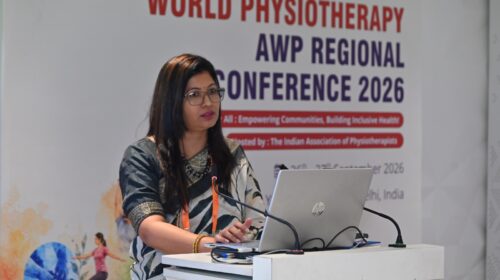
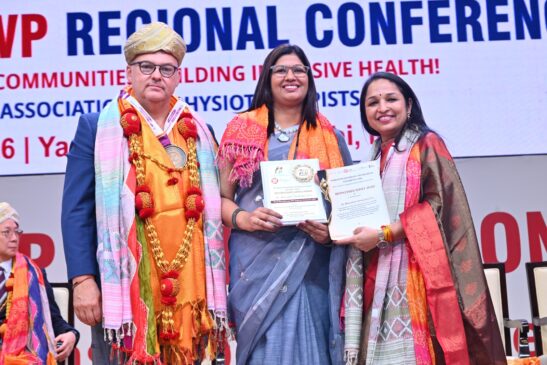
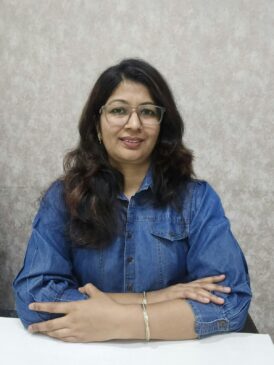
At BrilliantRead Media, we are committed to bringing inspiring and impactful stories from India and around the world to empower, educate, and motivate our growing community. As part of this endeavour, we invited Dr Meenakshi Shishodia, Physiotherapist and Founder of Shishodia’s Active Life Physiotherapy & Neuro-Rehabilitation Centre, for an exclusive interview with us.
With over 18 years of experience across neurological rehabilitation, orthopaedics, sports rehabilitation, and women’s health, Dr Meenakshi has dedicated her career to helping individuals regain mobility, independence, and confidence. Through her work, she advocates for personalised rehabilitation, preventive healthcare, and a holistic approach to physical well-being. Let’s learn more about her professional journey, the vision behind Shishodia’s Active Life, her approach to patient care, and the valuable lessons she has learnt along the way.
Excerpts from our exclusive interview with Dr Meenakshi:
Please tell us about your journey. What inspired you to become a physiotherapist, and what motivated you to establish Shishodia’s Active Life?
My journey into physiotherapy began with a simple belief that healthcare should not only treat injuries or illnesses but also help people regain confidence, independence, and quality of life.
Over the years, I realised that physiotherapy offers a unique opportunity to make a meaningful difference in people’s lives. Whether helping a stroke survivor walk again, an athlete return to sport, or a woman recover after childbirth, the impact goes far beyond physical recovery.
After more than 18 years in the profession and treating thousands of patients, I wanted to create a space where physiotherapy, rehabilitation, exercise, women’s health, and preventive healthcare could come together under one roof. This vision led to the establishment of Shishodia’s Active Life Physiotherapy and Neuro-Rehabilitation Centre.
For me, Active Life is more than a clinic; it is a philosophy centred on helping people move better, live independently, stay active, and age gracefully.
With over 18 years of experience across neuro, orthopaedic, sports rehabilitation, and women’s health, how has your approach to patient care evolved?
Earlier in my career, the focus was often on treating the immediate problem, whether pain, weakness, restricted movement, or injury. With experience, I have learnt that every patient is much more than a diagnosis.
Today, I consider the whole individual, including their lifestyle, occupation, emotional well-being, sleep, activity levels, movement patterns, and personal goals.
My approach has evolved from simply asking, “Where does it hurt?” to understanding why the problem is occurring, how it affects the person’s life, and what can be done to prevent it from recurring.
I strongly believe in evidence-based assessment, individualised treatment, active rehabilitation, patient education, and empowering people to take ownership of their health.
Many people seek physiotherapy only after experiencing severe pain or injury. What are the biggest misconceptions about physiotherapy, and why is early intervention important?
One of the biggest misconceptions is that physiotherapy is only necessary after an injury or when someone experiences severe pain. In reality, it plays an important role in prevention, recovery, physical performance, and maintaining independence.
Another misconception is that physiotherapy is limited to massages or treatment machines. Modern physiotherapy involves detailed assessment, movement analysis, exercise therapy, manual therapy where appropriate, functional training, patient education, and lifestyle modification.
Early intervention can help identify issues such as muscle weakness, balance difficulties, poor movement patterns, and early symptoms before they potentially progress into more significant problems.
My message is simple: Do not wait for your body to force you to stop. Listen to it early and seek professional guidance when needed.
You work with patients across neurological rehabilitation, sports injuries, orthopaedics, and women’s health. How do you personalise treatment plans for such diverse needs?
Every individual has a different body, medical history, lifestyle, and set of goals. Therefore, I do not believe in a one-size-fits-all approach to treatment.
The process begins with a detailed assessment to understand the patient’s condition, functional limitations, and expectations. Success can mean walking independently after a stroke for one person, returning to the gym after an injury for another, or regaining strength and confidence after childbirth for a new mother.
The treatment plan is designed around the individual rather than just the diagnosis. As patients improve, their rehabilitation programmes must also evolve to meet their changing needs.
Ultimately, my goal is not to make patients dependent on therapy but to help them develop the confidence, strength, and knowledge to manage their health and movement over the long term.
Women’s health physiotherapy is gaining greater recognition. How can it support women through different stages of life?
Women experience significant physical and hormonal changes throughout their lives, and physiotherapy can provide valuable support during these transitions.
During pregnancy, it can help manage musculoskeletal discomfort, improve posture and mobility, maintain appropriate strength, and prepare the body for childbirth. After delivery, rehabilitation may address pelvic floor dysfunction, abdominal muscle separation, back or pelvic pain, weakness, and a safe return to exercise and daily activities.
As women approach menopause and beyond, physiotherapy can support strength, mobility, balance, bone health, pelvic health, and physical independence.
Equally important is creating awareness. Symptoms such as urinary leakage, pelvic pain, or persistent weakness should not automatically be accepted as an inevitable part of motherhood or ageing. Women deserve appropriate assessment and care.
Seeking help is not a sign of weakness; it is an investment in long-term health and quality of life.
Recovery can be as much a mental journey as a physical one. How do you help patients remain motivated and consistent throughout rehabilitation?
Rehabilitation can be physically demanding, but the emotional challenges can sometimes be even greater. Patients may feel frustrated when progress is slow or compare their recovery with that of others.
I help them understand that recovery is not always linear. There will be good days and difficult days, and both can be part of the process.
We break larger goals into smaller, achievable milestones. Whether it is standing for longer, walking more confidently, experiencing less pain, or gradually regaining strength, recognising small improvements helps rebuild confidence.
Communication and education are equally important. When patients understand their condition and the purpose behind their exercises, they are more likely to participate actively in their recovery.
Sometimes, a simple reminder can make a difference: you may not be where you want to be yet, but you have already come a long way.
As both a clinician and founder, what have been the biggest challenges and most rewarding experiences in building Shishodia’s Active Life?
Building a healthcare organisation while continuing to work clinically has been both challenging and rewarding. Balancing patient care with team management, education, technology, patient awareness, community outreach, and maintaining clinical standards requires continuous effort.
However, every challenge has offered an opportunity to learn and improve.
The most rewarding moments are not necessarily awards or professional milestones. They are the moments when a patient tells me that they can do something again that they once believed was impossible.
Seeing a stroke survivor regain independence, an injured athlete return to activity, or a woman regain confidence after childbirth reminds me why this work matters.
Through Shishodia’s Active Life, I want to contribute to a culture where movement is valued, rehabilitation is respected, and people feel empowered to take charge of their health.
Looking ahead, what is your vision for the future of physiotherapy in India, and what advice would you offer aspiring physiotherapists?
I believe physiotherapy in India has a promising future. Healthcare is increasingly recognising the importance of prevention, rehabilitation, healthy ageing, mobility, and quality of life alongside the treatment of disease.
I would like to see physiotherapists play an even greater role in multidisciplinary healthcare, sports, women’s health, geriatrics, neurological rehabilitation, and community-based preventive care.
Technology will also be important. Tele-rehabilitation, wearable devices, digital education, and remote monitoring can help extend access to appropriate rehabilitation beyond traditional clinical settings.
My advice to aspiring physiotherapists is to never stop learning. A degree is only the beginning. Continue developing your clinical reasoning, communication skills, research knowledge, and practical expertise. Stay humble, embrace evidence-based practice, and remain open to new ideas.
Above all, never lose the human connection. Technical knowledge is essential, but compassion and understanding can transform a patient’s experience.
Physiotherapy is not just about restoring movement. It is about restoring possibility. That is the principle I hope to carry forward throughout my journey.
BrilliantRead is committed to bringing stories from the startup ecosystem, stories that reshape our perspective, add value to our community and be a constant source of motivation not just for our community but also for the whole ecosystem of entrepreneurs and aspiring individuals.
Note: If you have a similar story to share with our audience and would like to be featured on our online magazine, then please write to us at [email protected], we will review your story and extend an invitation to feature if it is worth publishing.