At BrilliantRead Media, we constantly strive to bring meaningful, inspiring and powerful stories from India and around the world to empower and motivate our growing community.
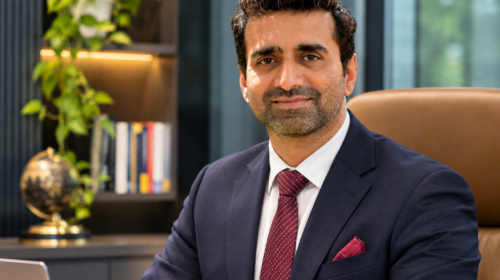
As part of this endeavour, we invited Balasab Kardegouda, Partner & CEO at SmiRox Ventures LLP, for an exclusive interview with us.
With over 25 years of experience across renowned organizations such as ISRO, Bosch, General Motors and Volvo Group, Balasab has built an accomplished career in engineering, automotive technologies and business leadership. An accomplished technology leader turned entrepreneur, he is now focused on building meaningful solutions through SmiRox Ventures LLP.
Driven by a deeply personal experience, he conceptualized FamEase, a platform designed to simplify complex family documentation, financial settlements and administrative processes following the loss of a loved one.
Through his journey, Balasab exemplifies resilience, innovation and the courage to turn personal challenges into meaningful entrepreneurial opportunities.
Let’s explore his professional journey, entrepreneurial experiences, leadership philosophy and valuable advice for aspiring entrepreneurs and our community!
Excerpts from our exclusive interview with Balasab Kardegouda;
You have spent over 25 years working with prestigious organizations such as ISRO, Bosch, General Motors and Volvo Group. Looking back, what have been the most defining moments of your professional journey, and how have they shaped your leadership philosophy?
First, a fun fact! My real name is Balasaheb. Someone made a mistake in school, and I became Balasab. Honestly, I still don’t know what Balasab means! But today, if you search for “Balasab” on Google, you will find me. A stranger’s mistake eventually became my differentiator.
One of the most defining moments of my career was joining ISRO as Scientist ‘C’, where I worked on avionics for sounding rockets, including developing modular payloads. I was fortunate to have an excellent mentor, V.K. Panicker, who taught me to understand the purpose behind every project and encouraged me to grow without fear.
There were instances when we had to stand our ground with senior management to defend our designs. Those experiences shaped my confidence and professional outlook.
The lessons I learned at ISRO gave me the courage to leave a stable central government job and enter the corporate world. It was not an easy decision to explain to my parents or society.
At Bosch, I worked on diesel systems and software and was part of the founding team of the Coimbatore development centre, which eventually grew from five or six people to approximately 3,500.
General Motors was my longest professional stint. The organization supported my master’s degree at the University of Michigan while I continued working full-time. It was challenging and would not have been possible without my family’s support.
At GM, I worked on diesel programs, electronic control systems for Indian vehicles, root-cause analysis and solutions with manufacturing plants, as well as electric vehicle technologies.
Later, at a global automotive supplier, I built a large engineering team serving the top 25 customers.
Every stage of this journey taught me something valuable. For me, leadership is about having clarity of purpose, demonstrating courage, standing by your convictions and, most importantly, building people.
Artificial Intelligence and Machine Learning are transforming automotive engineering and product development. How do you see these technologies reshaping the industry over the next five years, and what should organizations prioritize to remain competitive?
AI is transforming engineering at an incredible pace, and I make it a point to keep learning. I have also been pursuing learning opportunities through institutions such as Stanford and the University of Michigan.
My primary interest, however, is not just in generative AI or GPTs. I am particularly interested in Edge AI and Physical AI, where intelligence operates directly on devices, machines and physical systems.
The automotive industry already demonstrates how powerful these technologies can be. Vision-based systems are becoming increasingly common across companies such as Tesla, GM and Ford.
Vehicle diagnostics, for instance, have evolved from reactive maintenance to predictive maintenance. Algorithms can now identify potential failures in advance and alert dealers, service teams and customers before a problem actually occurs. AI is also being used across applications ranging from driver monitoring to autonomous vehicles and driverless buses.
Manufacturing is another major area of transformation. AI can detect defects, identify anomalies and classify components, automating processes that previously required highly skilled human intervention. This improves operational efficiency and reduces manufacturing costs.
Vision-based AI is also finding applications in retail stores, shopping malls and large facilities, where it can count visitors, monitor entries and detect potential hazards such as smoke and fire.
Almost every industry and application has the potential to benefit from AI.
As for organizational priorities, I would highlight three things. First, companies must invest in upskilling their engineering teams. Second, they should build stronger partnerships with universities and academic institutions. Third, they must focus on developing practical, business-oriented applications.
Building data infrastructure requires significant investment, and organizations can leverage specialized partners for that purpose.
The biggest risk is failing to adapt. Technology is evolving every day, and organizations that delay their transformation may eventually find it extremely difficult to catch up.
Having worked extensively across automotive systems, embedded technologies and electromobility, what do you believe are the biggest challenges and opportunities in accelerating the global transition towards electric mobility?
I have witnessed a remarkable transformation in the automotive industry throughout my career.
When I started, vehicles were largely mechanical. Gradually, we moved towards electronic engine control units that managed fuel injection and improved efficiency. This development also pushed the semiconductor industry to integrate more functionality into individual microcontrollers.
We then moved towards distributed electronic architectures, with dedicated controllers for ABS, airbags, body control, engine management and several other functions. Vehicle communication networks became increasingly sophisticated.
Connectivity brought another major transformation, followed by 4G, 5G, Advanced Driver Assistance Systems (ADAS), over-the-air updates, autonomous vehicles and now robotaxis.
However, the biggest shift today is the growing influence of AI and Machine Learning. Automotive technology is no longer evolving independently. AI is influencing vehicles, factories, semiconductors, memory technologies and even data centres.
When it comes to electric mobility, I believe infrastructure remains the biggest challenge.
In India, I personally see electric vehicles queuing at charging stations, sometimes waiting for a considerable period just to access a charger. China invested in charging infrastructure much earlier, and today electrified vehicles account for a substantial share of its new car sales.
Infrastructure will be one of the biggest drivers of EV adoption, and that is where we need to focus.
Battery technology is the second major frontier. Companies such as CATL, LG Energy Solution, Samsung and Panasonic are investing heavily in improving battery efficiency, performance and life.
We do not know exactly when the next major breakthrough will happen. Meanwhile, supporting vehicles already operating with existing battery technologies is equally important.
That creates a significant opportunity. Organizations that can develop scalable charging infrastructure and effective battery-support solutions will play a major role in shaping the future of electric mobility.
Having founded Synkentrono Software Solutions and subsequently established SmiRox Ventures, what are the most important lessons you have learned about transforming an innovative idea into a commercially viable and scalable business?
I started Synkentrono Software Solutions Pvt. Ltd. in 2021 to provide engineering services to Tier 1 and Tier 2 automotive suppliers.
We worked with German and Indian customers, helped establish a Global Capability Centre across three locations, and trained and deployed nearly 400 professionals.
One of the biggest lessons I learned was the importance of having the right founding team.
Never make someone your business partner simply because they are your friend or someone you are familiar with. I brought a friend on board as a co-founder for the wrong reasons, and eventually, it cost me that venture.
I tried to save the business by bringing in additional people, but some investors and stakeholders approached the company as though it were a bank that owed them returns.
A startup requires commitment, accountability and shared responsibility. Co-founders must understand their roles and contribute towards the common vision. One person cannot do everything; building a business is a collective effort.
People who view a startup merely as a side investment, without understanding the responsibilities involved, may not be the right partners.
I also learned that it is perfectly fine to build a business independently if that gives you better clarity and control.
With SmiRox, I applied these lessons differently. My co-founders are family members who understand and share the mission, allowing me to drive the business with greater clarity.
Ultimately, the relationship is not what matters most. Alignment, commitment and a shared vision are what make a founding team successful.
The two ventures are also very different in their approach. Synkentrono focuses on automotive and embedded engineering services, whereas SmiRox, through FamEase, operates in the family-services space with an entirely different technology architecture and business model.
In today’s rapidly evolving business environment, technology leaders must balance long-term innovation with immediate business priorities. How can they build high-performing teams while ensuring measurable business outcomes?
I strongly believe in achieving small wins.
Even when you are working towards a long-term vision, you should constantly ask yourself: How can we generate revenue from day one?
Early revenue gives an entrepreneur immense confidence. It validates the business model, builds momentum and creates opportunities to expand. Gradually, you can widen your customer base, strengthen relationships and deliver better services.
Another important aspect is engaging with your business partners and stakeholders across different functions, including technology, digital, service, marketing and sales.
These interactions provide valuable insights into customer expectations, emerging technologies and potential revenue opportunities.
You also learn which technologies are worth adopting and how to identify new business avenues.
For me, balancing innovation with business priorities comes down to maintaining a strong focus on measurable outcomes today while allowing customer feedback and market learning to guide long-term decisions.
Innovation should not remain limited to ideas and discussions. It must translate into tangible business value.
FamEase addresses the often fragmented and emotionally challenging processes involved in family documentation, financial settlements and related services. What inspired you to build this platform, and how do you envision technology and human assistance working together to simplify these experiences?
Our tagline captures the entire philosophy behind the platform: “Documentation Sorted, Peace Restored.”
FamEase was born out of my own personal experience.
A few years ago, my father passed away. Although we live in Bengaluru, my native place is approximately 600 kilometres away. I rushed home, completed the rituals and initially thought that everything was taken care of.
However, I soon realized that an entirely different set of challenges awaited us.
There were multiple formalities to complete, including PF transfers, bank account closures, identity document cancellations and insurance settlements.
It took me nearly six to eight months to transfer everything into my mother’s name.
Even after making payments, you often have to keep following up with different service providers. There is very little transparency regarding the process, timelines and service charges.
That experience stayed with me. I spent nearly two years thinking about the idea before finally deciding to act on it.
Considering my previous entrepreneurial experiences, I started this venture with family members as co-founders and partners. We are self-funded, have already started generating revenue and are now engaging with potential investors.
Since launching FamEase, we have been fortunate to make a meaningful difference in several lives.
I remember a particular case involving a widow whose PF amount of approximately ₹1.5 crore had been stuck for nearly three years due to organizational issues. We helped her get the amount transferred, and she was overwhelmed with emotion.
Experiences like these reinforce why we started this initiative. Today, we receive requests from NRIs as well as families living in villages across different states.
From a technology perspective, FamEase operates as a service aggregator.
The platform is designed to be fully automated. Once a request is received, an algorithm assigns it to an appropriate service provider who has been onboarded after following our strict verification and onboarding guidelines.
Service providers can track and complete assigned requests, while families can monitor the status of their cases in real time. All payments are processed through the platform.
Our objective is to bring transparency, accountability and convenience into a process that is otherwise fragmented and stressful.
Ultimately, we want families to spend less time chasing paperwork and more time focusing on what truly matters.
Throughout your career, you have worked at the intersection of engineering, product strategy and business development. What does it take to translate technological excellence into sustainable business growth and meaningful customer value?
The first principle is simple: always put the customer first.
You need to step into the customer’s shoes, whether you are serving an individual or a large organization. Ask yourself: What would I expect from this business? How would I want the organization to serve me?
Once you understand customer expectations, you can identify what needs to be done, how to deliver value and how to build a sustainable business model.
The second important factor is building connections.
Do not restrict yourself to online conversations. Go out, meet customers and engage with business leaders in person. Do not hesitate to make cold calls.
When you interact with customers and business partners, you often discover opportunities and potential revenue streams that you may never have identified otherwise.
I believe the future belongs to a hybrid approach that combines modern technology with traditional relationship-building methods.
AI and social platforms are powerful tools, but traditional business practices are not going to disappear. Personal relationships, direct conversations and trust continue to play an important role.
Combining the best of both worlds allows businesses to innovate, build stronger customer relationships and achieve sustainable growth.
As an AMA Award-winning technology and engineering leader, what advice would you offer aspiring professionals and entrepreneurs who want to lead innovation, navigate emerging technologies and build solutions that create a lasting impact?
The next generation must understand one important reality: building a business is never easy.
You will face challenges, setbacks and disappointments along the way. There will be moments when things do not work out despite your best efforts.
Today, we constantly read about large funding rounds, successful startups and new government policies supporting entrepreneurship. While all of this is encouraging, only a small percentage of businesses eventually achieve that level of success. What often remains unseen is the enormous amount of hard work behind those achievements.
I compare entrepreneurship to sculpting an idol. You have to go through the hammering before something beautiful takes shape.
Government policies have certainly improved, but ambiguities and practical challenges still exist. Even applying for startup benefits can sometimes become frustrating, with websites not functioning properly or officials not responding on time.
My advice is simple: do not give up.
Stay focused on what you want to achieve and continue building your business. Do not allow temporary setbacks to distract you from your larger vision.
Failure and rejection are not the real problems. In fact, experiencing failures early in your journey can teach you lessons that remain valuable throughout your career.
You may fail once, twice or even several times, but every experience makes you wiser and better prepared.
So keep learning, keep building and keep moving forward.
If you dream it, you can achieve it. All the best!
Follow Balasab At:
At BrilliantRead, we don’t just share startup stories; we bring you journeys that challenge perspectives, spark ideas, and fuel ambition. Every story we feature is carefully chosen to add real value, inspire action, and ignite possibility within our growing community of entrepreneurs and dreamers.
If you have a powerful story, one that can inspire, educate, or create impact, we want to hear from you.
Write to us at [email protected] and share your journey.
Our team will review your submission, and if it resonates with our vision, we’ll invite you to be featured on our platform.
Your story could be the spark someone else is waiting for. Let’s build, inspire, and grow together.