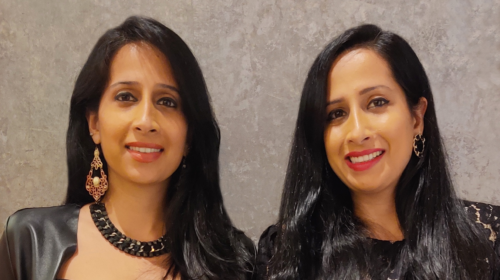
At BrilliantRead Media, we always strive to bring meaningful and inspiring stories from India and around the world to empower and motivate our growing community. As part of this endeavour, we are delighted to feature the creative journey of Aanchal Bubber Mehta and Sanjana Bubber Divecha, the identical twin sisters and co-founders of Bubber Couture, a contemporary fashion label known for its distinctive design philosophy, minimalist aesthetic and innovative approach to luxury fashion.
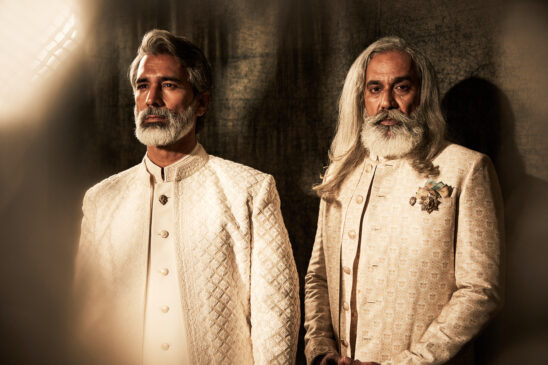
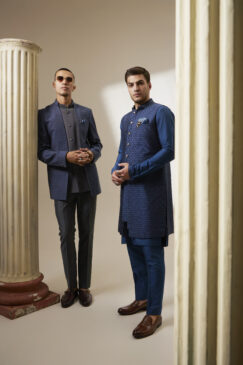
Built on a unique creative partnership, Bubber Couture brings together art, history, contemporary influences and functionality. From exploring unconventional inspirations and developing multifunctional garments to expanding into accessories, footwear and pret collections, the brand has consistently evolved while staying true to its creative identity.
In this exclusive interview with BrilliantRead Media, Aanchal and Sanjana share insights into their entrepreneurial journey, creative philosophy, the realities of building a couture label, maintaining originality in an increasingly competitive fashion industry, and the lessons they have learned along the way.
Excerpts from our exclusive interview with Aanchal & Sanjana;
You built Bubber Couture alongside your twin sister. How has being identical twins shaped your creative partnership, decision-making and the identity of the brand?
Being identical twins has given us a rather unique creative partnership. We have grown up sharing experiences, perspectives and, in many ways, a similar visual language. There is an instinctive understanding between us, particularly when it comes to design and aesthetics. Interestingly, our inspirations, colour sensibilities and the overall mood of a collection often find common ground even before we have fully articulated our ideas.
That said, we have our individual design preferences and differences of opinion, and I think that is what makes our partnership interesting. We challenge each other, question decisions and constantly push ourselves to arrive at the strongest design outcome rather than simply agreeing with one another.
There is also an interesting duality that finds its way into our design language. We often explore dual motifs, reversible garments and convertible clothing, where one piece can offer two distinct interpretations or styles. In a way, these designs represent our two perspectives while giving our clients more versatility, functionality and opportunities to wear the same garment differently.
Building a business together has taught us that a successful partnership goes beyond having a shared aesthetic. It requires trust, respect and the ability to recognise when the brand needs to come before individual preferences. I think Bubber Couture is a reflection of both our personalities, our differences and the common creative instinct that has brought us together.
Bubber Couture has evolved significantly since its inception. What was the original vision behind the brand, and what has changed most in your approach to fashion over the years?
We started Bubber Couture with a very clear minimalist philosophy. We wanted to explore Indian silhouettes through a contemporary lens, bringing in European influences, cleaner lines and a more understated approach to occasion wear. At the time, traditional Indian occasion wear was already widely available, but we felt there was room for something different: clothing that was distinctive and luxurious without relying on excessive embellishment.
Over the years, our aesthetic has evolved. The fashion landscape, social media and changing consumer preferences have all influenced the way people engage with fashion. We have become more experimental with prints, embroidery, techniques and silhouettes, and perhaps a little bolder with our design decisions. However, minimalism remains at the core of Bubber Couture. For us, it is not necessarily about creating simple garments, but about having a clear design point of view without unnecessary excess.
Our brand has also expanded beyond clothing. What began as a couture label has grown to include B-Square, our accessories line, footwear and Bubber Blu, our pret line. Each extension allows us to explore a different aspect of design while retaining the sensibility of the parent brand.
We think the biggest change in our approach has been developing the confidence to experiment while understanding what we should never compromise on. With experience, you learn that evolution is important, but losing your identity in the process is not.
Your work draws inspiration from art, history and archaeology. Where do you find inspiration today, and how do you transform those influences into something contemporary?
We have always been fascinated by history, mythology, archaeology and the origins of civilisation. For me, inspiration often begins with curiosity: understanding where we come from, how people lived and the symbolism, art and craftsmanship that existed centuries before us.
Interestingly, inspiration tends to come to us quite organically. As identical twins, we often find ourselves drawn to similar colours, landscapes, themes and moods when developing a collection. There is an almost unspoken language between us, a common thread that seems to guide the direction of our creative thinking.
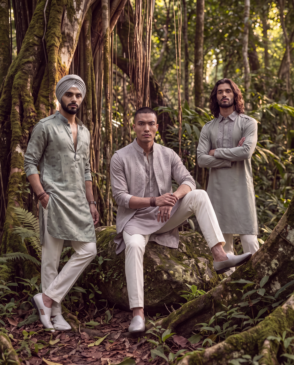
Our collections often begin with a subject that captures our imagination and gradually develop through research and exploration. For instance, while researching our NAKI collection, which drew inspiration from the Annunaki and ancient mythology, we came across the story of Noah’s Ark. It was a subject that had always intrigued us. Around the same time, reports and theories surrounding the discovery of Noah’s Ark near Mount Ararat brought the subject back into focus. That curiosity eventually developed into our ARK collection, where we explored the idea of nature reclaiming the ancient world, with wilderness, animals and earthy landscapes translated into contemporary menswear.
Travel is another significant source of inspiration. Our Vesuvius and Siena collection, for example, was influenced by our experiences in Italy. The ashen ruins of Pompeii, the burnt-umber tones of the Tuscan town of Siena, its beautiful church and the city’s famous Palio horse festival all became part of our design vocabulary. The horse prints that emerged from that collection went on to become some of our bestsellers at Bubber Couture.
I find that the most interesting part of design is the translation. We are not interested in recreating a historical reference or putting a literal interpretation of a monument or painting onto a garment. We take the colours, geometry, symbolism, textures or emotions associated with a subject and reinterpret them through prints, embroidery, textiles and silhouettes.
I want the inspiration to give a garment depth and a story, but I also want it to feel relevant today. That balance between the old and the new is something I find particularly exciting.
Bubber Couture is known for combining luxury with functionality, including multifunctional and reversible designs. What made you believe that practicality could become a defining element of luxury fashion?
I have always questioned why a luxury garment should have only one purpose or one way of being worn. We live in a time when consumers are becoming more conscious of sustainability, utility and the value of what they invest in. At the same time, there is a culture of wanting a different look for every occasion, particularly with social media making outfit repetition seem less desirable.
We saw an opportunity to address both. Our reversible and convertible garments are designed to offer multiple expressions from a single piece. A convertible garment can often be styled in three or four different ways, dressed up or down, while a reversible garment gives the wearer two distinct design perspectives, perhaps something bold on one side and more understated on the other.
There is also a very practical aspect to this. Clients appreciate getting more use out of a garment, having fewer pieces to pack for destination weddings and being able to create different looks without investing in multiple outfits. It is interesting that clients are often willing to invest a premium in these pieces because they recognise the additional value and thought that goes into their construction.
I believe luxury today needs to be more intelligent. It should not just be about the fabric, craftsmanship or price tag; it should also be about how thoughtfully a product has been designed and how much life it can offer beyond its first outing.
For us, functionality is not an afterthought. It is part of the design process itself. I think the real achievement is when a garment is versatile without looking like it has been designed to be practical. It should still feel special, considered and luxurious.
In an industry where clients often bring reference images and ask designers to recreate existing looks, how do you maintain originality while still meeting client expectations?
We have always been quite clear about one thing at Bubber Couture: we do not make copies. If a client comes to us, we want them to come for what we do and for our design sensibility. If they want an exact replica of something they have seen elsewhere, we would rather they purchase it from the original designer.
Having said that, I don’t think there is anything wrong with clients bringing references. In fact, references can be a useful communication tool. They help us understand what someone is drawn to, whether it is a particular colour, silhouette, proportion, mood or detailing. Today, clients also use AI tools to visualise what they have in mind, and we are open to understanding those ideas. But a visual reference is only the starting point, not the final design.
Our role as designers is to interpret what the client wants and translate it into something that works for them. We consider their complexion, body type, height, proportions and the occasion before developing our own version. The construction, fit, embroidery and overall design language still need to reflect Bubber Couture.
I strongly believe that if a designer’s role is simply to replicate an existing garment, there is very little room left for imagination. As designers, we have a responsibility to develop our own point of view and contribute something original to the industry.
Our aesthetic may be minimal, but that does not mean it lacks identity. We have worked hard to establish a recognisable Bubber Couture language through our silhouettes, fits, proportions, detailing and overall approach to design. We want a client to recognise a Bubber garment not because it has an obvious logo or excessive embellishment, but because of the thought and design sensibility behind it. Ultimately, originality is about having the confidence to stay true to your vision while still understanding and respecting what your client wants.
Fashion is often perceived as glamorous from the outside. What is one challenging or lesser-known reality of building and running a couture brand that people rarely see?
I think a lot of people enter the fashion industry because they are attracted to the glamour of it, but the reality is that glamour probably accounts for only five per cent of what we do. The rest involves a great deal of hard work, consistency, problem-solving and, quite often, sweat, blood and tears.
People love the idea of designing clothes, but as head designers and business owners, actual designing probably takes up only 15 per cent of our time. There is an entire business that needs to function behind every garment that reaches a client. From production, sourcing, fabric development and quality control to finances, inventory management, stock systems, retail operations, online portals, marketing, public relations, human resources, client servicing and team management, there are so many aspects that people rarely associate with running a fashion label.
What makes couture particularly challenging is that no two garments are necessarily the same. Every piece has its own requirements, detailing, measurements, craftsmanship and production challenges. You are constantly balancing creativity with timelines, budgets, people and expectations, while ensuring that the quality never suffers.
I think people see the final garment, the photographs, the fashion shows and the glamour of dressing a client, but rarely see the number of people, hours and decisions that go into making that one piece come together. There is no shortcut or recipe that can replace hard work. Building a brand is a process of showing up every day, getting the smallest things right and growing one step at a time.
Entrepreneurship has taught me that being a designer and running a design business are two very different things. You need to be equally passionate about both because one cannot survive without the other.
If you could go back to the day you started Bubber Couture and give your younger self one piece of advice about creativity, business or entrepreneurship, what would it be?
I would tell my younger self to eliminate fear, trust her instincts and have the confidence to stand by her creative vision. When you are starting out, there is always uncertainty. You question your decisions, compare yourself to others and sometimes spend too much time worrying about whether you are doing things right. I would say, trust the process and trust the work you put in. Hard work does pay off, but it takes time.
I would also tell myself to identify and strengthen our USP much earlier. In a competitive industry like fashion, it is very easy to get influenced by what everyone else is doing. But what makes a brand grow is not necessarily how much it follows trends, but how clearly it understands its own identity. Your design language, your point of view and what makes you different are things you need to constantly nurture and protect.
Another important lesson would be to grow steadily and not confuse expansion with success. More employees, a bigger office or more collections do not automatically mean a stronger business. Growth needs to be sustainable, and every decision should serve a purpose. It is important to build the right team, put the right systems in place and understand the business behind the creativity.
Most importantly, I would remind myself not to lose the excitement and curiosity that made me want to become a designer in the first place. Business can sometimes consume so much of your time that you forget to create simply because you love creating.
Looking back, building Bubber Couture has been a journey of learning, unlearning, taking risks and constantly evolving. I would not necessarily change the challenges because they have shaped the business and the people we are today. I would simply tell my younger self to be less afraid, trust her instincts a little more and enjoy the journey rather than always being in a hurry to get to the next milestone.
At BrilliantRead, we don’t just share startup stories; we bring you journeys that challenge perspectives, spark ideas, and fuel ambition. Every story we feature is carefully chosen to add real value, inspire action, and ignite possibility within our growing community of entrepreneurs and dreamers.
If you have a powerful story, one that can inspire, educate, or create impact, we want to hear from you.