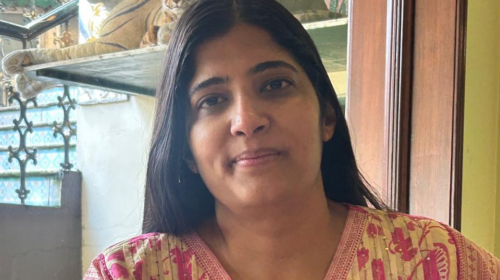
At BrilliantRead Media, we always strive to bring meaningful and inspiring stories from India and around the world to empower, transform and motivate our growing community. As part of this endeavour, we invited Roshani Baid Pipada for an exclusive interview with us. Roshani is a Connection Coach, Meditation Coach and Emotional Intelligence Expert. Through her work, she is passionate about helping individuals develop self-awareness, understand their emotions, strengthen their relationships and cultivate more meaningful connections. Let’s learn more about her background, inspiring journey, experiences and valuable advice for our community!
Excerpts from our exclusive interview with Roshani;
You began your professional journey as a fashion designer, but your fascination with human behaviour, emotions and relationships eventually led you towards connection coaching and emotional intelligence. Could you take us through this transition and share the experiences that shaped your professional journey?
My journey has been one of exploration, learning and self-discovery.
I actually began my professional journey as a fashion designer. However, somewhere along the way, I realised that my curiosity extended beyond how people present themselves externally. I became increasingly fascinated by human behaviour, thoughts, emotions and the way people connect with one another.
I started exploring meditation, emotional intelligence, relationship dynamics and the deeper aspects of human behaviour. My learning eventually led me to pursue a master’s in relationship coaching and emotional intelligence.
One of the biggest realisations during this journey was that we spend so much time trying to understand others, seeking validation from them and expecting them to understand us, but very little time developing an understanding of ourselves.
That became a turning point in how I viewed human connections.
I realised that the quality of our connections with others is deeply influenced by the connection we have with ourselves.
This is what led me to identify myself as a Connection Coach.
My work is not limited to romantic relationships or resolving conflicts between people. It is about helping individuals connect with themselves, understand their emotions, connect meaningfully with others and develop a more conscious relationship with life.
My philosophy is simple: When you connect better with yourself, you begin connecting differently with the world.
Many people are quick to identify the emotions and behavioural patterns of others but often struggle to understand their own emotional responses. Why do you think self-awareness is such a challenge, and how can individuals begin recognising the emotional patterns influencing their relationships?
I think one of the biggest reasons is that we are conditioned to observe others more than ourselves.
We are quick to notice when someone is angry, upset, insecure or behaving differently. We can often understand what someone else might be going through. But when it comes to our own emotions, we sometimes struggle to identify what is actually happening within us.
For example, imagine someone gets upset because their friend doesn’t return a phone call.
The immediate reaction might be anger: “They don’t value me.”
But if we pause and look deeper, perhaps the real emotion is hurt, the fear of being ignored or a feeling of not being important.
The situation is one thing, but the meaning we attach to it can be completely different.
This happens because we carry experiences, expectations, conditioning and emotional patterns that influence how we interpret situations.
We also tend to suppress uncomfortable emotions rather than understand them.
I believe the first step towards meaningful connection is self-awareness.
Instead of constantly asking, “Why are people behaving this way with me?”, we should also ask, “Why am I feeling this way? What is this emotion trying to tell me?”
That simple shift from blaming to observing can change the way we experience ourselves and others.
Emotional reactions can sometimes create distance between people, even when love and good intentions are present. How can individuals develop emotional intelligence and learn to respond to difficult situations more consciously rather than reacting impulsively?
I believe emotional intelligence is one of the most important life skills we can develop.
It is not about avoiding emotions or pretending that everything is fine. It is about recognising what we feel and learning how to respond constructively.
Let me give you a simple example.
Imagine your partner or a family member comes home and doesn’t speak much. You immediately assume something is wrong. You start questioning them, become defensive and perhaps an unnecessary argument begins.
But what if the person has simply had a difficult day?
Sometimes, we react not just to what has happened, but to the story we create around what has happened.
I encourage people to practise three things.
First, recognise the emotion. Ask yourself, “Am I angry, hurt, disappointed or insecure?”
Second, pause before responding. A few conscious breaths can help us step away from an automatic reaction.
Third, communicate rather than accuse. Instead of saying, “You never care about me,” try saying, “I am feeling disconnected, and I would really like us to spend some time together.”
The intention is not to become emotionless. It is to become emotionally aware.
Emotional intelligence is the ability to feel deeply without allowing every emotion to dictate your actions.
Effective communication is considered the foundation of meaningful relationships, yet misunderstandings and recurring conflicts remain common. What underlying communication patterns prevent people from expressing their needs effectively, and how can they build healthier communication habits?
I think one of the biggest misconceptions about communication is that speaking more means communicating better.
In reality, many people speak, but very few genuinely express what they feel or listen to understand what the other person is experiencing.
There are certain patterns I commonly highlight.
We expect people to understand our needs without expressing them. We make assumptions about their intentions. We sometimes bring past experiences into present conversations. And instead of expressing hurt or disappointment, we communicate through anger, criticism or silence.
For example, someone might say, “You never make time for me.”
But underneath that statement, the actual feeling might be, “I miss you, and I need to feel connected to you.”
See the difference?
One statement creates defensiveness; the other opens the door for understanding.
I encourage people to move from assumptions to questions, from accusations to expressions, and from listening to respond to listening to understand.
There is something I strongly believe in:
You don’t have to become louder; you need to become clearer.
Healthy communication is not about winning an argument. It is about creating an environment where both people feel heard, respected and understood.
Your approach emphasises awareness, meditation and inner mastery rather than simply telling people what they should do. How do these practices help individuals break repetitive emotional patterns, build self-trust and create healthier connections?
I strongly believe that information alone does not create transformation.
We may know what we should do, but applying that understanding when we are emotionally triggered is an entirely different challenge.
This is where awareness and meditation play an important role.
Meditation helps us slow down and observe our thoughts rather than immediately reacting to every thought that enters our mind. It creates a space between what happens and how we respond.
Let me explain with an example.
Suppose someone has a recurring pattern of feeling rejected whenever another person disagrees with them.
Their automatic response might be to withdraw, become defensive or stop communicating.
Through awareness, they can begin recognising this pattern.
They can start asking themselves, “Am I reacting to what is happening right now, or am I responding to an old emotional experience?”
That awareness creates an opportunity to make a different choice.
I also encourage reflection, journaling and practical exercises to help individuals recognise their triggers, understand their emotional needs and consciously work on their responses.
Gradually, they start trusting themselves because their actions become less dependent on external approval and more aligned with their own understanding.
For me, this is the essence of Inner Mastery.
Inner Mastery → Outer Excellence.
When we work on our inner world, it naturally begins reflecting in our communication, decisions, confidence and connections.
Setting boundaries can be challenging for individuals who fear disappointing others, being misunderstood or losing important relationships. How can someone establish healthy boundaries while remaining compassionate, emotionally connected and true to themselves?
I think many people confuse being a good person with always being available to everyone.
They say yes when they want to say no. They compromise their needs to avoid conflict. They feel guilty whenever they prioritise themselves.
But healthy boundaries are not about pushing people away. They are about creating clarity and respect within connections.
For example, imagine someone constantly expects you to be available, even when you have personal commitments.
You don’t have to become rude or emotionally distant. You can simply communicate, “I value our connection, but I also need some time for myself. Let’s find a time when I can be fully present.”
I often remind people that saying no to a request does not mean saying no to a person.
There are three things I believe are important:
– Understand your own needs.
– Communicate your limits respectfully.
– Stop making your self-worth dependent on everyone’s approval.
And most importantly, understand that compassion should include yourself too.
You can be kind without being available all the time. You can love someone without losing your individuality.
A healthy connection should allow you to remain connected to others without disconnecting from yourself.
Through your work and understanding of human behaviour, what are some of the most common misconceptions people have about love, emotional fulfilment and healthy relationships? What is one important insight you wish more people understood?
One of the biggest misconceptions is that another person is responsible for our happiness and emotional fulfilment.
We sometimes enter relationships expecting the other person to complete us, constantly validate us or fill every emotional gap within us.
But no external connection can replace the importance of having a healthy connection with ourselves.
Another misconception is that love alone is enough.
Love is important, but meaningful connections also need emotional intelligence, communication, empathy, mutual respect and individual growth.
I also feel people sometimes confuse attachment with love, possessiveness with care, and constant sacrifice with commitment.
A healthy connection should allow two individuals to grow without feeling that they have to abandon their identity.
And this applies beyond romantic relationships. It applies to friendships, family connections, professional relationships and our relationship with society.
There is one insight I wish more people understood:
Before looking for someone who understands you, learn to understand yourself.
When you become aware of your own emotions, expectations, needs and patterns, you develop a much healthier foundation for connecting with others.
Because meaningful connections are not just about finding the right people. They are also about becoming more conscious of how we connect.
Looking ahead, what is your larger vision as a Connection Coach, Emotional Intelligence Expert and Meditation Coach? What advice would you offer individuals who wish to begin their journey towards greater emotional awareness, inner harmony and more meaningful connections?
My larger vision is to help people move from unconscious living to conscious living.
I want people to understand that connection is not limited to relationships with other people. It begins with the relationship we have with ourselves.
How well do we understand our emotions? How consciously do we make decisions? How do we communicate our needs? How do we respond when life doesn’t go according to our expectations?
These questions influence almost every area of our lives.
Through my work as a Connection Coach, Emotional Intelligence Expert and Meditation Coach, I want to help individuals develop self-awareness, emotional balance, inner clarity and the ability to build meaningful connections.
I envision a world where emotional intelligence is valued as much as intellectual intelligence, where people learn to communicate rather than assume, understand rather than judge, and respond rather than react.
My advice to anyone beginning this journey is very simple.
Start observing yourself.
Notice what triggers you. Understand what makes you happy, what hurts you and what patterns you repeatedly experience.
Spend a few minutes every day in silence. Practise listening to yourself. Learn to express your emotions without blaming others. And become genuinely curious about the people around you.
Don’t judge yourself for what you discover. Awareness is not about finding faults; it is about creating possibilities for change.
And remember, transformation doesn’t necessarily mean becoming a different person. Sometimes, it means understanding yourself more deeply and bringing out the possibilities that already exist within you.
My guiding philosophy is:
“Connect Within. Connect Beyond.”
Because when you develop a deeper connection with yourself, you begin creating more meaningful connections with others and with life.
And ultimately, that is what I want my work to contribute towards.
At BrilliantRead, we don’t just share startup stories; we bring you journeys that challenge perspectives, spark ideas, and fuel ambition. Every story we feature is carefully chosen to add real value, inspire action, and ignite possibility within our growing community of entrepreneurs and dreamers.
If you have a powerful story, one that can inspire, educate, or create impact, we want to hear from you.