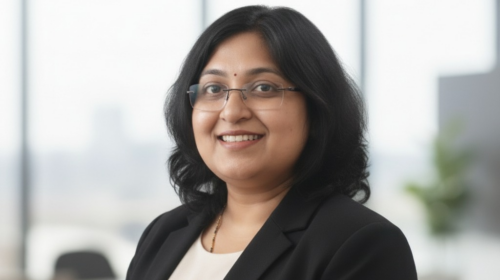
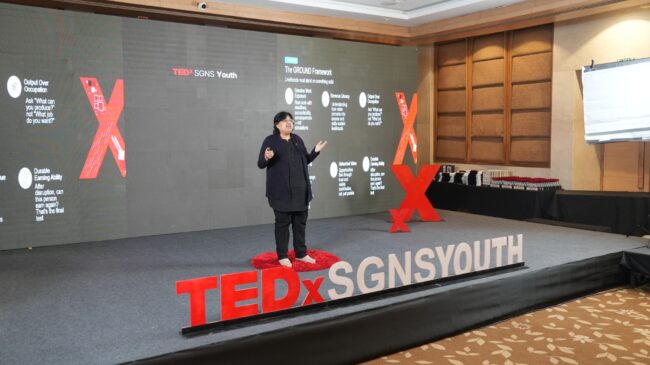
At Brilliant Read Media, it is our constant endeavour to identify and share some of the unique and compelling stories from the startup ecosystem. As part of this, we invited Dr. Akansha Jain for an interview with Brilliant Read Media. To say it further, Dr. Akansha is a Social Impact Leader, TEDx Speaker, Author, and Founder at EFOS Edumarketers Pvt. Ltd. Let’s learn more about her background, inspiring journey so far and her advice for our growing community!
Excerpts from our exclusive interview with Dr. Akansha:
What inspired you to start EFOS.in, and was there a defining moment that made you realise India needed a platform like this?
The inspiration behind EFOS.in came from observing a growing disconnect between education and employability. Over the years, while interacting with students, parents, educational institutions, and employers, I repeatedly noticed one common challenge: students were working hard to earn degrees but often lacked clarity about career direction, industry expectations, and pathways to meaningful employment.
The defining realisation came when I saw how career decisions in India were often influenced by marks, trends, or societal pressure rather than an individual’s strengths, interests, personality, and future opportunities. At the same time, employers consistently highlighted concerns around skill gaps and job readiness among graduates.
This led to a fundamental question: What if students could make informed career choices early and receive structured support throughout their journey?
That question became the foundation of EFOS.in. We envisioned a platform that goes beyond admissions or job placements and instead helps individuals discover the right career pathways through scientific assessments, expert counselling, skill development, industry exposure, and employability-focused interventions.
Our mission is simple yet powerful to help students move from uncertainty to clarity, from education to employability, and ultimately from qualifications to meaningful careers.
Your mission strongly focuses on underserved and last-mile youth. What personal experiences shaped this commitment to education and employability?
My commitment comes from witnessing firsthand that while talent is equally distributed, opportunities are not.
Throughout my journey, I interacted with students from urban cities, small towns, and rural communities. I saw many capable young people held back not because they lacked potential, but because they lacked information, mentorship, networks, and access to opportunities.
What struck me deeply was how two equally talented students could end up on entirely different paths simply because one had career guidance and industry exposure, while the other did not.
That reinforced my belief that employability is not just about getting a job; it’s about equipping young people with knowledge, confidence, skills, and exposure to build sustainable futures.
Through EFOS.in, we aim to democratize access to career guidance, skill-building, and employability opportunities so that a student’s success is determined by capability and effort, not geography or privilege.
For me, this is not just an education challenge; it is a social and economic imperative. When we empower young people, we strengthen families, communities, and ultimately, the nation.
EFOS.in has enabled over 50,000 verified job opportunities. What key challenges did you face while building this scale?
One of the biggest challenges was building trust among students, employers, and educational institutions.
In the beginning, many students were sceptical due to the prevalence of misleading job postings in the market. Employers, on the other hand, were looking for candidates who were not only qualified but job-ready.
We quickly realised that simply connecting candidates to jobs was not enough. Many students needed support in career planning, resume-building, interview preparation, skill development, and understanding workplace expectations.
That realisation transformed EFOS.in from being just a job platform into a complete employability ecosystem.
Another critical challenge was maintaining quality and credibility while scaling. We developed strong verification systems for employers and job opportunities to ensure authenticity.
Technology, partnerships, and a strong focus on outcomes helped us overcome these challenges. But the biggest lesson was this: scale is not built through numbers alone; it is built through trust and value creation.
For us, success is measured not only by opportunities enabled, but by lives transformed.
The “Learn and Earn” model has created significant impact. How did this idea originate?
The idea emerged from a very simple observation many young people needed skills to get jobs, but lacked the financial means to pursue training full-time.
I met countless students who wanted to learn but also had financial responsibilities. Many came from families where earning an income was not optional; it was necessary.
This created a cycle: lack of skills limited access to jobs, while lack of jobs limited access to learning opportunities.
The Learn and Earn model was designed to break this cycle.
Instead of separating education from earning, we integrated them into a single journey where students gain industry-relevant skills, practical exposure, internships, and financial support simultaneously.
The larger problem we wanted to solve was the gap between education and employability. Learning often remained theoretical, while employers expected practical competencies.
Today, this model empowers learners to build confidence, gain work experience, and access long-term career opportunities while continuing to support themselves financially.
Can you share one student success story that truly captures EFOS.in’s impact?
One story that deeply resonates with me is of a student from a small town who was the first person in his family to pursue higher education.
He had ambition but lacked career clarity, mentorship, and exposure. Despite completing his degree, he struggled to find direction and had begun losing confidence after facing repeated rejections.
Through EFOS.in, he underwent career assessment and counselling, which helped him identify his strengths and career path. He then joined an industry-aligned skill development program and participated in internships and practical projects.
Over time, not only did his technical skills improve, but his confidence transformed as well. Eventually, he secured employment with a reputed organisation and achieved financial independence.
What made this story truly meaningful was what happened next: he began mentoring students in his own community.
That ripple effect is what motivates us every day. We don’t just help students get jobs; we help them transform their lives and inspire others to believe in their own potential.
Having worked closely with youth across India, what do you believe are the biggest gaps between education and employment today?
The biggest challenge is not a lack of talent; it is a lack of alignment between education, industry needs, and career awareness.
The first major gap is career clarity. Many students make decisions based on trends or social influence rather than understanding their strengths and aspirations.
Second is the industry relevance of skills. Employers increasingly seek problem-solving, communication, adaptability, digital literacy, and practical competencies, while education often remains theoretical.
Third is the experience gap. Many graduates complete degrees without internships, apprenticeships, or real-world projects, creating a paradox where experience is required to get hired.
There is also a significant information and access gap, especially for students from underserved communities who lack awareness of opportunities and pathways.
Finally, in today’s fast-changing economy, we must shift from education as a one-time event to lifelong learning.
The solution lies in stronger collaboration between academia, industry, and skilling ecosystems so students are prepared not just for their first job but for long-term career success.
You’ve balanced academia, entrepreneurship, and social impact. How have these experiences shaped your leadership philosophy?
These experiences taught me that meaningful leadership is about creating opportunities for others to succeed.
Academia taught me curiosity, patience, and the importance of unlocking human potential.
Entrepreneurship taught me resilience, innovation, and execution the ability to navigate uncertainty and transform ideas into impact.
Social impact work shaped my belief that success should not be measured only by growth or scale, but by the number of lives positively transformed.
My leadership philosophy rests on three principles:
Purpose before position: Leadership is about solving meaningful problems.
People before processes Systems matter, but lasting impact comes from empowering people.
Impact before recognition Recognition follows consistent contribution; the real measure is outcomes created.
At its core, leadership is about enabling people, creating opportunities, and helping others realise their potential.
As a woman entrepreneur and changemaker, what barriers have you faced, and what advice would you give aspiring women leaders?
Like many women entrepreneurs, I have encountered moments where I had to work harder to establish credibility and ensure my ideas were evaluated on merit.
Women are still underrepresented in leadership and decision-making spaces, which can create additional barriers while building partnerships and scaling impact.
However, these experiences also strengthened qualities like resilience, empathy, collaboration, and persistence.
My advice to aspiring women leaders is:
> Believe in your capabilities. Confidence comes through action.
> Invest in continuous learning. Adaptability is a superpower.
> Build strong networks and seek mentors.
> View challenges as opportunities for growth.
> Lead authentically; there is no single formula for leadership.
Most importantly, leadership is not about being the loudest voice in the room it is about creating meaningful impact.
What is your long-term vision for EFOS.in and the EFOS Foundation?
Our long-term vision is to build one of India’s most trusted platforms for career discovery, employability, skilling, and economic empowerment.
We want every young person, regardless of geography, background, or financial circumstances, to have access to the guidance, skills, and opportunities needed to succeed.
Through EFOS.in, we aim to build an integrated ecosystem that combines career counselling, skill development, internships, apprenticeships, employment pathways, and lifelong learning.
Through the EFOS Foundation, we are committed to inclusion, ensuring underserved and rural communities gain equal access to opportunities.
Over the next decade, we aspire to impact millions of learners and help shape a future-ready workforce for India.
Ultimately, our goal is simple yet ambitious: to help every young person discover their potential, build capability, and create a life of dignity, purpose, and economic independence.
If you could give one message to every young person struggling with education, career uncertainty, or financial limitations, what would it be?
My message is simple: Your current circumstances do not define your future potential.
Many young people feel overwhelmed by uncertainty, financial constraints, or fear of failure. But success is not determined by where you start it is determined by your willingness to keep learning, adapting, and moving forward.
Do not compare your journey to others. Everyone’s timeline is different.
Invest in yourself daily. Build skills, seek mentors, stay curious, and remain consistent. Small steps taken every day can create extraordinary outcomes.
Most importantly, do not fear failure. Every setback carries lessons, and resilience often becomes your greatest strength.
At BrilliantRead, we don’t just share startup stories; we bring you journeys that challenge perspectives, spark ideas, and fuel ambition. Every story we feature is carefully chosen to add real value, inspire action, and ignite possibility within our growing community of entrepreneurs and dreamers.
If you have a powerful story, one that can inspire, educate, or create impact we want to hear from you.