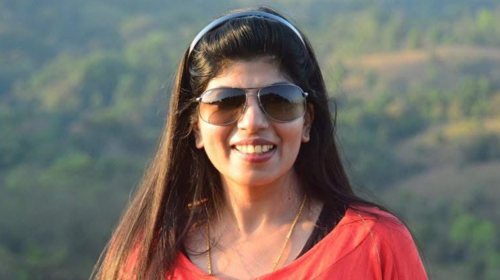
At BrilliantRead Media, we always strive to bring meaningful and powerful stories from India and around the world to empower and motivate our growing community. As part of this endeavour, we invited Dr. Aswathi R.S. Nair for an exclusive interview with us. Dr. Aswathi is a Mental Wellness Expert, Life Coach, HR Consultant, and Founder and Director at Vedhas Biz Pvt. Ltd. Let’s learn more about her background, journey and her advice for our community!
Excerpts from our exclusive interview with Dr. Aswathi:
What was the turning point that led you from corporate HR and academics into mental wellness and entrepreneurship?
There wasn’t one dramatic turning point. It was more of a gradual inner shift that unfolded over time.
Throughout my journey in Corporate HR and academia, both in India and internationally, I found myself deeply fascinated by people. I became increasingly curious about how human behaviour changes across environments, cultures, and life experiences. I was especially drawn toward understanding how beliefs silently shape the way we think, feel, decide, and respond to the world around us.
Living in Japan became a particularly transformative phase for me. It gave me the space to observe human psychology and behavioural patterns more closely. Around the same time, I also began becoming more aware of myself, my own thought processes, emotional responses, triggers, and belief systems. That self-awareness changed me profoundly.
I started realising that many people who appeared successful externally were internally struggling with stress, emotional exhaustion, confusion, and disconnection. That realisation stayed with me deeply.
Over time, I knew I wanted to dedicate myself to mental wellness and human transformation, not just as an area of interest, but as meaningful life work.
What problem were you trying to solve through your patented work on early prediction of mental disorders, and why is it even more relevant today?
The biggest problem I wanted to address was delayed intervention.
Most people seek help only when they are already emotionally overwhelmed or clinically affected. By then, recovery often becomes far more difficult and complex.
My work focused on identifying early emotional and behavioural indicators that are usually ignored or dismissed as “just stress” or “just a phase.” The idea was simple yet powerful: What if we could recognise psychological risk signals before they evolve into severe mental health conditions?
Today, this approach is more relevant than ever. We are living in an age of constant digital stimulation, blurred work-life boundaries, social comparison, and emotional overload. Emotional fatigue is building much faster than before.
Mental healthcare can no longer remain reactive. Early detection and preventive care are becoming essential not just for treatment, but for improving overall quality of life.
From your experience, what are the biggest mental health challenges leaders and professionals are facing today?
Surprisingly, the biggest challenge is not a lack of capability, but a lack of emotional processing.
Today’s leaders are constantly dealing with decision fatigue, uncertainty, emotional isolation, and the silent pressure to always appear strong. Many don’t have safe spaces where they can be vulnerable without feeling judged.
I also see a deeper identity crisis emerging. A lot of professionals no longer know who they are beyond their designation, productivity, or achievements. When identity becomes completely attached to performance, even small setbacks begin to feel deeply personal.
So the issue is not just stress. It’s unprocessed stress combined with identity imbalance. And over time, that can quietly affect emotional well-being, relationships, and clarity of thought.
How can organisations move beyond superficial wellness initiatives and truly build mentally healthy cultures?
The shift has to begin with intention, not activities.
Mental wellness cannot be reduced to occasional workshops, wellness weeks, or motivational sessions. It has to become part of leadership behaviour and organisational culture.
If leaders themselves don’t model emotional awareness, healthy boundaries, empathy, and openness, no wellness initiative can create a lasting impact.
Organisations need to:
– Train managers to have authentic human conversations, not just performance discussions
– Integrate emotional well-being into leadership evaluation
– Build psychologically safe workplaces where people feel heard without fear
– Normalise conversations around emotional health without stigma
Most importantly, companies need to stop treating mental wellness as an employee “benefit” and start recognising it as a business necessity.
Vedhas integrates mental wellness, creativity, and lifestyle. What vision inspired this holistic ecosystem?
The vision came from one simple observation: human beings don’t live in compartments, but most solutions do.
Mental health, emotional expression, creativity, physical lifestyle, relationships, and self-awareness are deeply interconnected. Yet people are often treated through fragmented approaches.
With Vedhas, I wanted to create a space where healing doesn’t feel clinical, and growth doesn’t feel rigid. A space where people can express, reflect, learn, heal, and rediscover themselves holistically.
Because real transformation happens when different dimensions of a person begin aligning together, not when we address only one aspect in isolation.
How do you combine psychotherapy, coaching, and emotional intelligence into a practical transformation framework?
I don’t really see them as separate approaches. To me, they are different stages of the same inner journey.
a) Psychotherapy helps people understand and heal past emotional patterns
b) Coaching helps them move forward with clarity and purposeful action
c) Emotional intelligence helps sustain that change in everyday life
The framework I follow is:
Awareness → Acceptance → Alignment → Action
Without awareness, nothing begins.
Without acceptance, nothing changes.
Without alignment, nothing sustains.
And without action, transformation never becomes real.
What matters most is making this practical something people can apply in their relationships, careers, leadership, and daily decisions.
What role do creative arts like music and dance play in emotional healing and self-discovery?
Creative arts access emotions that words often cannot.
Many emotions are difficult to explain logically; they are felt through the body, rhythm, silence, movement, and expression. Music, dance, and art create safe spaces where people can release emotions without the pressure of having to “explain” themselves.
I’ve seen individuals who struggled to open up verbally slowly begin expressing themselves through music, art, or movement. And once expression begins, healing naturally follows.
Creative arts also reconnect people with joy, spontaneity, and emotional freedom, qualities that often get lost in highly structured, performance-driven lives.
You also focus on supporting differently-abled individuals. What more needs to be done to make mental wellness truly inclusive?
Inclusion has to move beyond accessibility; it has to reach understanding.
We need more customised therapeutic approaches rather than one-size-fits-all systems. Families, educators, and workplaces also need greater emotional awareness and sensitivity.
Most importantly, society needs to shift its perception from seeing “limitations” to understanding “different lived experiences.”
Mental wellness systems should adapt to individuals, not expect individuals to fit into rigid frameworks.
True inclusion begins with empathy.
With your global exposure, what shifts do you see shaping the future of mental wellness over the next decade?
Three major shifts are becoming increasingly visible:
– Preventive care will become more important than reactive treatment
– Mental wellness will integrate more deeply into workplaces, schools, and everyday environments
– Personalised emotional wellness models using behavioural insights and psychology will grow significantly
At the same time, society is slowly beginning to understand that mental wellness is not only about treating illness, it’s about improving the quality of human experience.
The conversation is evolving from “fixing problems” to helping people live more emotionally balanced, meaningful, and self-aware lives.
On a personal level, how do you sustain your own emotional and mental well-being while supporting so many others?
I constantly remind myself that I’m human too.
I experience overwhelming days, self-doubt, emotional fatigue, happiness, frustration, all of it. I don’t believe anyone can remain “strong” all the time. What matters more is emotional honesty and self-awareness.
I consciously create pauses for myself through silence, reflection, music, or simply stepping away when things feel mentally heavy. Over time, I’ve become more aware of my own emotional triggers and behavioural patterns because self-awareness is an ongoing journey for everyone, including those who guide others.
I’ve also learned the importance of boundaries. When we continuously give without emotionally recharging ourselves, it eventually affects us internally.
And on difficult days, I reconnect with the deeper reason behind this journey to create more compassion, understanding, and emotional well-being in people’s lives.
For me, mental wellness is not about being perfect or positive all the time. It’s about staying connected with yourself in an honest and authentic way.
At BrilliantRead, we don’t just share startup stories – we bring you journeys that challenge perspectives, spark ideas, and fuel ambition. Every story we feature is carefully chosen to add real value, inspire action, and ignite possibility within our growing community of entrepreneurs and dreamers.
If you have a powerful story – one that can inspire, educate, or create impact – we want to hear from you.