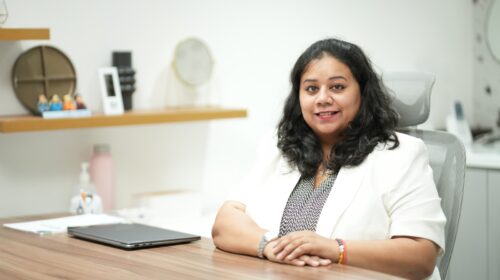
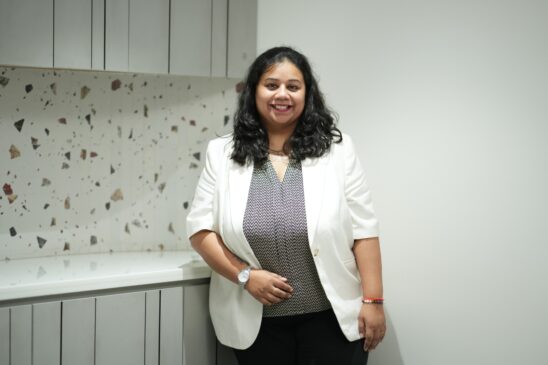
At BrilliantRead Media, we always strive to bring meaningful and powerful stories from India and around the world to empower and motivate our growing community. As part of this endeavour, we invited Dr Mili Sinha for an exclusive interview with us. Dr Mili is an Aesthetic Consultant and Co-Founder & Head of Medical Strategy & Innovation at The Health Equip. Let’s learn more about her background, journey and her advice for our community!
Excerpts from our exclusive interview with Dr Mili:
Could you please talk us through your background and your journey?
My journey has unfolded in distinct phases, even if it didn’t feel that way while I was living it.
I come from a family that deeply valued education. I was academically inclined, active in school, and eventually became the first doctor in my family. My parents worked incredibly hard to make that possible, and that responsibility shaped me early.
After completing my MBBS, I didn’t immediately know where I truly belonged. I explored hospital management and public health and even took up a few unconventional assignments because I was curious about how healthcare systems function beyond the consultation room. That period marked my first shift—from simply treating patients to understanding the larger structure of care delivery.
My real professional turning point came when I entered aesthetic medicine, somewhat by chance. What began as a clinical curiosity evolved into a practice of over 13 years. I built my aesthetic career around evidence-based treatments—lasers, energy-based devices, and injectables—while always keeping a patient-first approach. Over time, I realized I wasn’t just improving skin; I was helping rebuild confidence.
That phase shaped two important aspects of my journey: clinical depth and entrepreneurial instinct. During the pandemic, I launched SkinStop to provide guided skincare access online. It was a small but meaningful step toward building something of my own.
From there, the transition felt natural. I began thinking beyond individual practice and noticed how fragmented healthcare delivery often was—consultations in one place, physiotherapy in another, nutrition guidance somewhere else. This realization led to co-founding The Health Equip, where we focus on structured, patient-centric healthcare support by integrating consultations, physiotherapy, functional medicine, and home-based care solutions.
So my journey has evolved from clinician to aesthetic specialist to entrepreneur in integrated healthcare delivery. The underlying direction has always remained the same: building systems that genuinely help people.
And in many ways, I’m still building.
How did you discover your passion?
It wasn’t an instant realization—it evolved over time.
In the early years after MBBS, I was still exploring. I was competent in my work, but I hadn’t yet found the space that truly felt like my own.
Aesthetic medicine changed that perspective. I began to see how deeply physical appearance can influence emotional well-being. Patients weren’t just asking for procedures—they were seeking to feel comfortable and confident in their own skin again. That intersection between medicine, psychology, and self-image drew me in completely.
Over time, I realized that my passion extended beyond aesthetic procedures themselves. What truly motivates me is building healthcare solutions that are practical, accessible, and patient-focused.
Aesthetic practice was the starting point; entrepreneurship became the natural extension of that thinking. The Health Equip represents the broader expression of that passion—creating structured healthcare support that reduces gaps and simplifies care for families.
Today, my passion lies not in one specialty but in creating meaningful impact through healthcare delivery, both clinically and structurally.
What inspired you to pursue advanced training in aesthetic medicine?
Once I entered aesthetic practice, I quickly realized that surface-level knowledge isn’t enough.
Patients often present layered concerns—pigmentation linked to hormonal changes, hair loss connected to stress or metabolic conditions, and ageing influenced by lifestyle factors. I didn’t want to simply follow device protocols; I wanted to understand the deeper clinical reasoning behind treatment decisions.
Advanced training provided that foundation. It strengthened my ability to move from performing procedures to designing personalized treatment strategies.
For me, it was never about collecting certifications—it was about gaining the confidence to make independent, evidence-based decisions in a field that evolves rapidly.
What prompted you to launch SkinStop and co-found The Health Equip?
SkinStop emerged during the pandemic when patients had very limited access to structured skincare guidance. There was widespread confusion, misinformation, and panic buying of products online. I wanted to create a doctor-led platform where people could receive curated skincare solutions and responsible virtual consultations.
The inspiration for The Health Equip was far more personal. During a medical emergency in our family, we struggled to arrange timely, coordinated care for my mother-in-law because they lived in an area where advanced healthcare facilities were not easily accessible.
Even as doctors, organizing home support, post-hospital recovery care, physiotherapy, and consistent follow-ups proved challenging.
That experience highlighted a significant gap. Families don’t just need hospitals—they need structured home healthcare support, elderly care, post-surgery rehabilitation, nursing assistance, medical monitoring, and coordinated guidance.
The Health Equip was created to provide that continuity of care at home. If SkinStop addressed clarity in aesthetic care, The Health Equip focuses on structured and dependable home healthcare.
Both ventures were born from real problems I encountered—one in my clinic, the other within my own family.
Despite the challenges, what keeps you going when things get tough?
Three things keep me grounded.
First, my parents and my closest friends. My parents are my foundation—their discipline and resilience shaped how I approach life, decisions, and challenges. My closest friends have witnessed every high and low, and during difficult moments they remain my sounding board.
Second, I’m naturally a go-getter. Nothing in my journey has come easily. Whether it was discovering my path, establishing myself in aesthetic medicine, or stepping into entrepreneurship, each phase required persistence through doubt and resistance. That mindset doesn’t allow me to give up easily.
Third, patience and perseverance. Entrepreneurship especially tests your resilience. Growth is often slow, and results are rarely immediate. I’ve learned to stay consistent even when progress isn’t immediately visible.
And of course, my daughter. Motherhood gave my ambition a deeper sense of direction. Now my goal isn’t just growth—it’s growth that is responsible, meaningful, and sustainable.
What have been some of the most pivotal turning points in your professional journey?
There have been three defining turning points.
The first was choosing aesthetic medicine as a focused career path instead of continuing in general practice. That decision gave my professional journey direction.
The second was launching SkinStop during the pandemic. It was my first entrepreneurial step and showed me that I could build solutions beyond the clinic walls. Patients needed structured, professional skincare guidance rather than random online recommendations.
The third—and perhaps most transformative—moment was co-founding The Health Equip. This expanded my thinking from aesthetics to integrated healthcare delivery, encouraging me to look at patient care through a systems perspective that includes rehabilitation, preventive care, and continuity.
Each phase gradually shaped my identity from clinician to clinician-entrepreneur.
What are the three most important lessons you have learned in life?
First, clarity matters more than speed. It’s perfectly fine to take time to discover your direction, but once you do, commit to it wholeheartedly.
Second, strong foundations are everything. Whether in medicine, business, or family, shortcuts may work temporarily but rarely last.
Third, resilience is built over time. It isn’t something we inherit; it develops when we stay committed during difficult phases instead of stepping away from them.
How do you ensure clarity and trust during aesthetic consultations?
The aesthetic space can often feel overwhelming because of the sheer number of procedures, claims, and marketing narratives.
During consultations, I intentionally slow the process down. I explain the reasoning behind every recommendation, discuss alternatives, outline downtime, and clarify realistic outcomes as well as limitations.
If a procedure isn’t necessary, I say so.
Clarity builds trust, and trust sustains a long-term practice. I also avoid chasing trends. Just because a treatment is popular doesn’t mean it’s appropriate for every patient. When people understand that your priority is their long-term skin health rather than immediate sales, they stay with you.
What are the biggest misconceptions about aesthetic treatments today?
One of the biggest misconceptions is that aesthetic medicine is purely superficial.
When practiced responsibly, it has strong psychological and preventive dimensions. It’s about ageing well and maintaining confidence, not chasing unrealistic beauty standards.
Another misconception is that more treatments—or more expensive treatments—automatically lead to better results.
In reality, subtle and well-planned interventions often produce the most natural outcomes. Education is essential so patients understand that responsible aesthetic medicine focuses on balance and long-term health.
In your opinion, what are the keys to success?
I don’t consider myself successful yet because I’m still building.
However, if I reflect on what truly matters, I would highlight three things: long-term thinking, adaptability, and ethical grounding.
Healthcare evolves constantly. Technology advances, markets shift, and patient expectations change. If you cannot adapt, you eventually become irrelevant.
At the same time, growth without strong ethics becomes fragile. Integrity ensures that success remains sustainable.
Finally, thinking beyond immediate gains is essential. Sustainable growth may be slower, but it creates lasting impact.
What is your long-term vision for your professional impact?
In the long term, I see myself continuing aesthetic practice while increasingly focusing on building healthcare systems.
The Health Equip is central to that vision. I want to contribute to healthcare models that integrate home-based care, rehabilitation, and preventive support in a more structured and accessible way.
Digitally, education will play an even larger role. Transparent, evidence-based communication is becoming essential in modern healthcare.
My goal isn’t rapid expansion—it’s meaningful, sustainable growth that genuinely improves how patients experience care.
What advice would you give students and young professionals aspiring to build successful careers?
Don’t be afraid to change direction early in your career. Exploration is not failure—it is often a necessary part of growth.
Focus on building genuine competence before seeking recognition. Skill creates confidence.
For those in healthcare, it is equally important to understand the system, not just the science. The future belongs to professionals who can think both clinically and entrepreneurially.
And perhaps most importantly—be patient with your timeline. Social media often makes success appear instant, but in reality, most meaningful careers are built quietly over years of consistent effort.
What about your journey makes it most satisfying or exciting?
For me, the most exciting part is the evolution.
I began as a doctor searching for her space. Today, I practice aesthetic medicine while also co-building a healthcare services company that aims to simplify and structure patient care.
That transition—from individual consultations to system-building—is deeply fulfilling. I find satisfaction in knowing that I’ve allowed myself to grow, pivot, and think bigger.
And perhaps the most exciting realization is that I still feel like I’m only at the beginning.
What legacy would you like to leave for future practitioners and patients?
For practitioners, I hope my journey demonstrates that ethical aesthetic medicine and entrepreneurship can coexist.
For patients, I hope the systems I help build—whether in aesthetics or broader healthcare delivery—make their healthcare experience simpler, safer, and more transparent.
If, years from now, I am remembered as someone who built thoughtfully rather than quickly, that would be a legacy I would value deeply.
BrilliantRead is committed to bringing stories from the startup ecosystem, stories that reshape our perspective, add value to our community and be a constant source of motivation not just for our community but also for the whole ecosystem of entrepreneurs and aspiring individuals.
Note: If you have a similar story to share with our audience and would like to be featured on our online magazine, then please write to us at [email protected], we will review your story and extend an invitation to feature if it is worth publishing.