
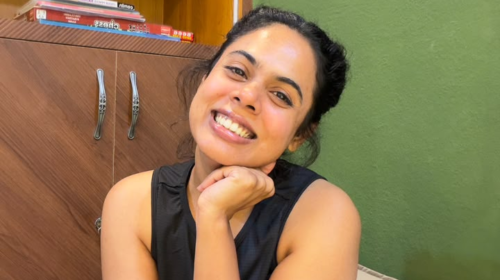
At Brilliant Read Media, we always strive to bring meaningful and powerful stories from India and around the world to empower and motivate our growing community. As part of this endeavour, we invited Neelu for an exclusive interview with Brilliant Read Media. To say further, Neelu is an Entrepreneur and Founder and Creative Director at Gulmohar Earth.
With a deep-rooted passion for fashion and a vision to promote conscious consumption, she is building a brand that celebrates slow fashion, timeless designs, Indian craftsmanship, and thoughtful creation.
Let’s learn more about her background, inspiring entrepreneurial journey, and advice for our growing community!
Excerpts from our exclusive interview with Neelu;
You’ve wanted to become a fashion designer since Grade 2. How did that childhood dream evolve through your years of working with Indian fashion houses, and what ultimately inspired you to build Gulmohar?
Honestly, I think I’ve always known that I wanted to do something in fashion. I remember wanting to become a fashion designer as early as Grade 2, and that stayed with me through school and college. It wasn’t one of those things I grew out of or changed my mind about.
Working with different fashion houses over the years gave me a very different perspective on the industry. You learn so much beyond designing how a business works, how collections come together, how people buy, what goes on behind the scenes, and the realities that come with creating clothes at scale.
Eventually, I reached a point where I wanted to create something of my own, something that reflected my personal sensibilities rather than working within someone else’s vision. Gulmohar came from that desire. I wanted to build a brand where I could have the freedom to create, experiment, and do things at my own pace, while being more conscious of what we make and why we make it.
For me, Gulmohar was not just about starting a label. It was about finally giving that childhood dream a space of its own.
Gulmohar is built around the philosophy of “Crafted Slow, Worn with Intention.” What does slow fashion mean to you beyond simply producing fewer clothes, and why do you believe it matters today?
For me, slow fashion isn’t just about making fewer garments. It’s about being more thoughtful at every stage from the fabric we choose, to the person making the garment, to how the garment is eventually worn and cared for.
I think we’ve become so used to buying clothes for a moment, wearing them once or twice, and moving on to the next thing. I don’t think there’s anything wrong with enjoying fashion or wanting something new, but I do think we’ve lost a little of the connection we once had with our clothes.
I want someone to buy a Gulmohar piece and actually live in it. Wear it to work, travel in it, wear it again a few months later, style it differently, and not feel like it’s something that belongs to just one occasion.
“Crafted Slow, Worn with Intention” is really about that relationship with clothing. It’s about appreciating the process behind it and choosing things that stay with you longer. I think that matters more today than ever, especially when we’re surrounded by so much noise, so many trends, and constant pressure to consume.
View this post on Instagram
Your experience in fast-paced fashion eventually led you to create a brand that deliberately moves slower. What did you learn from the fashion industry that made you rethink the way clothing should be designed and produced?
Working in the industry teaches you how much goes into making a garment, but it also shows you how quickly the industry can move. There are deadlines, collections, seasons, trends, and always something new that needs to be put out.
I think that experience was valuable because it taught me both sides of the business. I understand why speed is important, and I also understand what can get lost when speed becomes the only priority.
When I started Gulmohar, I knew I didn’t want to create a brand that was constantly chasing what was trending or producing just because there was a new season coming up. I wanted to take a little more time with the process. Think about the fabric, the fit, the details, and whether something actually deserved to be made.
That doesn’t mean everything at Gulmohar is perfect or that we have figured everything out. We’re still learning, still evolving, and still finding better ways of doing things. But being able to question the process and make those decisions for ourselves has been one of the most important things about building the brand.
Gulmohar focuses on made-to-order pieces, comfort, timeless silhouettes, and skilled craftsmanship. How do you balance these principles with the commercial realities of running and scaling a fashion business?
This is probably one of the most challenging parts of running Gulmohar. It’s easy to talk about what you want a brand to stand for, but you also have to make sure the business can sustain itself.
Made-to-order, for instance, is something I really believe in because it allows us to be more mindful about production and inventory. But it also comes with its own challenges, such as timelines, production planning, customer expectations, sourcing fabrics, and managing costs. You have to get all of that right for it to work as a business.
I don’t think being conscious or slow should mean being commercially impractical. We still need to make decisions that make sense financially, price our products appropriately, understand what our customers want, and build a business that can grow.
For me, the idea is not to grow at any cost. I’d rather grow steadily, understand our customer better, get our processes right, and build something that can sustain itself for years. I think there is a way to be commercially successful without losing what made you start in the first place, and that’s what I’m trying to figure out with Gulmohar every day.
Every Gulmohar collection begins with a feeling rather than a trend. What was the emotion or story behind Megh Malhar, and how do you translate an abstract mood into fabrics, silhouettes, and garments?
Megh Malhar was very much about that feeling of being between two things between the sun and the rain, the warmth of a summer afternoon and the calm that comes just before it rains. There was something about that transition that I really wanted to explore.
I didn’t want it to be a collection that was overly literal or that needed a very elaborate story behind every garment. I wanted it to feel familiar, a little nostalgic, and easy to connect with.
That mood naturally led us towards earthy colours, softer tones, natural fabrics like linen and cotton, and silhouettes that felt relaxed and effortless. I wanted the clothes to have a certain ease to them. Nothing that felt too forced or over-designed.
Usually, once I have that initial feeling, I start looking at fabrics, colours, references, and textures. It’s a very intuitive process for me. Sometimes a fabric inspires the garment; sometimes I have an idea for a silhouette and spend a lot of time trying to find the right fabric for it.
I think that’s what I enjoy most about designing watching something that starts as a feeling slowly turn into something tangible that someone can actually wear.
View this post on Instagram
You work closely with artisans and tailors while blending traditional techniques with modern sensibilities. What role does Indian craftsmanship play in Gulmohar, and how do you hope the brand contributes to preserving it?
Craftsmanship is an important part of Gulmohar, but I think I look at it in a very everyday way. I don’t necessarily want craft to be something that people only associate with elaborate occasion wear or garments that sit in their wardrobes waiting for a special day.
I love the idea of bringing craftsmanship into clothing that people can actually wear regularly. It could be a hand-embroidered detail, an interesting finish, a thoughtfully constructed garment, or something as simple as the way a pocket is made.
We work closely with the people who bring these garments to life, and I think that relationship is very important. A garment isn’t just an idea that comes from a designer. It goes through so many hands, and each person brings a skill and understanding of the craft that you cannot replicate through a design sketch alone.
I would love for Gulmohar to continue working with traditional techniques but in ways that feel relevant to how we dress today. I think craft should evolve, be used, be worn, and be appreciated not just preserved as something distant or untouchable.
As an entrepreneur and business leader, your experience working with established designers and managing different businesses has exposed you to various aspects of the fashion industry. How has this shaped your leadership style, decision-making, and understanding of entrepreneurship?
I’ve had the opportunity to work with different designers and brands, and those experiences have taught me a lot about the business of fashion, beyond just the creative side. I’ve worked across different functions and had the opportunity to understand how businesses operate, how teams are managed, how collections move from design to production, and how decisions around strategy, operations, and business ultimately affect everything.
At the same time, I was also building Gulmohar while taking on consulting roles, working as a Business Head for a brand and looking at its business, operations, strategy, and overall management. So, I was essentially doing two very different things at the same time managing and strategising for a business, while running Gulmohar.
This meant everything from designing collections and sourcing fabrics to managing production, coordinating with people, working on marketing, sales, and pretty much every aspect of building my own brand. It involved a lot of multitasking, but it also gave me the opportunity to look at the fashion industry from very different perspectives.
I think that’s what has shaped me the most as a professional. I’ve never really been someone who limits herself to just one function. I enjoy designing, but I also genuinely enjoy the business side of things strategising, problem-solving, building processes, understanding numbers, managing teams, and figuring out how to make things work. Having worked across so many aspects of the industry, I think I have a fairly holistic understanding of what it takes to run a fashion business.
Entrepreneurship has also taught me that there isn’t one formula that works for everyone. You can learn from people and take inspiration from their journeys, but eventually, you have to make decisions based on your own business, your own circumstances, and what you believe in.
I think I’m still learning every day. Running a business requires you to be creative, but it also requires a lot of practicality, patience, and the ability to adapt. And sometimes, honestly, it just requires you to figure things out as you go.
If you imagine Gulmohar five or ten years from now, what do you want the brand to be remembered for and what change would you ultimately like to create in the way people think about fashion and consumption?
I would love for Gulmohar to be a brand that people genuinely connect with and return to. Not necessarily because we’re constantly giving them something new, but because they know what they’re getting from us and they feel good wearing it.
I want Gulmohar to grow, of course. I want it to reach more people, be present in spaces that feel right for the brand, and become a financially strong business. I also want to keep exploring with different fabrics, techniques, collaborations, and ideas without feeling like we have to fit into a particular mould.
But if, five or ten years from now, someone tells me that they still own a Gulmohar garment they bought years ago, that they wear it regularly, that it has travelled with them or become one of those pieces they always reach for, that would mean a lot to me.
I think that’s the change I would really like to see. Not necessarily people buying less because they have to, but people buying more thoughtfully because they want to. Understanding that clothes don’t have to be disposable, that getting dressed can be about comfort and individuality, and that you don’t always need something new to feel good about what you’re wearing.
If Gulmohar can be a small part of that shift, I think that would be a wonderful thing.