At BrilliantRead Media, we always strive to bring meaningful and powerful stories from India and around the world to empower and motivate our growing community. As part of this endeavour, we invited Aatika Manzar for an exclusive interview with us. Aatika is an Architect, Interior Designer and Founder at Aatika Manzar Designs. Let’s learn more about her background, journey and her advice for our community!
Excerpts from our exclusive interview with Aatika:
You’ve built a strong presence in architecture and interior design. What inspired you to choose this path despite early challenges, and how did those experiences shape your creative identity?
Ever since school, I found myself equally drawn to mathematics and art. Mathematics was one of my favourite subjects, but at the same time, I loved sketching and visual storytelling. Architecture naturally became the perfect meeting point between logic and creativity. It allowed me to explore artistic expression while satisfying the technical side of my personality.
Even today, that balance defines the way I design. I still begin many concepts through freehand sketches because I enjoy understanding spaces in a raw, instinctive way before moving into software or technology. My understanding of structure and calculations also helps me approach spaces more holistically.
For me, design has never been only about aesthetics. A space should not just look beautiful it should function beautifully too. I think my creative identity has evolved from constantly balancing emotion with practicality.
From working with global brands to launching your own studio, what was the defining moment that pushed you toward entrepreneurship?
Honestly, my parents always believed I would eventually start something of my own, much before I believed it myself. In the beginning, I was hesitant because architecture is a field where experience matters immensely, especially on-site. I wanted to spend time learning under established architects and designers and truly understand how projects move from paper to reality.
Most of my learning happened on construction sites rather than inside offices. Watching spaces come alive layer by layer teaches you things no classroom can.
Over the years, after working with different firms and handling creative responsibilities, I slowly felt more confident about building my own studio. By then, it no longer felt like a risky decision; it felt deeply personal. I wanted to create something that reflected my own design language and thought process. That’s how Aatika Manzar Designs truly began.
Your projects span luxury residential, hospitality, and commercial spaces. How do you ensure each space tells a unique story while staying true to your design signature?
I believe every project already carries a story within itself. Our role as designers is to carefully discover it rather than impose something generic onto the space.
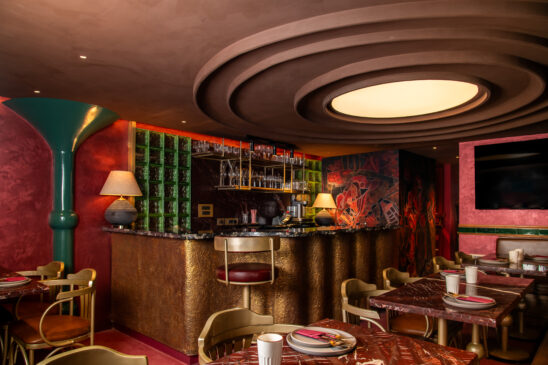
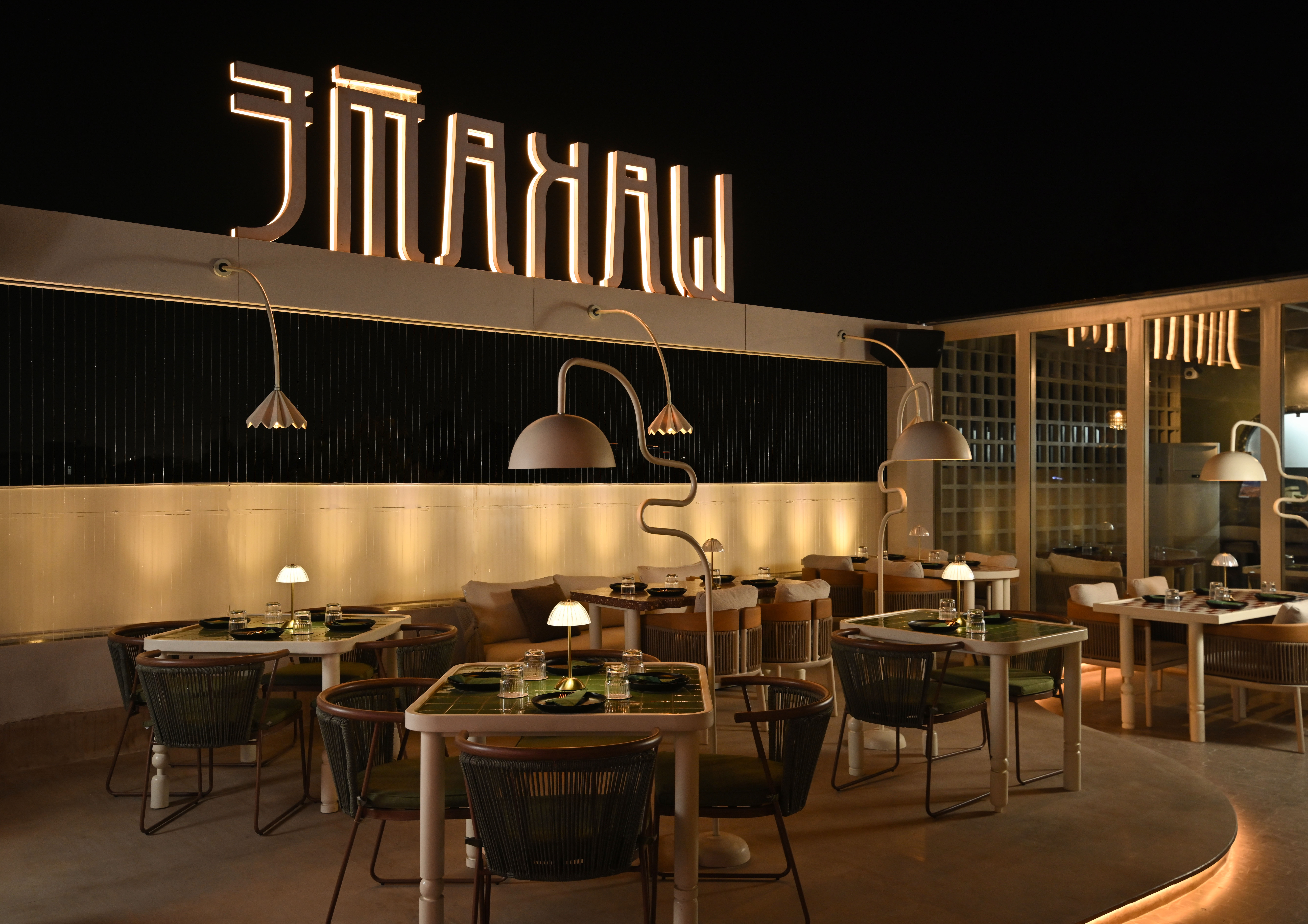
A lot of our concepts emerge from the location, the surrounding culture, or even the client’s own journey. For example, while designing Yoko Sizzlers in Guwahati, we worked extensively with bamboo because it is deeply rooted in the region. It was locally available, craftsmen understood the material beautifully, and it instantly created a stronger connection with the place.
Similarly, when we designed Overeasy in DLF Avenue, the entire concept evolved from the idea of toasted bread and butter. The warm yellow palette represented butter, while the ceiling details were inspired by sliced bread forms and layered textures.
While people often associate my work with tree-inspired installations and sculptural elements, I consciously avoid repeating the same visual language in every project. I want each space to feel emotionally different and rooted in its own narrative. That individuality is extremely important to me.
You often emphasise that “every space speaks.” How do you decode a client’s vision and translate it into a functional yet aesthetic design?
For me, the first step is understanding what the space needs to communicate emotionally. I always ask myself what should become the focal point of the project and how the interiors can support that, instead of overpowering it.
For instance, we designed a dessert and pastry space where the brand identity revolved around seven vibrant colours. But the products themselves were already visually colourful.
If we had used all seven colours throughout the interiors, the pastries would have visually disappeared into the space. So we introduced those colours subtly within the ceiling installation while keeping the rest of the interiors monochromatic. This allowed the desserts to remain the true hero of the space.
I also enjoy finding design solutions that feel innovative yet practical. In one project, we used nearly 1,200 plumbing balls within a ceiling installation inspired by cake frosting swirls. In another bakery project, we worked with PVC pipes because the client came from a PVC manufacturing background.
Good design happens when storytelling, functionality, material understanding, and budget work together naturally. Spaces should feel thoughtful, never forced.
Building a multidisciplinary studio like Aatika Manzar Designs is no small feat. What were the biggest challenges in scaling across multiple cities in India?
The initial phase was definitely the hardest. Getting people to trust a young studio takes time, and in construction, especially, credibility is built slowly through execution.
Another challenge was being a woman leading sites in an industry that is still heavily male-dominated. Clients were often supportive, but contractors, labourers, and vendors were not always immediately comfortable taking instructions from a female architect. Initially, I constantly had to prove myself on-site through consistency and work ethic.
But once a few projects started getting recognised, and we built a strong portfolio in Delhi, things gradually became easier. Most of our expansion into other cities happened organically through referrals and word of mouth. I believe when people genuinely connect with your work, geography stops becoming a barrier.
How do you balance creativity with business decisions, especially when managing high-end luxury projects and client expectations?
Architecture is a deeply emotional process for clients because they are investing not just financially, but personally, into a space. That’s why relationships and trust become extremely important.
Of course, we maintain professional systems and contracts, but I never want the process to feel transactional. If a project requires additional involvement, extra discussions, or more site visits, we willingly do it because the final outcome matters more than rigid boundaries.
A lot of effort also goes into helping clients visualise ideas clearly through sketches, renders, and detailed conversations. Once clients understand the thought process behind the design, they naturally become more aligned creatively.
For me, luxury is not only about expensive finishes. It’s about attention to detail, honesty in execution, and creating spaces that genuinely feel meaningful.
With design rapidly evolving, how do you see the role of technology, like AI and 3D visualisation, shaping the future of architecture and interiors?
Technology is definitely transforming the way we communicate and visualise ideas, and I think that’s incredibly valuable. Tools like AI and 3D visualisation help us experiment faster, present concepts more clearly, and simplify the design process for clients.
For example, testing different materials, lighting moods, or colour palettes becomes significantly faster through technology. It reduces confusion and improves collaboration between designers and clients.
However, I don’t believe technology can ever completely replace architects or designers. Architecture is deeply human. It involves intuition, emotions, spatial understanding, and real-life execution. The soul of a space still comes from people, craftsmanship, and lived experiences.
Technology can support creativity beautifully, but it cannot replace the emotional intelligence behind design.
What trends are you currently excited about in luxury design, and how are client expectations changing in India?
What genuinely excites me is how people are slowly returning to authenticity. Even in luxury projects, clients are becoming more interested in local materials, handcrafted details, adaptive reuse, and spaces that feel culturally rooted rather than simply expensive.
I’m especially drawn toward projects that reinterpret regional materials and traditional techniques in contemporary ways. Right now, we are working on projects like Brij Lakshman Sagar, where mud architecture and locally sourced materials play a huge role in shaping the experience of the space.
I think luxury today is becoming more emotional and experiential. Clients are no longer only looking for polished surfaces or grand interiors. They want warmth, individuality, sustainability, and spaces that genuinely feel alive.
Your journey reflects immense resilience. How have personal challenges influenced your leadership style and the culture within your studio?
Personal experiences have taught me how important emotional well-being is, especially in creative fields. People work best when they feel safe, respected, and heard.
Because of that, I’ve always tried to build a studio culture that feels collaborative and human rather than overly corporate. Brainstorming in our office is extremely open; everyone contributes ideas freely, irrespective of hierarchy. I never want people to feel intimidated while expressing themselves creatively.
I also strongly believe in maintaining balance. We work sincerely, but we equally value personal time and mental health. Beyond projects and deadlines, I want my team to know they can approach me openly during difficult moments as well.
Over time, the studio has naturally started feeling more like a family than just a workplace, and I think that warmth reflects in our work too.
What advice would you give to young architects and designers who want to build a strong personal brand and stand out in a competitive industry?
I think the most important thing is to genuinely believe in your own voice and perspective. The way you speak about your work and the confidence with which you present your ideas eventually shape how people perceive you.
Young designers often feel pressured to follow trends or constantly compare themselves with others, but authenticity is what truly helps someone stand out in the long run.
Also, spend as much time on-site as possible. Understanding materials, labour, execution, and real-world challenges teaches you far more than aesthetics alone. Design is not only about creating beautiful visuals, it’s about understanding how spaces actually live and breathe.
Most importantly, stay patient with the journey. A personal brand is built slowly through consistency, honesty, and trust in your own process.
At BrilliantRead, we don’t just share startup stories – we bring you journeys that challenge perspectives, spark ideas, and fuel ambition. Every story we feature is carefully chosen to add real value, inspire action, and ignite possibility within our growing community of entrepreneurs and dreamers.
If you have a powerful story – one that can inspire, educate, or create impact – we want to hear from you.