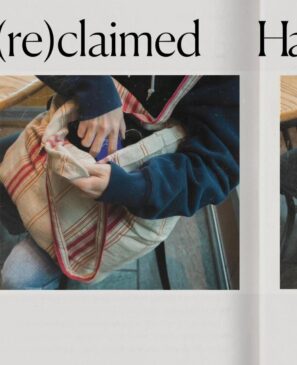
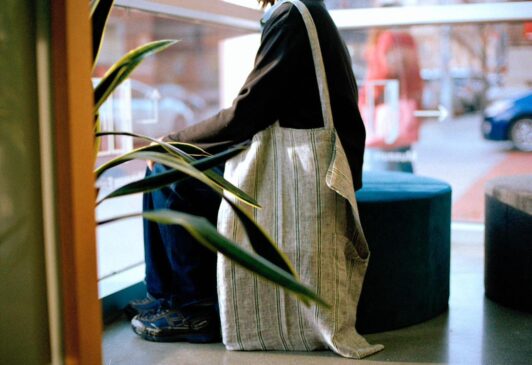
At Brilliant Read Media, it is our constant endeavour to identify and share some of the unique and compelling stories from the startup ecosystem. As part of this, we invited Hanisha Thirth for an interview with Brilliant Read Media. In a world obsessed with perfection and speed, some creators are choosing slowness, repair, and emotional honesty.
For Hanisha, design is not merely about aesthetics; it is about rescue, regeneration, and giving forgotten things a second life. Through deadstock fabrics, visible repairs, and imperfect beauty, they are building a movement rooted in jugaad, storytelling, and conscious creation. Let’s learn more about her background, inspiring journey so far and her advice for our growing community!
Excerpts from our exclusive interview with Hanisha:
If Post Rejection Design and HA-THI were movements, what would you want them to teach the next generation?
If these became movements, I would want them to teach three things:
a) Jugaad is a design method, not a last resort. Innovation doesn’t always come from abundance. Sometimes it emerges from constraints, limitations, and resourcefulness.
b) Waste is not an absence of value; it’s evidence of a broken system. What we call “waste” often says more about how industries function than about the material itself.
c) Rebirth ‘punarjanm’ applies to everything. Careers, cities, materials, identities… nothing is ever truly finished.
If a young designer looks at a scrap pile or an abandoned building and thinks, “Ah, raw material,” instead of “useless,” then the movement has already begun.
Where do you begin a piece with material, feeling, or story?
Usually, the material walks in first.
The feeling quietly sits beside it, and the story barges in late but loud.
I might find a roll of deadstock fabric, and it already has an attitude. Sometimes it feels stiff, shy, loud, moody. I respond to that energy.
Then comes collaboration with artisans, with process, with possibility. We drape, cut, rearrange, repair. Somewhere in that dance, the narrative begins to reveal itself: Who is this for? What moment of life does it belong to?
I don’t impose stories.
I excavate them.
You speak often about imperfections and honest design. Why does that matter to you?
Perfect design can feel emotionally sterile.
It’s like talking to someone who has rehearsed their lines too many times.
Imperfections, visible joins, repaired seams, and mismatched tones reveal effort. They show risk, time, and human intention. They quietly say:
“A human being tried here.”
That honesty is infinitely more interesting to me than flawless surfaces that reveal nothing.
Design doesn’t just need to become sustainable.
It needs to stop lying about how things are made.
Your philosophy feels slow and deeply intentional. How does that coexist with social media’s obsession with ‘new’?
Social media constantly demands “new, new, new.”
My practice, on the other hand, asks:
“What if we sat with the same idea for five years?”
Has that been challenging? Absolutely.
Algorithms don’t reward nuance. They don’t reward patchwork made from 20-year-old fabric or long-term thinking.
But my goal online isn’t to look big.
It’s to look true.
That’s why I share the thinking, the failures, the repair work, the rejection stories. If growth comes slower because of that, then maybe it’s working exactly as it should.
I’m not building a cult of aesthetics.
I’m building a community that thrives in voids, pauses, and negative spaces.
Do you think people are reconnecting with conscious design?
Yes. I genuinely think people are emotionally exhausted by perfection and speed.
There are only so many shiny things you can buy before you start asking deeper questions.
At some point, you stop wanting perfection and start wanting meaning.
When people touch something made from deadstock, with visible repair and a story stitched into it, something softens. It feels personal. Honest.
Almost like proof that things don’t have to be flawless to be worthy.
And maybe that resonates because, honestly, we’re all rejected material on some level.
How do you balance emotional storytelling with running a business?
Emotion is the engine.
Spreadsheets are the brakes.
You need both unless your goal is to become extremely poetic and extremely broke.
I design like an artist, but I operate like an auditor.
Controlled quantities. Honest pricing. No fake “limited edition” scarcity. No sustainability theatre.
I would rather sell fewer things that genuinely matter than flood the world with more clutter disguised as consciousness.
So yes, the work is deeply emotional.
But the business model is intentionally anti-drama.
Was there a defining rejection that changed your path?
Not one cinematic rejection.
No dramatic “you’re fired” moment.
It was more like a thousand tiny “no thank yous.”
Ideas being dismissed as “too slow,” “too thoughtful,” or “too small”, which, honestly, sometimes feels like code for “not optimised for capitalism.”
But the real turning point happened while standing beside an artisan and a pile of fabric.
We weren’t talking about beauty anymore.
We were talking about survival.
The conversation had shifted from the love of making to the burden of keeping it alive.
And I realised something:
If rejection can strip artisans of the joy of creation, then maybe I could build something centred entirely around what industries reject: leftovers, slowness, imperfections, tenderness, love.
That became the beginning.
Of the four words, repair, regenerate, rescue, revitalise, which feels most like you?
Rescue and regenerate.
Those are my soul settings.
Rescue is dramatic, pulling something back from the edge of metaphorical landfill.
Regenerate is a patient sitting with something long enough for it to become honest again.
At BrilliantRead, we don’t just share startup stories; we bring you journeys that challenge perspectives, spark ideas, and fuel ambition. Every story we feature is carefully chosen to add real value, inspire action, and ignite possibility within our growing community of entrepreneurs and dreamers.
If you have a powerful story, one that can inspire, educate, or create impact we want to hear from you.