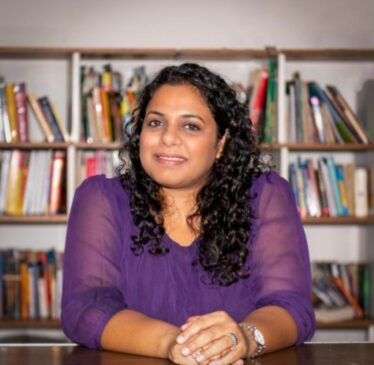
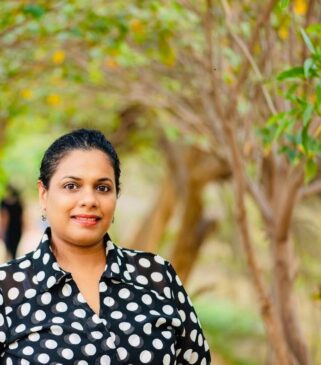
At BrilliantRead Media, we always strive to bring meaningful and inspiring stories from India and around the world to empower and motivate our growing community. As part of this endeavour, we invited Ishha Ajmera for an exclusive interview with us. Ishha is a Certified Life Coach and Mental Health Advocate. Let’s learn more about her inspiring journey, teaching philosophy, and valuable insights.
Excerpts from our exclusive interview with Ishha:
You’ve had a diverse journey spanning entrepreneurship, recruitment, and coaching. What was the turning point that led you to step into life coaching and mental health advocacy?
It’s interesting because people often expect one life-changing moment to explain such a transition. I wish I had one; it would have made for a great story! But when I look back, I don’t see one particular turning point. I see a journey of experiences that gradually nudged me in this direction.
My entrepreneurial journey began in recruitment, where I was running an executive search firm. On the surface, I was helping organizations find the right people, but over time, I realized that I was far more fascinated by people than by resumes or roles.
I became curious about why one person flourishes under pressure while another struggles, why some highly talented individuals lack confidence, and why success means such different things to different people.
Entrepreneurship itself became a tremendous teacher. I often say that entrepreneurship is probably the most expensive personal development program you can sign up for! You think you are building a business, but one day you realize the business has been building you.
Every challenge introduces you to another version of yourself: your courage, fears, impatience, resilience, need for control and ability to let go.
Like every entrepreneur, I experienced setbacks. My first real jolt in business made me look beyond what was happening externally and start looking inward. That experience created a deeper curiosity about people and, more importantly, about the human mind.
I started asking questions such as: Why does one setback become someone’s greatest teacher while another person carries it as a wound for years?
Coaching, therefore, was not really a career switch for me. It became a natural extension of my own journey of understanding human beings.
Mental health advocacy followed a similar path. I don’t see it as separate from coaching. Every leader, entrepreneur and professional is carrying something invisible: fear, loneliness, grief, self-doubt or simply the pressure to always appear okay.
Titles don’t protect us from being human. My work today is about creating spaces where people can put those titles aside for a while and simply meet themselves.
Because I have realized that most breakthroughs don’t happen because someone gives us better advice. They happen when, perhaps for the first time, we truly hear ourselves.
As a mental health advocate, what are some silent struggles you see high-performing professionals dealing with today, and how can organizations respond better?
One thing I’ve noticed is that high performers are celebrated for their strengths, but very few people notice the cost at which those strengths sometimes come.
Most high performers don’t struggle because they aren’t capable. They struggle because somewhere along the journey, achievement quietly becomes their identity.
The next target. The next promotion. The next milestone.
The finish line keeps moving.
I’ve worked with leaders who have built incredible careers, yet when I ask them a simple question “What are you proud of?” they pause for a long time.
Not because they haven’t achieved enough, but because they have forgotten how to acknowledge themselves.
Another pattern I see, irrespective of age or designation, is the quiet voice that says, “I’m not enough.”
Not experienced enough.
Not intelligent enough.
Not successful enough.
Not doing enough.
The words change, but the emotion underneath is surprisingly similar.
These beliefs often begin much earlier in childhood, family, school and life experiences and become deeply embedded in the way we see ourselves. We then enter organizations carrying those stories without even realizing it.
That is why I believe mental health isn’t only about stress management or counselling. It is also about awareness, helping people recognize the stories they are unconsciously living from.
Organizations are certainly trying, and we have come a long way. But I believe the next shift needs to be cultural rather than merely programmatic.
People don’t just need another wellness initiative. They need leaders who create spaces where it is okay not to have all the answers, where asking for help isn’t seen as weakness, where mistakes become learning rather than labels, and where people feel that they belong before they perform.
When people stop spending all their energy proving their worth, they naturally begin bringing their best selves to work. And that creates a very different kind of performance.
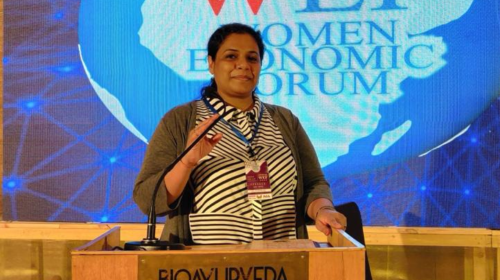
What did receiving the ‘Exceptional Women Excellence’ recognition from the Women Economic Forum mean to you personally and professionally?
Receiving the Exceptional Women Excellence Award from the Women Economic Forum was a beautiful moment, but probably not for the reasons people imagine.
Through my journey with the Mental Health Council in Karnataka, I had the opportunity to work alongside wonderful people, NGOs and communities to create conversations around mental health at a time when many people still found the subject uncomfortable.
A lot of that work happens quietly. There is no applause after every conversation or visible scorecard. Sometimes, all you know is that one person walked away feeling a little lighter than when they arrived.
So, when recognition comes for that kind of work, it feels less like a personal achievement and more like an acknowledgement that these conversations matter.
Professionally, awards certainly add credibility. They reassure people that you have contributed meaningfully in your field. But my relationship with success has also evolved.
Earlier, success meant reaching a destination. Today, success feels more like alignment.
Am I doing work that feels meaningful?
Am I able to sleep peacefully at night?
Am I helping someone see themselves differently?
Those questions matter much more to me now.
You work closely with founders and senior leaders. What is one mindset shift that consistently unlocks transformational leadership?
One thing I’ve realized after working with founders and senior leaders is that leadership can be surprisingly lonely.
From the outside, people see confidence, authority and decisiveness. What they don’t see is the constant weight of making decisions that affect people, businesses and families. Everyone comes to leaders with expectations, but very few people ask them what they are carrying.
I often tell founders that coaching isn’t a place where I give them answers. It is one of the few spaces where they don’t have to pretend they already have them.
And that is where something beautiful happens. When people finally stop trying to sound like a leader, they begin becoming one.
If I had to identify one mindset shift, it would be this:
Move from asking, “What should I do?” to asking, “Who does this situation need me to be?”
That one question changes the quality of leadership completely.
Leadership isn’t one fixed personality. We all wear many hats in a single day. You might begin your morning as a CEO, become a mentor before lunch, a negotiator in the afternoon, a parent in the evening and a friend later at night.
The challenge isn’t wearing different hats. The challenge is carrying one hat into every conversation.
Awareness helps us understand which version of ourselves the moment requires. Somewhere in that shift, leadership becomes much more peaceful, authentic and effective.
You emphasize self-mastery and executive presence. How can individuals begin this inner work in a practical, everyday way?
I love this question because self-mastery is often misunderstood. People think it means controlling yourself all the time. For me, self-mastery begins much earlier it begins with understanding yourself.
Most of us don’t simply respond to situations. We respond to our interpretation of those situations.
Our values, beliefs, emotions and inner voices are constantly influencing our choices, often without us realizing it. So when people ask me where to begin, I don’t tell them to read another book or attend another workshop.
I ask them to spend time with themselves.
Not scrolling.
Not listening to a podcast.
Not consuming something.
Just being.
I encourage many of the founders and CXOs I work with to block 20–30 minutes in their calendar every day. Just as they protect an important client meeting, they need to protect this meeting with themselves.
Initially, they often tell me, “I don’t know what to do.”
And I smile because that’s the point.
You don’t have to do anything. You simply have to listen.
Listen to the conversations happening inside your head the fears, judgments, dreams, expectations, inner critic and the parts of you that are still seeking approval.
These voices have been speaking for years. We’ve simply been too busy to hear them.
Once you begin listening without judging, awareness starts growing naturally.
And that is where self-mastery begins.
Executive presence, in my experience, isn’t something you perform. People can usually sense whether your confidence is coming from ego or clarity.
Presence is what remains when the noise inside settles.
Through platforms like SHEmantra, how do you see the narrative of women’s leadership evolving in India today?
Every time someone asks me about SHEmantra, I smile because, for me, it stopped being a platform a long time ago. It feels like home.
Home is where you don’t have to explain yourself before you belong. That’s exactly how SHEmantra has felt to me.
It is a space where women can show up with their achievements, doubts, questions, laughter and even their tears, and somehow everything is welcome.
What I cherish most is that nobody is trying to become someone else. We are simply encouraging each other to become more of ourselves. There is so much giving and receiving without keeping score.
One woman shares her experience. Another shares her network. Someone else shares her time. Someone simply listens.
And somehow, everyone grows.
When I look at women’s leadership in India today, I feel we are witnessing a very meaningful shift.
For years, women had to constantly prove that they belonged in leadership. Today, I see more women asking a different question: not “How do I fit into existing leadership models?” but “What if leadership can look different?”
I think that is powerful.
We’re bringing empathy into boardrooms without apologizing for it. We’re showing that strength and compassion aren’t opposites. We’re demonstrating that collaboration can create extraordinary outcomes.
Most importantly, we’re beginning to understand that another woman’s success doesn’t reduce our own. It expands what is possible for all of us.
My hope is that we continue creating spaces where women don’t feel they have to choose between ambition and authenticity.
The world needs leaders who are deeply competent and deeply human. Women are beautifully capable of being both.
In your coaching practice, how do you help clients balance external success with inner well-being and emotional resilience?
I’ve noticed something over the years: people rarely come to coaching asking for inner peace.
They usually come because they want clarity around a career move, a difficult relationship at work, a leadership challenge, a business decision or because they simply feel stuck.
The conversation begins there, but somewhere along the way, it almost always reaches a much deeper place.
Because very often, the problem isn’t really the problem.
The promotion isn’t the problem.
The business isn’t the problem.
The difficult conversation isn’t the problem.
They are often mirrors reflecting something happening within.
So my work isn’t about giving people better answers. It’s about helping them ask themselves better questions.
What is truly important to you?
Whose expectations are you carrying?
Which fear is making this decision on your behalf?
What part of you is asking to be seen?
I’ve realized that awareness itself can be incredibly powerful. The moment people begin recognizing their own patterns, something shifts. They stop fighting themselves.
And when they stop fighting themselves, they naturally begin making different choices.
A lot of people think emotional resilience means becoming stronger. I see it differently.
Emotional resilience isn’t about becoming hard. It’s about becoming spacious.
It is having the capacity to experience disappointment without becoming disappointment, to experience fear without becoming fear, and to experience success without becoming attached to it.
One idea that has deeply influenced my own life comes from our wisdom traditions: the practice of doing our best while gradually learning to detach from the outcome.
That doesn’t mean becoming indifferent. It means not allowing the outcome to determine our worth.
When people begin living from that space, success becomes joyful instead of exhausting.
Ultimately, I want people to experience a life where ambition and inner well-being don’t compete with each other.
What is your larger vision for the impact you want to create in the space of leadership, mental health and holistic well-being over the next decade?
This question makes me smile because I don’t think about the next ten years only in terms of numbers.
I don’t have a target that says I want to coach a certain number of leaders or build a certain number of programs.
Of course, growth matters. Impact matters. But somewhere along the way, I’ve realized that the quality of the ripple is far more important than the size of the ripple.
If I can help one leader become a little more self-aware, that leader influences a team. That team influences families. Those families influence communities.
Transformation has a beautiful way of travelling far beyond the person sitting in front of us.
My larger vision is actually quite simple.
I want leadership conversations to become more human.
I want organizations to understand that emotional well-being isn’t separate from performance; it shapes performance.
I want coaching to become less of a corrective intervention and more of a way of leading.
I hope we reach a point where asking for a coach is seen in the same way as seeking a mentor, not because something is wrong, but because growth deserves companionship.
I also want to continue building communities where people experience something that is becoming increasingly rare today a genuine sense of belonging.
Whether through coaching, leadership programs, women’s communities or mental health initiatives, I want people to leave feeling a little more connected to themselves and to one another.
Because I genuinely believe healing doesn’t always happen in isolation. Sometimes healing happens because another human being truly listened.
And if I look even deeper, I think my work has always been about one thing:
Helping people remember who they are beneath all the labels they have collected over the years.
The leader.
The entrepreneur.
The parent.
The achiever.
The people-pleaser.
The perfectionist.
There is always a quieter, wiser self underneath all of that.
If my work helps people reconnect with that part of themselves, I think everything else follows naturally.
Ten years from now, I don’t necessarily want people to remember the workshops I’ve conducted or the number of coaching hours I’ve completed.
I’d rather they remember how they felt after meeting me.
If someone says, “After that conversation, I started listening to myself a little more,” or “I went back and had the courage to make a different choice,” or even, “For the first time in a long time, I felt seen,” I think I’ll know I’ve lived my purpose.
Because at the end of the day, I don’t believe transformation begins with finding better answers.
I believe it begins the moment we become willing to meet ourselves with honesty, compassion and curiosity.
At BrilliantRead, we don’t just share startup stories; we bring you journeys that challenge perspectives, spark ideas, and fuel ambition. Every story we feature is carefully chosen to add real value, inspire action, and ignite possibility within our growing community of entrepreneurs and dreamers.
If you have a powerful story, one that can inspire, educate, or create impact, we want to hear from you.