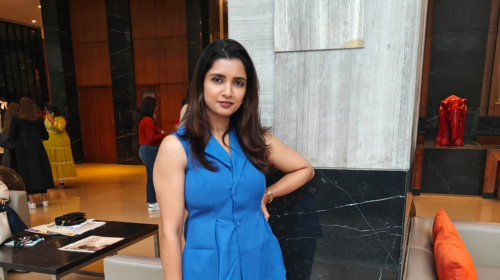
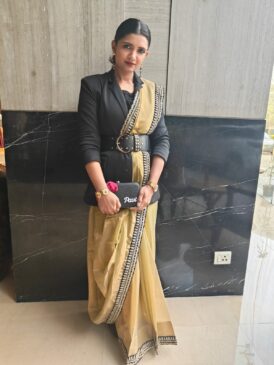
At BrilliantRead Media, we always strive to bring meaningful and inspiring stories from India and around the world to empower and motivate our growing community. As part of this endeavour, we invited Pavithra Sarath for an exclusive interview with us. Pavithra is a Certified Personal Stylist, Personal Shopper and Wardrobe Curator. Let’s learn more about her inspiring journey, teaching philosophy, and valuable insights.
Excerpts from our exclusive interview with Pavithra:
What inspired you to become a personal stylist, and how did your journey evolve into wardrobe curation and personal shopping?
My journey into personal styling actually started during my childhood. I have always loved dressing up, observing people, noticing fashion trends, and getting inspired by celebrities and different cultures.
My father played a major role in developing this interest. Since he worked for the government and travelled extensively across India to places like Kolkata, Mumbai, Delhi, Bengal and many other cities he would often come back with beautiful dresses for my sister and me. Those days, you could find lovely, good-quality frocks at very affordable prices. My mother would dress us up in matching outfits, clips, hairbands, socks and shoes. Even our childhood photographs are filled with coordinated looks from head to toe!
Growing up in such an environment naturally made me curious about fashion. I started observing trends, understanding what worked and what didn’t, and experimenting with styling. Gradually, it became a passion.
Initially, I did this for my family and friends. Whenever my cousins or friends wanted to shop, they would ask me to accompany them, select outfits and help them decide what would suit them. Among my friends, I became almost like their personal “Google” for shopping! They would message me asking where to buy a particular dress, lehenga, children’s outfit, shoes or even something they had seen online. They would often call me their “Idea Guru”, which eventually became the inspiration behind my channel name.
One day, a friend asked me a very simple but powerful question: “You put so much time and effort into this, and you clearly love it. Why don’t you turn your passion into a profession?”
That thought stayed with me.
I realised that if I wanted to professionally charge people for my expertise, I needed the right knowledge and credentials. That’s when I decided to get certified as a personal stylist with Ishita Saluja Image Consultancy, led by pioneer image consultant Ishita Saluja in Delhi.
That marked the beginning of my professional journey as a personal stylist.
Today, wardrobe curation and personal shopping remain two of my favourite areas. I particularly enjoy helping people solve two very common wardrobe problems: “I have nothing to wear” and “I have clothes, but I don’t know how to put them together.”
For me, styling is ultimately about making someone’s existing wardrobe work better for them.
Many people struggle with confidence in their appearance. How do you use styling as a tool for self-expression and empowerment?
This is one of the most meaningful aspects of my work.
Many of my clients are mothers, including women who are postpartum or have young children. After pregnancy and childbirth, their bodies may change significantly. Some may have a larger tummy, broader arms, fuller thighs or changes in their overall body proportions. Many women struggle to understand how to dress for their new body and, as a result, lose some of the confidence they once had.
This is where a stylist can make a real difference.
One misconception I often come across is that hiring a stylist means being told to buy more clothes. That’s not what good styling is about.
A good stylist first understands what you already have.
I analyse the client’s body, colours and lifestyle before recommending anything. We understand their body proportions, colour preferences, daily routine, professional requirements and comfort level. Then we work with what they already own and identify what can be styled differently.
For example, if someone is conscious about their tummy, there are different styling techniques that can help create balance. Similarly, emphasis and de-emphasis techniques can be used depending on the client’s body proportions.
But styling is not only about clothes.
Sometimes, we also need to change the way a person looks at their own body. I spend a lot of time talking to my clients and helping them develop a healthier perspective towards their appearance and the expectations society places on them.
So, beyond elevating an outfit, I believe a stylist should help elevate the client’s confidence.
Many of my clients have told me that after our sessions, they feel more confident at work, among friends and within their families. For me, that’s one of the most rewarding outcomes of being a stylist.
How do you approach a body analysis session, and what are the most common misconceptions people have about their bodies?
Body analysis is about understanding proportions rather than judging the body.
During a body analysis session, I ask clients to complete a questionnaire that helps me understand their lifestyle and preferences. I also collect relevant body measurements and photographs so that I can analyse their overall proportions.
Based on the analysis, we identify their body shape for example, triangle, inverted triangle, rectangle, round or hourglass.
The purpose is not to put someone into a box. It is to understand their proportions and use clothing to create visual balance.
For instance, someone with an inverted triangle body shape may have a relatively broader upper body and narrower lower body, while someone with a triangle shape may have more volume around the lower body. Based on these proportions, I recommend silhouettes, fits and styling techniques that create balance.
One of the biggest misconceptions I try to change is the belief that there is something “wrong” with someone’s body.
There is nothing wrong with your body.
Sometimes, the issue is simply that the clothes you are wearing are not working with your proportions.
Once clients understand this distinction, their entire perspective towards dressing can change. They stop trying to hide themselves and start learning how to dress in a way that makes them feel comfortable, confident and balanced.
What does a well-curated wardrobe mean to you, and how can someone start building one without feeling overwhelmed?
For me, a well-curated wardrobe is an intentional wardrobe.
Every piece should have a purpose and should work with your personality, body, lifestyle and existing wardrobe.
The idea isn’t to have a wardrobe overflowing with clothes. In fact, an efficient wardrobe can often be much smaller.
This is where the concept of a capsule wardrobe becomes useful.
Having versatile essentials such as a well-fitted white shirt, a basic black shirt, versatile bottoms, a good pair of shoes, and a few pieces that add personality allows you to create multiple outfits from a relatively small number of garments.
The idea is to reuse and repurpose the same pieces for different occasions by changing the way you style them.
Someone starting from scratch doesn’t need to overhaul their entire wardrobe at once. Start by understanding what you already own, identify the pieces you actually use, and then determine what is missing.
This is also where a personal stylist can help. Instead of randomly shopping, you can identify the gaps in your wardrobe and purchase only what genuinely adds value.
As a personal shopper, how do you balance trends with individuality when selecting pieces for clients?
I don’t believe every client needs to follow every trend.
Trends and fashion can certainly be considered, but they are not the primary factors I look at.
My priority is the client’s comfort, personality, body shape, proportions, colour palette and lifestyle.
For example, something may be extremely fashionable, but if the client doesn’t feel comfortable wearing it or it doesn’t suit their lifestyle, I wouldn’t recommend it simply because it is trending.
The objective is not to make everyone look trendy.
The objective is to help each person look like the best version of themselves.
When the right combination of comfort, personality and styling comes together, the client looks naturally polished and put together.
What are the top three wardrobe essentials you believe everyone should invest in, regardless of trends?
This is slightly tricky because wardrobe essentials should ideally be customised according to a person’s body type and lifestyle.
However, if I had to choose three versatile essentials, I would recommend:
1) A well-fitted bottom suited to your body proportions.
2) A crisp white shirt or elegant silk blouse.
3) Comfortable, good-quality footwear.
These three pieces can become the foundation of a versatile wardrobe. You can build multiple looks around them and adapt them for different occasions.
The key, however, is not simply owning these pieces. They need to fit you well and work with your lifestyle.
Can you share a memorable client transformation where styling created a significant shift in confidence and lifestyle?
One transformation that remains particularly memorable for me is that of a client from Hosur, who is originally from Madurai.
She works in HR and approached me because she felt that her dressing wasn’t completely aligned with her professional environment.
But she was very clear about one thing: she didn’t want to lose her identity.
She told me, “I am a very traditional person. I want to look confident and professional, but I don’t want to change who I am.”
We worked together through my complete transformation package.
We analysed her body proportions, colour palette and lifestyle, understood her comfort zones, identified what she wanted to emphasise and de-emphasise, and then worked on her existing wardrobe. I also visited her home for a wardrobe decluttering session, where we identified the pieces that worked, the pieces that no longer served her, and the gaps that needed to be addressed.
The transformation went far beyond buying new clothes.
After the transformation, her colleagues started noticing the difference. They would regularly ask her things like, “Is it your birthday today?” or “Is there something special today? You look stunning!”
She later shared this feedback with me, and that made me incredibly happy.
She was already a confident woman, but the right styling helped her confidence become more visible.
That’s what I love about styling it doesn’t have to change who you are. It can simply help you express who you already are more confidently.
What are the most common mistakes people make while shopping or styling themselves?
There are quite a few common mistakes I see.
The first is buying something simply because it is on sale. A discount doesn’t make something valuable if you aren’t going to wear it.
The second is buying trends without considering body proportions, lifestyle or individuality. Just because something is trending doesn’t mean it will work for you.
The third is ignoring wardrobe basics. People often focus on statement pieces while forgetting the importance of well-fitted trousers, basic shirts, belts and comfortable footwear.
Another important mistake is ignoring the importance of proper fit, including well-fitted innerwear. The foundation of an outfit matters.
People also tend to keep clothes in their wardrobes long after they have stopped wearing them, perhaps because they no longer fit, are outdated, or simply don’t suit their current lifestyle.
Another common issue is shopping for a fantasy lifestyle rather than the lifestyle you actually live.
For example, someone may buy outfits for occasions they rarely attend while not having enough practical clothes for their everyday life.
Finally, many people dress primarily to hide their bodies because of insecurities. Instead of understanding their proportions and creating balance, they simply try to cover everything.
Styling should be about understanding your body, not hiding from it.
How do you ensure the same level of personalisation and impact in online styling sessions compared to in-person experiences?
Personally, I believe in-person styling provides a deeper level of personalisation because you get to interact with the client more closely and understand their environment, lifestyle and wardrobe firsthand.
However, online styling can also be extremely effective, especially for my NRI clients.
For online sessions, I use video calls extensively. Once the shopping recommendations are made and the client purchases the outfits, I don’t simply ask them to send photographs.
I prefer them to come on a video call wearing the outfit.
Then I can guide them on how to style it how to tuck the shirt, what accessories to add, which footwear works, how to layer the outfit and how to make the overall look more cohesive.
Anyone can buy an outfit.
The real value of a stylist is knowing how to style it.
So, while in-person sessions offer certain advantages, online styling can still provide meaningful personalisation when the process is structured properly.
What styling advice would you give someone who wants to look effortlessly stylish every day without spending excessively?
Looking stylish doesn’t mean buying more clothes.
If you wear clothes that fit your body well, work with your lifestyle and reflect your personality, you can look effortlessly stylish without constantly shopping.
I would focus on three things:
Fit. Lifestyle. Identity.
When your clothes fit well, suit your everyday life and communicate your personality, you automatically look more put together.
You don’t need an enormous wardrobe.
You need the right wardrobe.
Finally, why should someone consider hiring a personal stylist?
A personal stylist can help you save time, money and unnecessary shopping.
We help clients understand their body proportions, lifestyle and personal preferences so that they stop buying simply because something is fashionable or available on sale.
A stylist can also help identify why certain clothes don’t work for you and what changes can make a significant difference.
Most importantly, a good personal stylist should not simply tell you to buy more clothes.
The goal should be to build a curated or capsule wardrobe where existing pieces can be repeated and styled differently for different occasions.
I see hiring a personal stylist as an investment in learning.
You may work with a stylist for a few sessions, but the knowledge you gain about your body, wardrobe, shopping habits and styling can stay with you for years.
Ultimately, my goal is not to make my clients dependent on me.
My goal is to help them understand themselves well enough that they can make better styling and shopping decisions confidently on their own.
At BrilliantRead, we don’t just share startup stories; we bring you journeys that challenge perspectives, spark ideas, and fuel ambition. Every story we feature is carefully chosen to add real value, inspire action, and ignite possibility within our growing community of entrepreneurs and dreamers.
If you have a powerful story, one that can inspire, educate, or create impact, we want to hear from you.