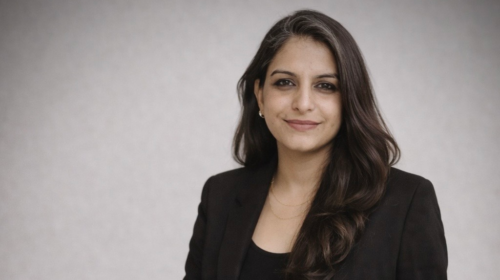
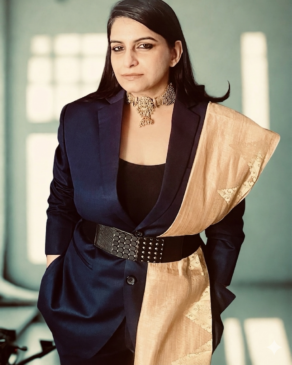
At Brilliant Read Media, it is our constant endeavour to identify and share some of the unique and compelling stories from the startup ecosystem. As part of this, we invited Richa Singh for an interview with Brilliant Read Media. To say further, Richa is a Leadership Image & Etiquette Consultant and an Influencer. Let’s learn more about her background, inspiring journey so far and her advice for our growing community!
Excerpts from our exclusive interview with Richa:
What inspired your transition into leadership image consulting and etiquette, and how did your MBA background shape this journey?
My journey didn’t begin with a title—it began with observation and lived experiences.
As an army spouse, I have often found myself in environments where you are perceived even before you introduce yourself. This made me deeply aware of how presence, grace, and the way you carry yourself quietly influence how others receive you.
Parallelly, my work with thousands of women through skill development programs revealed another powerful insight—most were capable, hardworking, and full of potential, yet they held themselves back because they didn’t feel confident expressing who they truly were.
Then came my role in academia.
While teaching management, I observed students who were academically strong and technically sound, yet there was a visible gap when they stepped into the corporate world. The gap wasn’t in knowledge—it was in communication, soft skills, and overall professional presence.
My MBA gave me the framework to understand business and leadership. But these lived experiences helped me connect the dots: success is not just about capability—it is equally about how effectively you present, communicate, and carry that capability.
That’s where my work truly began—bridging the gap between competence and presence.
In your 18+ years of experience, what has been the most defining moment that reinforced the importance of personal image in leadership?
Over the years, one pattern consistently stood out.
I met women who had taken sabbaticals, navigated career transitions, or gone through deeply personal challenges. They were capable, experienced, and resilient—yet somewhere along the way, they began to doubt themselves. Not because they lacked ability, but because they felt they had “fallen behind.”
And that shift was visible.
It reflected in how they spoke, how they entered a room, and how quickly they withdrew from opportunities—even before being evaluated.
That’s when it became clear to me: leadership today is not just tied to your role or your work. It is deeply connected to how you perceive yourself—and how you allow others to perceive you.
A strong personal image doesn’t just help you grow—it helps you reclaim your space after life interrupts your journey. It allows you to be seen again, heard again, and most importantly, to believe in your own voice again.
That was my turning point.
Because I realised this work is not just about grooming or etiquette—it is about helping people reconnect with their sense of worth, and express it with clarity and confidence.
How do you define “leadership image” in today’s corporate world beyond just appearance?
To me, leadership image is not about looking perfect—it’s about being aligned.
It is the harmony between your inner confidence and your outer expression.
It shows up in how you carry yourself in uncertainty, how you speak when it matters, and how others feel in your presence.
It’s your values, your voice, and your visual presence—working together.
What are the top 3 mistakes professionals make when it comes to executive presence and personal branding?
What I often observe is not a lack of effort, but misdirected effort:
> Focusing only on appearance while neglecting communication and emotional intelligence
> Trying to fit into a mould instead of building an authentic presence
> Assuming their work will speak for itself, without taking ownership of perception
The reality is—visibility and perception matter. If you don’t shape your presence, it gets defined for you.
How does non-verbal communication influence leadership credibility?
Non-verbal communication is deeply human—it’s what people feel before they process what you say.
A leader may say all the right things, but if their presence lacks alignment, people sense it instantly.
On the other hand, when your body language, grooming, and energy are grounded, people feel reassured. They trust you—not just logically, but instinctively.
And trust is where leadership truly begins.
Why is dining etiquette still relevant in a digital-first business world?
Because relationships are still human—even if communication is digital.
Some of the most meaningful conversations and decisions still happen across a table, not a screen.
I’ve seen highly capable professionals feel uncomfortable in dining settings—and that discomfort subtly impacts their confidence and participation.
Dining etiquette is not about which fork to use—it’s about being at ease, so you can focus on connection instead of self-consciousness.
What are some commonly overlooked etiquette mistakes that impact reputation?
It’s rarely the big mistakes—it’s the subtle ones:
– Not truly listening
– Speaking over others
– Casual disrespect in emails or messages
– Lack of awareness of boundaries
– Inconsistency in behaviour across settings
Reputation is built in these quiet moments.
How do you bridge theory with real-world corporate expectations in your sessions?
For me, it’s not about simplifying theory—it’s about translating it into lived experience.
As a facilitator and image coach, I don’t just deliver content—I create spaces where participants see themselves as others see them. That awareness is where real transformation begins.
I integrate three key elements into my sessions: image, data, and influence.
It’s not just about what you know (data), but how you present it (image), and how effectively you move people (influence).
Through experiential activities, real-time feedback, and behavioural simulations, participants don’t just learn—they uncover patterns, blind spots, and untapped strengths.
Because in the corporate world, success is not awarded to the most informed person—it is experienced by the one who can communicate, connect, and create impact.
How do you customize your coaching for different audiences?
Customization, for me, is not just about the audience—it’s about their context and definition of success.
I approach every engagement through an L&D lens, anchoring it to:
a) ROI (Return on Investment)
b) WIIFM (What’s In It For Me)
c) Real-world applicability
Whether it’s a CXO, a young professional, or an entrepreneur, the core question remains: How will this create impact in their daily reality?
For some, it’s about finding their voice. For others, it’s about refining influence in high-stakes environments.
Because learning sustains only when it feels relevant—and when it does, it drives both transformation and measurable impact.
What are the biggest internal barriers women face in owning their presence?
The biggest barrier is not lack of ability—it’s self-doubt shaped by conditioning.
Many women hesitate to take space, speak firmly, or be fully seen.
The shift begins when they stop seeking permission and start acknowledging their worth.
Confidence is not something you wait for—it’s something you practice.
Is “image” misunderstood as superficial?
Very often, yes.
Image is not about luxury brands or vanity—it is a strategic necessity.
Because before people experience your work, they experience you.
I see image as a leadership tool—one that communicates credibility, builds trust, and creates influence even before a conversation begins.
When used intentionally, it doesn’t overshadow capability—it amplifies it.
What does “authentic elegance” mean in leadership?
Authentic elegance is quiet strength.
It is the ability to carry yourself with grace, confidence, and integrity—without imitation.
It’s not about perfection.
It’s about being real, with refinement.
One etiquette rule that guarantees success in any room?
Make people feel valued.
When people feel respected, heard, and comfortable around you—they remember you, trust you, and open doors for you.
BrilliantRead is committed to bringing stories from the startup ecosystem, stories that reshape our perspective, add value to our community and be a constant source of motivation not just for our community but also for the whole ecosystem of entrepreneurs and aspiring individuals.
Note: If you have a similar story to share with our audience and would like to be featured on our online magazine, then please write to us at [email protected], we will review your story and extend an invitation to feature if it is worth publishing.