

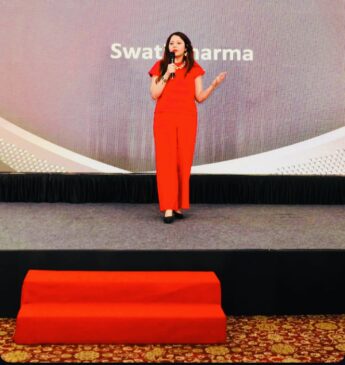
At BrilliantRead Media, we believe inspiring stories have the power to educate, empower, and create meaningful change. As part of this endeavour, we invited Swati Sharma, Corporate Mentor, High Performance Leadership Coach and Trainer, for an exclusive conversation.
With 12 years of experience across organisations such as PayU, Paytm, and American Express, Swati brings a unique perspective on leadership, career growth, self-belief, and sustainable high performance.
Excerpts from our exclusive interview with Swati:
You’ve worked with organisations like PayU, Paytm, and American Express. What inspired you to transition from corporate leadership to coaching?
After 12 years in corporate B2B sales, I realised that subject matter expertise alone doesn’t determine long-term success. I saw talented professionals struggle with self-doubt, difficult conversations, people management, and the pressure that comes with promotions.
I experienced many of these challenges myself. My biggest transformation happened when I stopped looking outward for answers and started focusing on self-awareness, personal responsibility, and self-leadership.
That led me to ask: “Can I become the coach I wished I had during my corporate journey?” That question became the foundation of my work today.
Today, I help first-time and mid-level managers build the confidence, resilience, and leadership readiness needed to step into bigger roles.

What patterns did you observe in high performers who felt stuck despite delivering strong results?
A common pattern was the belief that working harder automatically leads to career growth.
Many high performers are excellent at execution but struggle when they need to influence stakeholders, manage people, handle pressure, or transition from individual contributor to leader.
Every career transition requires a new version of you. What made you successful in one role may not be enough for the next.
I often compare leadership to a marathon; you don’t wait until race day to prepare. You prepare before you’re ready for the next level.
What is the biggest barrier holding talented professionals back?
Often, it isn’t a lack of competence. It’s a lack of belief in their own capability.
Self-doubt can make highly capable professionals hesitate, overthink, seek validation, or avoid visibility.
Real confidence isn’t about proving yourself to others. It’s about knowing your value and trusting your ability to handle what comes next.
What are the four pillars of your Leadership Readiness Framework?
My framework focuses on four core pillars:
> Leadership Identity & Mindset
> Emotional & Mental Resilience
> Executive Presence & Visibility
> Sustainable Peak Performance
Traditional leadership programs often focus on skills such as communication, delegation, and strategic thinking. Those are important, but sustainable leadership starts deeper.
Leadership isn’t just about learning new skills; it’s about becoming the leader your next role requires.
Why is internal alignment as important as professional capability?
Skills can open doors, but internal alignment determines how you perform once those doors open.
Two professionals can have similar expertise, yet one may progress faster because they communicate with confidence, make decisions under pressure, influence effectively, and trust themselves.
Our beliefs and emotional patterns influence how we show up professionally. When your internal world aligns with your career ambitions, growth becomes more consistent and sustainable.
How do self-doubt and overthinking affect leadership potential?
The first step is self-awareness without judgment.
Instead of trying to simply “fix” self-doubt, I encourage professionals to understand what triggers it.
Ask yourself:
“What story am I believing about myself right now?”
That question can create enough awareness to replace an automatic reaction with an intentional leadership choice.
Transformation begins with awareness.
How do limiting beliefs show up in highly competent professionals?
They rarely announce themselves. They often appear as perfectionism, hesitation, fear of visibility, reluctance to delegate, or constantly seeking approval.
These behaviours may look like personality traits, but they can actually reflect deeper beliefs about capability, failure, or worthiness.
When those beliefs change, people begin to communicate, decide, and lead with much greater confidence and clarity.
You often talk about preparing for the next level without burnout. What mistakes do professionals commonly make?
The biggest mistake is assuming that career growth means doing more.
People work longer hours, say yes to everything, and sacrifice recovery because they believe effort alone will get noticed.
But leadership isn’t measured by how busy you are. It’s measured by the quality of your decisions, your impact, your influence, and your ability to sustain performance.
Sustainable success requires energy management, not endless hustle.
How can leaders perform under pressure without compromising their well-being?
Pressure itself isn’t always the problem; our relationship with pressure is.
Leadership requires emotional awareness alongside professional competence. Leaders need to regulate their emotions, communicate clearly during uncertainty, recover from setbacks, and avoid taking every challenge personally.
Emotional well-being isn’t separate from leadership performance. It is one of its foundations.
Why do some professionals get overlooked for promotions despite consistently delivering results?
The key shift is from proving your value through effort to demonstrating your value through impact.
At the next level, it’s not enough to complete your tasks. You need to solve business problems, influence stakeholders, think strategically, and make your contribution visible.
Promotions don’t happen only because you’re delivering results. They happen when others can see that you’re already operating at the next level.
If someone feels they’re doing everything right but still isn’t progressing, what could they be missing?
Often, they’re missing internal readiness.
It could be perfectionism, fear of failure, people-pleasing, difficulty owning achievements, or hesitation to take ownership.
Career growth isn’t determined only by what you know. It’s also shaped by who you become.
When confidence, emotional resilience, leadership identity, and mindset evolve together, external growth becomes much more sustainable.
What is one message you would like to leave with professionals aspiring to their next level?
Don’t wait for the promotion to start becoming the leader your next role requires.