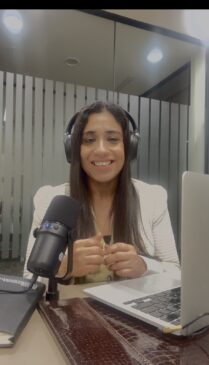
At BrilliantRead Media, we always strive to bring meaningful and powerful stories from India and around the world to empower and motivate our growing community. As part of this endeavour, we invited Manpryt Kaur for an exclusive interview with us. Manpryt is a Certified Corporate Soft Skills Trainer, Global Leadership Coach and Director at BroSis Services. Let’s learn more about her background, journey and her advice for our community!
Excerpts from our exclusive interview with Manpryt:
What inspired you to move into Learning & Development, and what keeps you passionate after nearly two decades?
I don’t think I chose Learning & Development; curiosity chose it for me.
I’ve always been fascinated by people: their stories, their decisions, and how two individuals can experience the same situation yet walk away with entirely different perspectives. That fascination eventually led me into the world of learning, behaviour, and human development.
Nearly two decades later, that curiosity remains unchanged. Every training room reminds me that the most interesting subject I’ve ever worked with isn’t leadership, communication, or emotional intelligence; it’s people.
You run BroSis Services, a Learning & Development and consulting company. What many people don’t know is that its foundation was laid by a conversation with your brother years ago. How did that conversation shape the organization you lead today?
The story of BroSis Services began long before the company itself.
In 2011, my elder brother casually said, “If we ever have an organization together, we’ll call it BroSis Services Brother and Sister.” At the time, I laughed it off. He was managing a garment manufacturing business, and I was focused on building my corporate career. It felt like an impossible idea.
Then, in 2013, I lost him to cancer. He was only 34.
Losing him felt like losing my anchor. He was my mentor, guide, and strongest supporter. While trying to rebuild my life and find purpose again, I registered BroSis Services in 2014. What started as my brother’s dream gradually evolved into a Learning & Development and consulting organization.
Today, every program we design and every milestone we achieve is my way of keeping his dream alive.
What has been one of the most transformational success stories from your training or coaching journey?
A participant once told me, “I want to be like you this confident.”
While I appreciated the compliment, what struck me was the assumption behind it. People often see confidence as something you’re born with. They rarely see the years of self-doubt, failures, learning, and growth that happen behind the scenes.
The most transformational moments in my journey have been when individuals stop admiring confidence in others and start building it within themselves.
If you had to debunk one myth about soft skills training, what would it be?
The biggest myth is that soft skills training is about motivation.
Motivation can be powerful, but it is often temporary. People may leave a session feeling energised, only to return to old habits a few days later.
True soft skills development is about creating lasting behavioural change. It’s about helping people communicate better, build stronger relationships, develop self-awareness, and improve workplace effectiveness. That’s where real transformation happens.
After 19 years in Learning & Development, what major shift have you seen in workplace behavioural and performance challenges?
One manager once said to me, “My team knows exactly what to do. Getting them to take ownership is the real challenge.”
That statement perfectly captures one of the biggest shifts I’ve witnessed.
Earlier, organizations focused heavily on technical skills and knowledge building. Today, information is readily available. The challenge is no longer access to knowledge but applying it effectively.
Organizations are increasingly looking for professionals who can take initiative, navigate ambiguity, collaborate effectively, and remain accountable for outcomes.
You work on diagnosing performance gaps globally. What are some common behavioural blind spots organizations often overlook?
A common mistake organizations make is focusing on what people are doing wrong before understanding why they’re doing it.
I once worked with a leader who believed his team needed communication training. However, after exploring the issue more deeply, we realized communication wasn’t the problem at all; people simply lacked clarity around expectations.
Many organizations assume every problem is a skill gap. In reality, people may need better feedback, clearer direction, or greater ownership rather than more training.
Many companies invest heavily in training, yet struggle with outcomes. What separates impactful learning interventions from ineffective ones?
The most effective learning interventions don’t begin with a training calendar; they begin with a business challenge.
Participants rarely remember every framework or model they learn. What they do remember are situations that feel relevant to their work.
When people leave a learning session thinking, “I can apply this tomorrow,” the likelihood of sustainable behaviour change increases significantly.
You specialise in framework-based and case study-driven learning. Can you share an example where a learning intervention created measurable business impact?
I worked with a team of consultants who were technically excellent but often struggled when clients challenged their recommendations.
Through carefully designed case studies and simulations, we shifted their focus from simply presenting solutions to understanding stakeholder perspectives.
Interestingly, their technical expertise remained the same. What changed was the quality of their conversations. As they became better listeners and more effective at asking questions, client interactions improved significantly, leading to stronger outcomes and better stakeholder engagement.
With Gen Z entering the workforce, leaders often face communication and engagement challenges. What are the biggest mistakes organizations make while managing Gen Z talent?
A young professional once told me, “I don’t expect a promotion every year. I just want to know where I’m heading.”
That statement explains a lot.
Organizations sometimes assume Gen Z is impatient or looking for shortcuts. What I often see instead is a generation seeking clarity, growth opportunities, meaningful feedback, and purpose.
The biggest mistake is managing them based on assumptions rather than understanding their expectations and aspirations.
How do you see Emotional Intelligence evolving in an AI-driven workplace? Can AI complement emotional intelligence, or challenge it?
During a session, someone asked me, “If AI can do so much, what will be left for us?”
My response was simple: “Understanding people.”
As technology becomes more capable, uniquely human skills such as empathy, active listening, trust-building, and perspective-taking will become even more valuable.
AI can enhance productivity, but emotional intelligence remains essential for navigating relationships, resolving conflicts, and leading people effectively.
As someone leveraging AI in learning and storytelling, how can trainers and L&D professionals use AI without losing the human touch?
AI can generate content, create stories, and organise information in seconds.
What it cannot do is understand why a participant suddenly withdraws from a discussion, why a team resists change, or why a client remains unconvinced despite a strong proposal.
The human side of Learning & Development begins where technology ends, understanding people beyond the words they speak.
What does the future of L&D look like in the age of AI, hybrid work, and shrinking attention spans?
A few years ago, participants looked to trainers for answers. Today, they can ask AI.
That changes the role of Learning & Development professionals significantly.
The future is not about being the smartest person in the room. It’s about creating meaningful conversations, challenging assumptions, facilitating reflection, and helping people learn from one another. Information is becoming abundant; perspective is becoming invaluable.
Leadership today is changing rapidly. What are the top three leadership competencies every manager must develop to stay relevant in the next five years?
Three competencies stand out:
1) Creating clarity amid uncertainty.
2) Understanding perspectives different from their own.
3) Building accountability and ownership within teams.
The future belongs to leaders who can communicate effectively, connect authentically, and inspire responsibility, not just manage tasks.
You’ve worked across industries like IT, Telecom, Pharma, and Food Services. How do learning needs differ across sectors, and what remains universally important?
Every industry has its own challenges, language, and performance expectations.
However, when you look beneath the surface, the core human needs remain remarkably consistent. People want to feel understood, valued, supported, and connected to a larger purpose.
While learning objectives may vary from one industry to another, the human element remains universal.
For organizations wanting to build a culture of accountability, ownership, and continuous learning, where should they begin?
I often say that ownership isn’t about accepting blame after something goes wrong.
It’s about taking responsibility before things go wrong.
Organizations build strong cultures when people are encouraged to think, contribute, learn, and take initiative rather than simply follow instructions. Accountability grows when individuals feel empowered to influence outcomes.
If you could give one piece of career advice to young professionals entering the corporate world today, what would it be?
Think like an explorer.
Stay curious about people, ideas, industries, and experiences. The corporate world evolves faster than any long-term career plan.
Those who continue learning, questioning assumptions, and exploring new possibilities often discover opportunities they never imagined.
Curiosity has been one of the greatest teachers in my journey, and I believe it will continue to be one of the most valuable career assets in the future.
At BrilliantRead, we don’t just share startup stories; we bring you journeys that challenge perspectives, spark ideas, and fuel ambition. Every story we feature is carefully chosen to add real value, inspire action, and ignite possibility within our growing community of entrepreneurs and dreamers.
If you have a powerful story, one that can inspire, educate, or create impact, we want to hear from you.